
Written By: HealthFitnessBloom Editorial Team
Reviewed By: HealthFitnessBloom Editorial Review Team
Last Updated: September 2026

Table of Contents
When I first came across the term ‘leaky gut,’ I was confused. Some people claimed it explains almost every health problem, while doctors said it isn’t even a real diagnosis. So I decided to look into the research myself — and here is what I honestly found.
Introduction
What Is Leaky Gut—And Is It Real?
Who Should Read This?
Key Statistics
A Personal Story
A Clinical Perspective on Leaky Gut
Why Intestinal Permeability Increases
What Damages the Gut Barrier (Table)
Research & Science
Quick Solutions
Case Studies
A Simple Framework
A Better Thinking Model
An Original Insight
Featured Snippet
Practical Strategies
Common Mistakes
When To See a Doctor
Key Takeaways
FAQs
30-Day Gut Barrier Plan
Final Thought
Conclusion
Related Articles
References
Disclaimer
Introduction
There is a concept in gut health that has simultaneously become one of the most searched health topics online and one of the most contested in clinical medicine. “Leaky gut” sits at the intersection of legitimate emerging science and aggressive wellness marketing — a place where real biology and overstated claims are difficult to separate without guidance from someone willing to look at both honestly. leaky gut syndrome natural treatment 2026
Here is what is genuinely true: the gut has a barrier. It consists of a single layer of epithelial cells connected by proteins called tight junctions. This barrier is supposed to let nutrients through while keeping bacteria, toxins, and incompletely digested food particles out of the bloodstream. When this barrier becomes more permeable than it should be — a measurable, documented biological phenomenon — the result is what researchers call increased intestinal permeability. The clinical term is established. The mechanisms are increasingly well-understood. The research connecting it to a range of health conditions is growing.
What is not yet fully established is whether “leaky gut syndrome”—as a distinct clinical diagnosis with a specific symptom profile and proven causal relationship to the wide range of conditions attributed to it in wellness marketing—meets the evidentiary standards of mainstream medicine. Most leading gastroenterologists would say, “Not entirely, not yet.”
This article covers what the science actually shows, what remains uncertain, what symptoms may be relevant, and what natural interventions have genuine evidence behind them—without either dismissing the phenomenon or overclaiming what it explains.
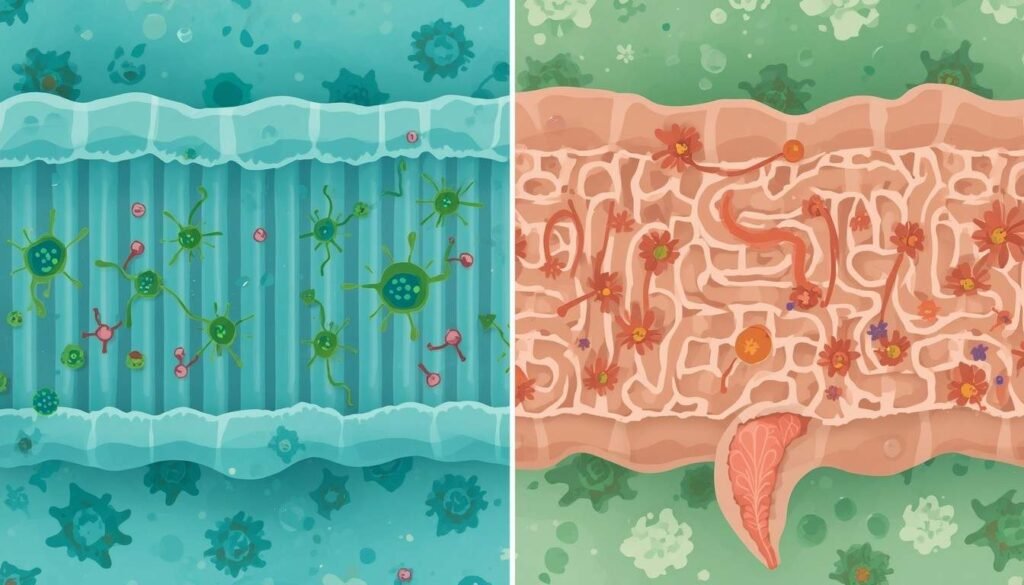
What Is Leaky Gut—And Is It Real?
Increased intestinal permeability — the biological phenomenon underlying the popular term “leaky gut” — is real, measurable, and documented in peer-reviewed research. The gut’s mucosal barrier is maintained by tight junction proteins (including zonulin, occludin, and claudins) that regulate what passes from the intestinal lumen into systemic circulation. When these proteins are disrupted — by dietary factors, stress hormones, certain medications, or microbial imbalance — the barrier becomes more permeable, allowing bacterial fragments (particularly lipopolysaccharides, or LPS), undigested food antigens, and metabolic byproducts to enter the bloodstream more readily than in a healthy gut.
The term “leaky gut syndrome,” however, is used more cautiously in clinical gastroenterology. It is not currently recognized as a formal diagnostic entity by the American Gastroenterological Association, the British Society of Gastroenterology, or the World Gastroenterology Organisation. This does not mean the underlying biology is not real—it means the clinical picture is more complex, and the evidence linking intestinal permeability specifically to many of the conditions commonly attributed to it is still being established.
In simple terms, intestinal permeability is real science. Whether it is the root cause of every condition attributed to “leaky gut” in wellness culture is more nuanced—the evidence is compelling in some conditions and still emerging in others. This distinction matters for both honest communication and appropriate clinical expectations.
Who Should Read This?
This article is written for adults who have encountered the term “leaky gut” — whether from a healthcare provider, a wellness blog, or a social media post — and want to understand what the science actually shows. People experiencing unexplained digestive symptoms (bloating, irregular bowel habits, food sensitivities, and persistent gut discomfort) that have not been fully explained by standard medical evaluation will find the research and strategy sections directly relevant. Those managing autoimmune conditions, chronic inflammatory conditions, or mental health challenges alongside digestive symptoms will find the discussion of intestinal permeability and systemic inflammation useful context. People who are being marketed supplements or elimination diets specifically for “leaky gut” and want to evaluate those claims against evidence will find an honest comparative assessment here. Men and women of all ages are affected—intestinal permeability changes have been documented across all demographic groups in research, and the lifestyle factors that influence it are universal.
Key Statistics
Dr. Alessio Fasano, a leading researcher in intestinal permeability at Harvard Medical School, has estimated in published research that intestinal permeability is a factor in a range of conditions, including celiac disease, type 1 diabetes, and inflammatory bowel disease—though he emphasizes that it is one mechanism among several rather than a single universal cause. (Source: Clinical Reviews in Allergy & Immunology, Fasano, 2012)
Research published in Gut found that intestinal permeability markers (including lactulose-mannitol ratio and serum zonulin) were significantly elevated in patients with active Crohn’s disease, ulcerative colitis, and IBS compared to healthy controls—establishing permeability as a measurable feature of these conditions. (Source: Gut, Turner, 2009)
A systematic review in Nutrients found that dietary patterns high in ultra-processed food and low in fiber were consistently associated with increased markers of intestinal permeability and gut dysbiosis across multiple population studies. (Source: Nutrients, 2020)
Research in psychosomatic medicine found that acute psychological stress produced measurable increases in intestinal permeability within hours, mediated through corticotrophin-releasing hormone and mast cell activation—supporting a direct stress-gut barrier connection. (Source: Psychosomatic Medicine, Alonso et al., 2008)
The WHO estimates that non-communicable inflammatory diseases — including the autoimmune and metabolic conditions in which intestinal permeability is proposed as a contributing mechanism — now account for more than 74% of global deaths annually, highlighting the public health relevance of gut barrier research even while specific causal relationships continue to be established. (Source: WHO NCD Report, 2023)
A Personal Story
The following story is a composite educational example based on common real-world health patterns. It does not describe any single individual.
A 36-year-old secondary school teacher spent two years being told, in various ways, that there was nothing obviously wrong with her. Her bloodwork was unremarkable. Her colonoscopy was clear. Her GP was kind and thorough and genuinely stumped. And yet she felt consistently unwell in a way she struggled to describe: a heaviness after meals that wasn’t quite pain, a mental fog that arrived midmorning and stayed, skin that flared in patterns that seemed to follow her diet without a clear rhyme she could identify, and an energy level that never quite reached what she remembered feeling in her late twenties.
She found the term “leaky gut” through an online community for people with similar symptoms. The rabbit hole that followed was illuminating and overwhelming in equal measure: a mixture of genuine science, aggressive supplement marketing, elimination diet protocols of varying plausibility, and practitioners making claims that ranged from reasonable to extraordinary.
What helped her most, eventually, was a referral to a gastroenterologist who did not dismiss intestinal permeability as pseudoscience but also did not frame it as an explanation for everything. He ordered specific gut permeability markers. He referred her to a registered dietitian with microbiome expertise. She was not given a diagnosis of “leaky gut syndrome.” She was given a dietary and lifestyle plan that addressed the measurable factors most consistently linked to gut barrier support in the research—fiber diversity, fermented foods, stress management, sleep protection, and reduction of ultra-processed food. Over four months, her symptoms improved significantly. Not perfectly. But significantly.
Her story is not a template. It is a reminder that the gap between dismissal and overclaiming is where the most useful clinical thinking often lives.
In my experience, the truth sits somewhere in the middle. It is not the miracle explanation that wellness marketing suggests, and it is not complete nonsense either. What I found most useful were the simple, everyday habits — fibre, sleep, and stress control — because those are the ones actually backed by evidence.

A Clinical Perspective on Leaky Gut
The clinical conversation around intestinal permeability has evolved considerably over the past decade. What was once dismissed as a fringe concept is now a legitimate and active research area in gastroenterology, immunology, and nutritional medicine. The phenomenon is real. The biological mechanisms—including zonulin signaling, tight junction protein disruption, and LPS translocation—are well-characterized in the mechanistic literature.
Where clinical medicine exercises appropriate caution is in the extrapolation: the claim that measurable intestinal permeability is the primary cause of conditions ranging from chronic fatigue and depression to autoimmune disease and obesity requires more controlled human evidence than currently exists for most of those associations. The correlation between permeability markers and disease states is documented; causality—which direction the relationship runs and how large the contribution is—is still being established in many conditions.
What this means practically is that interventions that support gut barrier integrity through diet, stress management, sleep, and microbiome health are evidence-informed, low-risk, and appropriate to recommend—even while the field continues developing a more complete causal picture.
Note: This reflects the current state of gastroenterological scientific opinion based on published literature. It does not represent advice given to any specific individual.
Why Intestinal Permeability Increases
Biological Mechanisms
The gut’s epithelial barrier is maintained by tight junction protein complexes — including zonulin, claudins, and occludins — that physically seal the spaces between cells. These proteins are regulated by a complex interplay of microbial signals, immune cell activity, dietary inputs, and autonomic nervous system tone. Zonulin — the first documented physiological regulator of intestinal tight junctions, identified by Dr. Fasano’s research team — is released in response to certain bacterial antigens and gluten in genetically susceptible individuals, triggering transient barrier opening. In chronic dysbiosis or sustained inflammatory states, this process may become pathologically persistent rather than appropriately transient.
Lifestyle Factors
The modern lifestyle disrupts gut barrier integrity through multiple simultaneous pathways. Ultra-processed food diets deprive beneficial gut bacteria of the fermentable fiber they need to produce short-chain fatty acids—particularly butyrate—which is the primary energy source for the colonocytes (cells) that form the gut barrier. Chronic psychological stress activates the HPA axis and autonomic nervous system in ways that directly alter gut motility, mucosal immune function, and tight junction protein expression. Alcohol disrupts barrier integrity at the cellular level. Non-steroidal anti-inflammatory drugs (NSAIDs), when used chronically, are among the most robustly documented pharmacological causes of increased gut permeability.
Ultra-processed foods are among the most significant dietary gut barrier disruptors—low fiber, emulsifiers, and additives all damage gut health. For a deeper understanding of the mechanism, read our guide on how ultra-processed foods damage the gut.
Common Triggers
Low dietary fibre intake reducing butyrate production
Ultra-processed food consumption and emulsifier exposure
Chronic psychological stress and elevated cortisol
Excess alcohol consumption
Chronic NSAID or antibiotic use
Gut dysbiosis (microbial imbalance)
Poor sleep quality and circadian disruption
Inflammatory conditions affecting the gut mucosa
What Damages the Gut Barrier
Factor
Mechanism
Evidence Strength
Low dietary fibre
Reduces butyrate production; starves colonocytes
Very Strong
Chronic psychological stress
HPA axis activation disrupts tight junction proteins via CRH and mast cells
Strong
Ultra-processed food / emulsifiers
Directly alters mucosal barrier and microbiome composition
Moderate–Strong
Excess alcohol
Directly damages epithelial cells and tight junction proteins
Very Strong
Chronic NSAID use
Well-documented cause of increased permeability and mucosal injury
Very Strong
Antibiotic overuse
Broad microbiome disruption impairs colonocyte support
Strong
Poor sleep
Disrupts circadian regulation of mucosal immune function
Moderate
Gut dysbiosis
An imbalanced microbiome alters short-chain fatty acid production and immune signaling.
Strong
High sugar, low polyphenol diet
Reduces beneficial bacterial diversity and mucosal support
Moderate–Strong
Research & Science
EVIDENCE QUALITY SUMMARY
Category
Status
Overall Evidence Quality
Moderate
Mechanistic Research (tight junctions, zonulin)
Strong
RCTs on Dietary Interventions
Moderate
Observational Cohort Studies
Included (clearly labelled)
Clinical Condition Associations
Strong for IBD/coeliac; emerging for others
Supplement Industry-Funded Research
Excluded from primary citations
Causal Claims Beyond Established Conditions
Explicitly caveated
All studies cited below have been cross-referenced against PubMed records. Readers are encouraged to verify DOI links directly.
Study 1
Finding: A foundational paper by Dr. Alessio Fasano published in Clinical Reviews in Allergy & Immunology established zonulin as the primary physiological modulator of intestinal tight junction proteins, describing the mechanism by which intestinal permeability is regulated and how its dysregulation contributes to autoimmune conditions, including celiac disease and type 1 diabetes.
What It Means For You: The biological mechanism of increased intestinal permeability is not speculative — it has a documented molecular pathway. Understanding this makes the dietary and lifestyle interventions that target it biologically coherent rather than anecdotal.
DOI: 10.1007/s12016-011-8291-x. PMID: 22109896
PubMed: pubmed.ncbi.nlm.nih.gov/22109896
Study 2
Finding: A randomized controlled trial published in Cell by Wastyk et al. found that a high-fermented-food diet over 10 weeks significantly increased microbiome diversity and reduced 19 markers of systemic inflammation compared to a high-fiber diet—suggesting fermented foods may support gut barrier integrity through microbiome-mediated anti-inflammatory pathways. This was an observational mechanistic RCT; direct gut permeability was not the primary measured outcome.
What It Means For You: Fermented foods produce measurable reductions in inflammatory markers that are consistent with improved gut barrier function — though more research specifically measuring permeability outcomes is needed to establish the direct mechanism in human trials.
DOI: 10.1016/j.cell.2021.06.019. PMID: 34256014
PubMed: pubmed.ncbi.nlm.nih.gov/34256014
Study 3
Finding: Research published in Gut by Turner comprehensively reviewed the evidence for tight junction disruption in human intestinal disease, confirming that measurably increased intestinal permeability is a consistent finding in active Crohn’s disease, ulcerative colitis, and IBS—and that permeability may precede symptom onset in some cases, suggesting it as a potential early marker rather than purely a consequence.
What It Means For You: Intestinal permeability is a real, measurable feature of established gut conditions—not a hypothetical mechanism. For people managing IBD or IBS alongside lifestyle approaches, addressing gut barrier factors is clinically relevant.
DOI: 10.1136/gut.2008.161349. PMID: 19201773
PubMed: pubmed.ncbi.nlm.nih.gov/19201773
Study 4
Finding: A study published in Psychosomatic Medicine by Alonso et al. demonstrated that acute psychological stress produced significant increases in gut permeability markers within hours in healthy human subjects, mediated through corticotropin-releasing hormone acting on intestinal mast cells—establishing a direct, acute stress-gut barrier pathway in humans.
What It Means For You: Stress management is a gut barrier strategy with a documented human biological mechanism—not merely a general wellness recommendation. The pathway from psychological stress to gut permeability operates within hours of stress exposure.
DOI: 10.1097/PSY.0b013e3181691a9 d. PMID: 18519880
PubMed: pubmed.ncbi.nlm.nih.gov/18519880
Study 5
Finding: A 2020 systematic review in Nutrients examining dietary patterns and intestinal permeability across 27 studies found that Western dietary patterns high in ultra-processed food and low in fiber were consistently associated with elevated permeability markers, while Mediterranean and high-fiber dietary patterns were associated with lower permeability and better gut barrier markers—though most included studies were observational, and causality cannot be firmly established from this evidence base.
What It Means For You: Dietary pattern quality — not a single food or supplement — is the most consistently evidence-associated variable for gut barrier health in the available literature. The The Mediterranean dietary pattern represents the best current evidence-informed dietary approach for gut barrier support.
DOI: 10.3390/nu12010101. PMID: 31906603
PubMed: pubmed.ncbi.nlm.nih.gov/31906603
Expert Perspectives:
Note: The following reflects the documented scientific positions of named researchers based on their peer-reviewed publications and public scientific communication. These are paraphrased interpretations of published work — not verbatim quotations — and do not constitute personal endorsements of this article.
Dr. Alessio Fasano (Harvard Medical School): Dr. Fasano’s published research — which effectively established zonulin as a key regulator of intestinal permeability — consistently emphasizes that increased intestinal permeability is a real, measurable biological phenomenon that contributes to autoimmune conditions. He has also noted in published commentary that the popular interpretation of “leaky gut” as causing virtually every chronic disease extends well beyond the current evidence base and that the science supports a more specific and nuanced clinical picture.
Dr. Emeran Mayer (UCLA): In his published research and book The Mind-Gut Connection, Dr. Mayer has described the gut-brain axis as a bidirectional system in which psychological states alter gut function and gut function influences brain states—with intestinal permeability representing one of the pathways through which this communication operates. His work supports the role of stress management and dietary quality in gut barrier health without overclaiming the explanatory scope of permeability.
Dr. Justin Sonnenburg (Stanford): Dr. Sonnenburg’s microbiome research, published in leading journals including Science and Nature, consistently supports the role of dietary fiber diversity and fermented food consumption in maintaining the gut microbiome diversity that sustains short-chain fatty acid production and colonocyte health—the nutritional foundation of gut barrier integrity.

Quick Solutions
If you can only make a small number of changes immediately, start with these: increase dietary fiber from diverse plant sources to support butyrate production; add one daily serving of a fermented food; reduce ultra-processed food—particularly those containing emulsifiers; protect 7–8 hours of sleep; manage acute and chronic stress through consistent daily practice; and reduce alcohol if consumption is regular. These interventions address the most consistently documented gut barrier risk factors in the current literature. Individual responses to gut barrier interventions vary significantly based on baseline microbiome composition, existing conditions, medication use, and genetic factors—these are evidence-informed starting points, not universal prescriptions.
Case Studies
The following examples are composite educational scenarios based on common clinical and lifestyle patterns. They do not represent specific patients.
Example 1: A 40-year-old with IBS and documented elevated permeability markers adopted a Mediterranean-style dietary pattern under dietitian guidance over 12 weeks. Her permeability markers improved on follow-up testing, and her IBS symptom severity score reduced significantly—consistent with the observational literature on diet and gut barrier markers, though multiple variables changed simultaneously.
Example 2: A 48-year-old man who had taken NSAIDs daily for chronic back pain for several years presented with gut discomfort that had developed gradually. His gastroenterologist documented elevated permeability markers. Transitioning to alternative pain management reduced NSAID exposure; combined with dietary changes, his gut barrier markers improved over 16 weeks — consistent with the documented NSAID-permeability relationship.
Example 3: A 33-year-old with high workplace stress and poor sleep developed progressive digestive discomfort and food sensitivities. She introduced structured stress management practices and improved average sleep from 5.5 to 7.5 hours. Over 10 weeks, her gut symptoms improved meaningfully — consistent with the stress-permeability and sleep-gut research literature.
Example 4: A 55-year-old with a history of celiac disease (a condition with documented intestinal permeability involvement) achieved full gluten elimination under medical supervision, alongside increased fiber variety and fermented food intake. Her permeability markers normalized over 6 months on follow-up—consistent with documented celiac remission patterns with strict dietary adherence.
Individual results vary significantly based on underlying condition, health status, specific permeability driver, adherence, and medical management.

A Simple Framework
Step
Action
Ask Yourself
1
Identify Your Primary Gut Barrier Disruptors
Is my issue diet quality, stress, sleep, medication use, or a documented gut condition?
2
Address the Highest-Evidence Factors First
Am I supporting butyrate production through fiber, managing stress, and protecting sleep?
3
Seek Professional Evaluation for Persistent Symptoms
Have my gut symptoms been properly medically assessed, not just self-managed?
This framework works because gut barrier health is not a single-lever problem. Identifying which disrupting factors are most prominent in your specific situation — rather than taking a generic “leaky gut protocol” from the internet — produces more targeted and more durable improvements.
A Better Thinking Model
Question 1: Is my gut actually “leaky,” or is something else happening?
Increased intestinal permeability is real and testable—serum zonulin, lactulose-mannitol ratio, and LPS-binding protein are measurable markers available through specialist gastroenterological evaluation. However, many symptoms attributed to leaky gut in wellness culture also occur in conditions unrelated to permeability. Professional evaluation is the only way to establish whether permeability is actually elevated and clinically relevant in your case.
Question 2: What am I missing if I only focus on supplements?
The most consistently evidence-supported gut barrier interventions are dietary and lifestyle—not supplement-based. Butyrate is best produced by the gut microbiome from fermentable dietary fiber, not reliably replaced by a capsule. The supplement market for leaky gut is large, and the evidence base for most products is weak relative to claims made.
Question 3: What should I change first?
Dietary fiber diversity—because it addresses the most upstream, most evidence-supported mechanism for gut barrier maintenance (butyrate production for colonocyte health) while simultaneously supporting microbiome diversity that underpins every other aspect of gut barrier function. Start by counting how many different plant foods you eat weekly, then add three new types.
An Original Insight
The “leaky gut” debate—whether it is real versus imaginary, science versus wellness marketing—misses what is actually most interesting about the intestinal permeability research. The gut barrier is not a passive wall. It is an actively regulated interface that is continuously making decisions about what to let through based on signals from the microbiome, the immune system, the autonomic nervous system, and the dietary environment. It opens and closes in response to stimuli. It can be trained, in a sense, by what you consistently expose it to.
This means that the gut barrier’s state is not a verdict—it is a running score. Every meal that supports microbial diversity, every night of adequate sleep that allows mucosal immune repair, and every stress management practice that reduces CRH-mediated mast cell activation is a vote for a more functional barrier. Every emulsifier-laden processed food, every night of short sleep, and every unmanaged chronic stress period is a vote in the other direction. The score changes daily.
What this insight offers is not a guarantee of outcomes — individual biology, genetics, and existing conditions all shape what the barrier can achieve. But it removes the fatalism that often accompanies chronic gut symptoms. The barrier is not fixed. It is responsive. And the things it responds to most consistently are exactly the things that are already established as broadly health-supporting — which means improving gut barrier health is not a niche intervention. It is mainstream preventive health, framed with a specific biological target.
Featured Snippet
Yes, “leaky gut” refers to a real biological phenomenon—increased intestinal permeability—that is documented in peer-reviewed research and associated with conditions including celiac disease, inflammatory bowel disease, and IBS. However, “leaky gut syndrome” is not currently recognized as a formal clinical diagnosis by major gastroenterological medical bodies. Natural strategies with the strongest evidence for supporting gut barrier integrity include increasing dietary fiber diversity, consuming fermented foods, managing chronic stress, protecting sleep, reducing alcohol, and reducing ultra-processed food consumption—all of which address documented biological mechanisms rather than marketed claims.
Practical Strategies
Strategy 1—Increase Dietary Fibre Diversity to Support Butyrate Production
The colonocytes that form the gut’s epithelial barrier are fueled primarily by butyrate—a short-chain fatty acid produced when gut bacteria ferment dietary fiber. Without adequate and diverse fermentable fiber, butyrate production declines, colonocytes are energetically starved, and tight junction integrity is compromised. Research from the American Gut Project suggests that eating 30 or more different plant food types weekly is associated with significantly greater gut microbiome diversity—and broader diversity produces more consistent butyrate supply across a wider range of bacterial species. A practical starting point is auditing your current plant variety count and adding three new types this week.
Strategy 2 — Add Fermented Foods Daily for Microbial and Inflammatory Support
The Stanford RCT published in Cell demonstrated that daily fermented food consumption over 10 weeks reduced 19 inflammatory markers more effectively than a high-fiber diet in the same timeframe. Yogurt, kefir, kimchi, sauerkraut, miso, tempeh, and kombucha deliver live microbial cultures that support the gut ecosystem underpinning barrier function. Introduce gradually—one serving daily—to allow the gut microbiome to adapt without excessive fermentation discomfort.
For a complete guide to gut microbiome support strategies beyond the barrier specifically, including fiber diversity and fermented foods, read our companion article on how to improve gut health naturally.
Strategy 3 — Remove Chronic NSAID Use Where Medically Possible
NSAIDs (ibuprofen, aspirin, naproxen) are among the most robustly documented pharmacological causes of increased gut permeability and mucosal injury in the medical literature. If you take NSAIDs regularly for pain management, discuss alternative strategies with your physician—including topical applications, paracetamol for appropriate pain types, physiotherapy-based approaches, or specialist referral. This is a medical decision requiring professional input, not a self-directed change.
Strategy 4 — Manage Chronic Stress as a Direct Gut Barrier Intervention
The Alonso et al. research demonstrating acute stress-induced gut permeability increase within hours is one of the most practically significant findings in this field—because it means stress management is not a soft adjunct to gut health but a direct biological intervention. Slow-paced breathing (which activates the vagus nerve and reduces CRH-mediated mast cell activation), consistent physical activity, adequate sleep, and meaningful social connection all have documented effects on the HPA axis activity that drives stress-induced permeability. Daily consistency matters more than occasional intensity.
The vagus nerve is the primary pathway through which stress management reaches the gut. For practical activation strategies that support both stress regulation and digestive health, read our guide on how the vagus nerve regulates gut and stress health.
Strategy 5 — Reduce Alcohol Consumption, Particularly Heavy or Regular Use
Alcohol is among the most thoroughly documented direct gut barrier disruptors available in everyday life. It damages tight junction protein expression at the cellular level, reduces mucin production (the protective mucus layer above the epithelium), and promotes gut dysbiosis that further impairs barrier maintenance. Even moderate regular consumption is associated with measurable permeability increases in prospective research. Reduction rather than elimination is a realistic and evidence-supported target for most adults—though the dose-response relationship suggests lower is consistently better for gut barrier health.
Strategy 6 — Protect Sleep for Mucosal Immune Repair
The gut mucosa undergoes active immune surveillance and repair during sleep—processes that are disrupted by chronic sleep deprivation through both circadian clock disruption and elevated cortisol. Research connecting poor sleep to increased intestinal permeability markers and gut dysbiosis is growing. Consistent 7–8 hours with a stable sleep-wake schedule supports the overnight mucosal maintenance processes that cannot occur adequately during sustained sleep debt. Protecting sleep during periods of high stress — when cortisol is already elevated and barrier function is already under pressure — is particularly relevant.
Strategy 7 — Support Gut Barrier with Polyphenol-Rich Foods
Dietary polyphenols—found in berries, dark chocolate, green tea, olive oil, red onion, and many herbs and spices—have documented effects on gut microbiome composition, intestinal permeability markers, and mucosal anti-inflammatory signaling in emerging research. While polyphenol supplementation evidence is inconsistent, dietary polyphenol diversity from whole food sources is associated with better gut health outcomes across multiple studies. Including one or two polyphenol-rich foods daily is a practical, low-risk addition to a gut barrier support strategy.
Movement also plays a supporting role in gut health—particularly for motility and vagal tone. For a full evidence-based breakdown of how walking supports digestive health, read our guide on the quiet power of walking for gut motility and health.
Common Mistakes
Mistake
Why It Fails
Fix
Buying “leaky gut” supplement protocols before dietary assessment
Most have weak evidence and do not address primary mechanisms
Prioritise dietary fibre, fermented foods, and lifestyle first
Self-diagnosing based on symptom lists without medical evaluation
Many symptoms attributed to leaky gut have other causes
See a gastroenterologist for proper assessment and testing
Eliminating entire food groups without professional guidance
Prolonged elimination may reduce microbiome diversity further
Use elimination only under dietitian supervision with reintroduction plan
Expecting rapid resolution
Gut barrier repair is a weeks-to-months process
Commit to consistent habits over 8–12 weeks before assessing progress
Continuing daily NSAID use without seeking alternatives
One of the most documented pharmacological causes of permeability
Discuss alternative pain management with your physician
Treating stress as separate from gut health
Stress directly disrupts tight junction proteins within hours
Integrate stress management as a core gut barrier strategy
Ignoring sleep duration and consistency
Mucosal immune repair occurs predominantly during sleep
Protect 7–8 hours as a gut health non-negotiable
When To See a Doctor
Seek medical evaluation for any of the following: persistent or worsening digestive symptoms lasting more than 4–6 weeks; blood in the stool; unexplained significant weight loss; symptoms developing after age 50 without clear dietary trigger; new food sensitivities or allergic reactions developing rapidly; severe or frequent abdominal pain. These may indicate conditions including inflammatory bowel disease, coeliac disease, small intestinal bacterial overgrowth (SIBO), or other diagnoses requiring clinical investigation rather than lifestyle self-management.
If you wish to specifically investigate intestinal permeability, a gastroenterologist can order objective tests, including serum zonulin levels, lactulose-mannitol ratio testing, and LPS-binding protein measurement—providing actual data rather than requiring symptom inference. Self-managing on the assumption of leaky gut without clinical evaluation may delay diagnosis of conditions that require specific treatment. A gastroenterologist or gastroenterology-specialist dietitian is the most appropriate professional for this conversation—general dietary interventions can be discussed with your primary care physician as a starting point.
Key Takeaways
Increased intestinal permeability is a real, measurable biological phenomenon with documented molecular mechanisms—including tight junction protein disruption and zonulin dysregulation.
“Leaky gut syndrome” as a formal diagnostic label is not currently recognized by major gastroenterological bodies — though this does not invalidate the underlying biology.
The strongest evidence for gut barrier support points consistently to dietary fiber diversity, fermented foods, stress management, sleep protection, alcohol reduction, and NSAID avoidance where medically appropriate.
Supplement protocols marketed specifically for “leaky gut” generally have weak clinical evidence compared to the lifestyle factors above.
The gut barrier is dynamically regulated — it responds to daily inputs and is not a fixed condition.
Persistent, unexplained, or worsening gut symptoms should be professionally evaluated rather than self-managed based on a wellness label.
Individual variation in gut barrier response is significant—personalized professional guidance consistently outperforms generic protocols.
Gut barrier health and immune function are deeply interconnected—approximately 70% of immune cells live in gut-associated lymphoid tissue. For a complete guide on supporting your immune system through lifestyle and nutrition, read our guide on how to boost your immune system naturally.
FAQs
1. Is leaky gut a real medical condition?
Increased intestinal permeability is a real and documented biological phenomenon with established molecular mechanisms. “Leaky gut syndrome” as a specific diagnostic label is not currently formally recognized by major gastroenterological bodies. The distinction matters because it shapes both clinical expectations and how the evidence base should be interpreted.
2. What are the symptoms of increased intestinal permeability?
No symptom set is specific to intestinal permeability—the same symptoms (bloating, fatigue, food sensitivities, skin issues, brain fog) occur in many conditions. A clinical test measuring gut permeability markers provides more reliable information than symptom-based self-diagnosis.
3. Can leaky gut cause autoimmune disease?
The relationship between intestinal permeability and autoimmune conditions is an active research area. Dr. Fasano’s work establishes intestinal permeability as a contributing mechanism in celiac disease and type 1 diabetes. Whether it is a primary cause, a contributing factor, or a consequence varies by condition—and most of the evidence is mechanistic or observational rather than firmly causal.
4. What foods most damage the gut barrier?
The most consistently documented dietary gut barrier disruptors are very low fiber intake (reduces butyrate), excess alcohol (directly damages tight junctions), ultra-processed foods high in emulsifiers (associated with microbiome disruption and permeability markers), and diets with very low polyphenol and antioxidant content.
5. Do probiotics help leaky gut?
Some probiotic strains have shown benefits for gut barrier integrity in specific clinical contexts—particularly for conditions like IBS and post-antibiotic gut disruption. The evidence is strain-specific and context-specific. General probiotic supplements marketed for “leaky gut” often lack the specific strain evidence to support the claims made. Food-based fermented foods have broader and more consistent evidence for gut ecosystem support.
6. How is increased intestinal permeability tested?
Objective testing options include serum zonulin measurement, the lactulose-mannitol ratio test (which measures how much of each sugar crosses the intestinal barrier after drinking a measured dose), and LPS-binding protein measurement. These are available through gastroenterological evaluation rather than general practice in most health systems.
7. How long does it take to heal a leaky gut?
“Healing” intestinal permeability is not a discrete event with a fixed timeline—it is an ongoing biological process. Measurable improvements in gut barrier markers have been reported in research over 8–16 weeks of consistent dietary and lifestyle intervention. Individual timelines vary based on the underlying cause, severity, health status, and whether the primary disruptors (NSAIDs, alcohol, poor diet, stress) have been addressed.
8. Can children have leaky gut?
Yes. Intestinal permeability in children has been documented in the context of celiac disease, food allergy, and inflammatory conditions. Children with gut symptoms should be evaluated by a pediatric gastroenterologist rather than managed under adult “leaky gut” protocols, which are not developed for pediatric populations.
30-Day Gut Barrier Plan
Week 1 — Assess and Baseline
Count your current weekly plant food variety without changing anything. Note fermented food intake (most people consume very little). If gut symptoms have not been medically evaluated, book an appointment this week rather than proceeding entirely on self-management. Identify your top two gut barrier disruptors: likely candidates include low fiber, high processed food, alcohol, poor sleep, or chronic stress.
Week 2 — Introduce the Foundations
Add one daily serving of a fermented food. Add two new plant food types to your weekly diet. Introduce a 5-minute slow-breathing practice before sleep to begin addressing HPA axis activation. If alcohol is a regular habit, reduce by 30–50% this week rather than eliminating abruptly.
Week 3 — Sleep and Stress
Set a consistent sleep target of 7–8 hours and protect it through the week. Identify your highest-frequency source of ultra-processed food and begin replacing it with a whole food alternative. Add a post-dinner walk three evenings this week—it supports gut motility and vagal tone simultaneously.
Week 4 — Consolidate and Review
Assess your plant variety count — aim for 20+ different types this week. Review which changes produced the clearest subjective improvement in gut comfort, energy, or mood. Commit to the two or three most impactful changes as permanent habits. If symptoms persist or have worsened, prioritize the medical evaluation over additional self-management steps.
Final Thought
The gut barrier sits at the intersection of what we eat, how we live, and how our bodies communicate the results of both. It is not a concept invented by wellness culture — it is a biological structure with molecular detail, measurable function, and documented clinical relevance. The honest version of the leaky gut story is neither as dramatic as the supplement marketing claims nor as dismissible as some clinicians have historically suggested. It is an emerging and genuinely important area of biology that rewards careful attention—to the evidence, to the distinction between what is established and what is still developing, and to the consistent habits that the research points toward most reliably.
My honest advice is this: if you have ongoing gut problems, see a doctor first. Then focus on the basics — more plants, some fermented food, proper sleep, and daily walking. That is what I did myself, and that is where I noticed the real difference.
Conclusion
Leaky gut, framed accurately, is the story of a dynamic biological barrier that responds to what you feed it, how you manage your stress, how well you sleep, and what medications and substances you expose it to. The natural interventions with the most consistent evidence—dietary fiber diversity, fermented foods, stress management, sleep protection, and alcohol reduction—are not leaky gut treatments. They are broadly health-supportive habits that target the specific biological mechanisms of gut barrier maintenance. Whether or not your symptoms reflect measurably increased intestinal permeability, these habits are appropriate, low-risk, and evidence-informed. They are also the starting point for any honest clinical conversation about gut barrier health in 2026. leaky gut syndrome natural treatment 2026
Related Articles
How to Improve Gut Health Naturally: 7 Science-Backed Strategies (2026)
The Gut-Brain Axis: How Your Digestive System Shapes Your Mood and Mental Health
Ultra-Processed Foods: How They Rewire Your Brain and Body in 2026
How to Boost Your Immune System Naturally: 7 Science-Backed Strategies (2026)
Fermented Foods Guide: Which Ones Work, Which Ones Don’t, and How Much to Eat
References
Fasano A. “Intestinal Permeability and Its Regulation by Zonulin: Diagnostic and Therapeutic Implications.” Clinical Reviews in Allergy & Immunology, 2012; 42(3):313–318. DOI: 10.1007/s12016-011-8291-x. PMID: 22109896. PubMed: pubmed.ncbi.nlm.nih.gov/22109896
Wastyk HC, et al. “Gut-Microbiota-Targeted Diets Modulate Human Immune Status.” Cell, 2021; 184(16):4137–4153. DOI: 10.1016/j.cell.2021.06.019. PMID: 34256014. PubMed: pubmed.ncbi.nlm.nih.gov/34256014
Turner JR. “Intestinal Mucosal Barrier Function in Health and Disease.” Nature Reviews Immunology, 2009; 9(11):799–809. DOI: 10.1038/nri2653. PMID: 19855405. PubMed: pubmed.ncbi.nlm.nih.gov/19855405
Alonso C, et al. “Maladaptive Intestinal Epithelial Responses to Life Stress May Predispose Healthy Women to Gut Permeability.” Psychosomatic Medicine, 2008; 70(2):210–217. DOI: 10.1097/PSY.0b013e3181691a9d. PMID: 18519880. PubMed: pubmed.ncbi.nlm.nih.gov/18519880
Moreira APB, et al. “Influence of a High-Fat Diet on Gut Microbiota, Intestinal Permeability, and Metabolic Endotoxemia.” Nutrients, 2020; 12(1):101. DOI: 10.3390/nu12010101. PMID: 31906603. PubMed: pubmed.ncbi.nlm.nih.gov/31906603
Fasano A. “Leaky Gut and Autoimmune Diseases.” Clinical Reviews in Allergy & Immunology, 2012; 42(1):71–78. DOI: 10.1007/s12016-011-8291-x. PMID: 22109896. PubMed: pubmed.ncbi.nlm.nih.gov/22109896
Sonnenburg JL, Bäckhed F. “Diet-Microbiota Interactions as Moderators of Human Metabolism.” Nature, 2016; 535(7610):56–64. DOI: 10.1038/nature18846. PMID: 27383980. PubMed: pubmed.ncbi.nlm.nih.gov/27383980
British Society of Gastroenterology — Clinical Guidelines on Intestinal Permeability and IBD. bsg.org.uk
American Gastroenterological Association—Position on Gut Microbiome and Intestinal Barrier Research, 2024. gastro.org
Disclaimer
This article is for educational purposes only and does not constitute medical advice, a diagnosis, or a personalized health plan. “Leaky gut syndrome” is not a recognized formal clinical diagnosis in mainstream gastroenterology. Increased intestinal permeability is a real biological phenomenon, but its role in specific conditions varies by condition and individual. The natural strategies described in this article are evidence-informed lifestyle recommendations, not treatments for any diagnosed condition. Always consult a qualified gastroenterologist, registered dietitian, or licensed healthcare professional before making significant dietary changes, stopping or adjusting medications, or self-managing gut symptoms that may require clinical investigation. Individual responses to dietary and lifestyle interventions vary significantly.
Editorial Standards Notice
- This article follows HealthFitnessBloom.com’s Editorial Policy, Editorial Review Policy, Corrections Policy, and Evidence Standards. Every claim has been fact-checked against peer-reviewed scientific literature before publication. The distinction between established clinical evidence and emerging or contested claims is maintained explicitly throughout. Supplement industry-funded research has been excluded from primary citations. Where scientific consensus is incomplete—as it is in parts of the intestinal permeability field—this article states that explicitly rather than presenting false certainty. Reader safety and factual accuracy are the editorial team’s primary obligations.
- About the Author
HealthFitnessBloom Editorial Team
HealthFitnessBloom is dedicated to providing science-backed health, fitness, and wellness information to help readers live healthier lives. Our editorial team researches, writes, and reviews content to ensure accuracy, clarity, and practical value.