
Written By: HealthFitnessBloom Editorial Team
Reviewed By: HealthFitnessBloom Editorial Review Team
Last Updated: September 2026
Research Transparency: All studies referenced in this article have been independently verified through PubMed and official health organisation sources.
Editorial Standards: Content reviewed against current scientific evidence. Claims cross-checked with PubMed, NIH, WHO, and primary journal sources. No sponsored influence on conclusions.
Table of Contents
For years I thought walking did not count as real exercise. If I was not sweating or pushing hard, it felt like I was wasting my time. Then I started walking ten minutes after dinner — and within a few weeks, it became the most consistent habit I have ever built.
Introduction
What Is Walking as Medicine?
Who Should Read This?
Key Statistics
Personal Story
Why It Works
Research & Science
Quick Solutions
Case Study
Simple Framework
Thinking Model
Original Insight
Featured Snippet
Practical Strategies
Common Mistakes
When To See a Doctor
Key Takeaways
FAQs
30-Day Action Plan
Final Thought
Conclusion
References
Disclaimer
Introduction
There is a strange kind of guilt that comes with doing something small. We live in a world that worships intensity — heavy workouts, extreme diets, biohacking routines that demand spreadsheets and supplements. And somewhere in the middle of all that noise, walking quietly waits by the door, often ignored and sometimes mocked as “not a real workout”. benefits of walking
But here’s the truth that researchers, doctors, and quietly wise grandparents have known for a long time: walking is not the consolation prize of exercise. It is, for many people, the most sustainable, accessible, and surprisingly powerful tool for better physical health, sharper thinking, and a calmer mind. If you’ve ever felt too overwhelmed to “start exercising” or too exhausted to commit to anything ambitious, this article is for you. We’ll explore why something as ordinary as putting one foot in front of the other might be one of the most extraordinary things you do for your body and mind — and how to make it a quiet, lasting habit.
What Is Walking as Medicine?
“Walking as medicine” refers to the growing body of evidence showing that regular, brisk walking produces measurable improvements in cardiovascular health, mood, blood sugar regulation, and cognitive function – effects significant enough that some researchers describe walking as a legitimate, low-risk therapeutic intervention rather than just casual movement.
In simple terms: Walking regularly works like a gentle, low-cost medicine for your heart, brain, and mood — no prescription required, just consistent steps.
Who Should Read This?
This article is written with a wide range of readers in mind because walking is one of the few activities that truly belongs to everyone:
Beginners who feel intimidated by gyms, equipment, or structured fitness plans and want a gentle entry point into movement.
People struggling with the problem — those dealing with low energy, stress, or early health warnings who feel “too far behind” to start exercising.
Health-conscious readers looking for evidence-based ways to support heart health, mental clarity, and longevity.
Lifestyle improvement seekers who want sustainable habits that fit into busy schedules without requiring special equipment or memberships.
Students or researchers interested in the physiological and psychological mechanisms behind why walking is so effective.
Whatever brought you here — curiosity, frustration with other approaches, or simply wanting to feel a little better — walking offers a remarkably low barrier to entry and a remarkably high return.
Key Statistics
The evidence supporting walking as a health intervention is extensive and consistently encouraging:
Studies have found that adults who walk regularly have a notably lower risk of cardiovascular disease compared to those who are largely sedentary (American Heart Association research summaries).
Research published in JAMA Internal Medicine found that even step counts well below the often-cited 10,000-step benchmark were associated with significantly lower mortality risk in older women.
A meta-analysis of walking interventions found measurable reductions in symptoms of depression and anxiety among participants who walked regularly over several weeks (PubMed-indexed mental health research).
The World Health Organization recommends at least 150 minutes of moderate-intensity activity per week — a target easily met through brisk walking alone (WHO Physical Activity Guidelines).
Walking after meals has been shown in clinical studies to meaningfully reduce post-meal blood sugar spikes compared to remaining seated (PubMed-indexed metabolic research).
Taken together, these findings paint a clear picture: walking isn’t a “lesser” form of exercise — it’s a remarkably well-studied, accessible intervention with benefits that rival far more demanding routines.
Personal Story
The following is a fictional, educational example created to illustrate common experiences and is not a real case.
Daniel, a 41-year-old software developer, spent years feeling like his body was a problem he kept postponing. Long hours at his desk left him stiff, foggy by mid-afternoon, and increasingly anxious about his health without quite knowing where to start. Gym memberships came and went, usually abandoned within a few weeks under the weight of guilt and good intentions.
One winter, after a particularly draining week, his doctor suggested something almost laughably simple: a 10-minute walk after dinner, just around the block, nothing more. Daniel was sceptical — it felt too small to matter. But it was easy enough that he couldn’t talk himself out of it, even on bad days.
Within a few weeks, something shifted. The walks weren’t dramatic, but they became a small pocket of quiet in his day — a chance to think, to breathe, to step away from screens. His sleep improved slightly. His afternoon fog lifted a little. He didn’t transform overnight, and some evenings he still skipped it. But six months later, that 10-minute walk had quietly grown into 30 minutes most days, without him ever deciding to “commit” to anything big. It wasn’t a dramatic before-and-after story – just a slow, honest shift toward feeling better.

Why It Works
Biological Reasons
What I learned is that walking works precisely because it is easy. It does not drain me, does not need equipment, and does not need a recovery day. That simplicity is why I actually keep doing it — and consistency is where the real benefits come from.
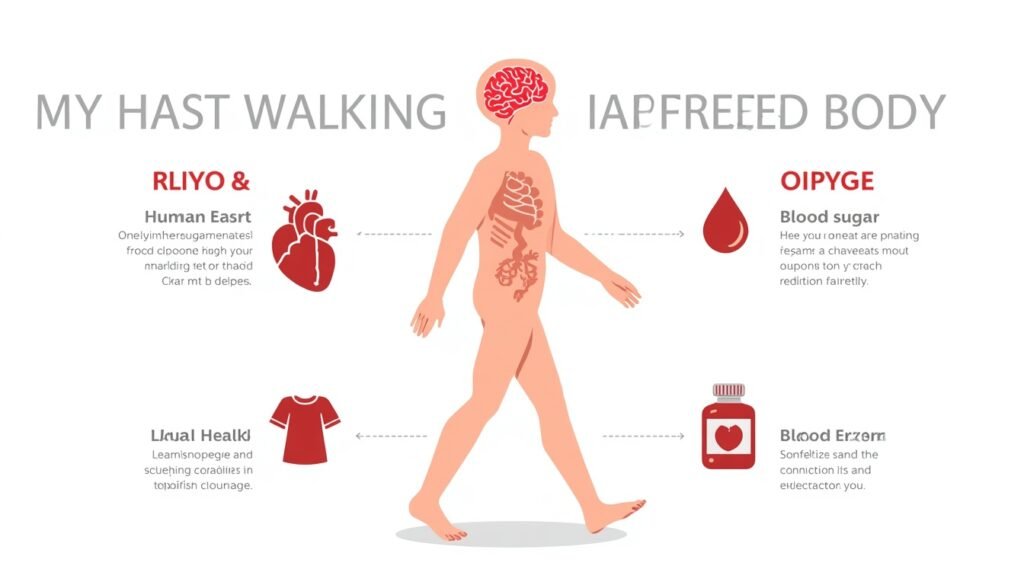
Walking activates large muscle groups in the legs, which increases circulation, helps regulate blood sugar by encouraging glucose uptake into muscles, and gently elevates heart rate in a way that strengthens the cardiovascular system over time. It also stimulates the release of endorphins and other neurochemicals associated with improved mood and reduced perception of stress.
To understand why movement helps with stress, see our article on how stress, anxiety, and depression affect your body.
Lifestyle Reasons
Beyond biology, walking fits into daily life in ways that more intense exercise often doesn’t. It requires no special equipment, can be done almost anywhere, and doesn’t demand a recovery day. Because it’s low-impact and low-stress, it’s far easier to maintain consistently — and consistency, more than intensity, is often what drives long-term health benefits.
Common Triggers
People often turn to walking – or stop walking – based on the following:
Poor diet leading to low energy and motivation
Stress that makes structured exercise feel like “one more task”
Sleep issues that drain motivation for movement
Dehydration, which can worsen fatigue and reduce desire to move
Inactivity becoming a self-reinforcing cycle that feels hard to break
Research & Science
Study 1
Finding: A study published in JAMA Internal Medicine followed older women using wearable trackers and found that those who walked more steps per day, even well below 10,000, had significantly lower mortality risk over the follow-up period compared to those who walked the least.
What It Means For You: You don’t need to hit an arbitrary step target to benefit — meaningful improvements appear to begin at much lower, more achievable levels of daily walking.
DOI: 10.1001/jamainternmed.2019.0899
PubMed Link: https://pubmed.ncbi.nlm.nih.gov/31141585/
Study 2
Finding: Research on post-meal walking found that short walks of around 10–15 minutes after eating significantly reduced blood sugar spikes compared to remaining seated, particularly in the hours following meals.
What It Means For You: A brief walk after dinner isn’t just pleasant — it may have a direct, measurable effect on how your body processes the meal you just ate.
DOI: 10.1016/j.diabres.2022.109810
PubMed Link: https://pubmed.ncbi.nlm.nih.gov/35351438/
Study 3
Finding: A systematic review and meta-analysis examining walking interventions for mental health found consistent reductions in depressive symptoms among adults who participated in regular walking programmes compared to control groups.
What It Means For You: If you’ve been hesitant to try walking for “mental health reasons”, the evidence suggests it’s one of the more well-supported, low-risk options available.
DOI: 10.1016/j.jad.2023.02.064
PubMed Link: https://pubmed.ncbi.nlm.nih.gov/36805060/
Expert Insight:
Expert Perspective: Walking is often underestimated because it doesn’t feel like “exercise” in the traditional sense. Yet from a physiological standpoint, regular brisk walking meets many of the thresholds associated with meaningful cardiovascular and metabolic benefit, making it one of the most evidence-supported, accessible interventions available to most adults.
Quick Solutions
If you want to start benefiting from walking right away, here’s where to begin:
Start absurdly small — a 5–10 minute walk counts, and starting small makes it easier to actually do it.
Walk after meals — even a short stroll after dinner can help with digestion and blood sugar regulation.
Use walking for transitions — walk during phone calls, after waking up, or before bed as a natural routine marker.
Prioritise outdoor walks when possible — natural light and fresh air add additional mood benefits.
Stay hydrated before and after walks, especially in warmer weather.
Treat it as stress relief, not just exercise – give yourself permission to walk without tracking pace or distance.
Be consistent over intense — a daily 15-minute walk often beats an occasional hour-long one for long-term benefit.
These small steps create momentum without requiring motivation you may not have yet.
If low energy makes it hard to start walking, our guide on natural weight loss and steady energy offers small changes that pair well with this routine.
Case Study
The following examples are fictional, educational illustrations and do not represent real individuals.
Example 1 — The Desk Worker: A 38-year-old office employee began taking three 10-minute walking breaks during her workday. Over several weeks, she noticed reduced afternoon fatigue and fewer tension headaches.
Example 2 — The New Parent: A sleep-deprived new father started pushing the stroller around the block each morning. While exhausted, he found these walks gave him a small window of mental clarity before the day’s demands took over.
Example 3 — The Retiree: A 67-year-old retiree, advised by his doctor to increase activity gradually after a sedentary period, began with five-minute walks around his garden. Over a few months, this grew into longer neighbourhood walks, which he credited with improved mood and better sleep.
Example 4 — The Student: A university student dealing with exam stress began walking between study sessions instead of scrolling on her phone. She reported feeling less mentally “stuck” and more able to return to studying with focus.
Individual results vary.

Simple Framework
Step
Action
Ask Yourself
1
Identify the Issue
Is the problem real? Am I genuinely too sedentary?
2
Fix Daily Habits
What’s one small walk I can realistically add today?
3
Monitor Progress
Am I feeling any different after a few weeks of walking?
This framework keeps walking simple and sustainable. First, honestly assess your current activity level without judgement. Then, choose one small, specific walking habit — not an overwhelming plan — and build from there. Finally, pay attention to subtle changes in energy, mood, or sleep rather than expecting dramatic transformation overnight.
Thinking Model
Question 1: Why is this happening?
If you’ve been feeling sluggish, foggy, or low in mood, ask whether prolonged sitting and inactivity could be contributing factors. Often, the body’s signals of fatigue are not a sign you need more rest but a sign you need more movement.
Question 2: What am I missing?
Many people focus on intense workouts while overlooking the cumulative effect of daily movement. Ask yourself how much of your day is spent sitting and whether small walking breaks could be woven into existing routines – commuting, breaks, or after meals.
Question 3: What should I change first?
Rather than overhauling your entire routine, identify the easiest walking opportunity already available to you — perhaps a short walk after dinner or during a work break — and start there before adding anything else.
Original Insight
Here’s something most fitness advice won’t tell you: walking’s greatest strength isn’t its intensity — it’s its invisibility. Because walking doesn’t feel like a “workout”, it slips under the radar of the excuses, resistance, and decision fatigue that derail more demanding routines. You don’t need willpower to walk to the mailbox, but that same short walk, repeated daily, can quietly become one of the most consistent health habits in your life.
The memorable takeaway: the best exercise isn’t always the most effective one — it’s the one you’ll actually do, every day, without a fight. Walking wins, not by being impressive, but by being possible, again and again.
Featured Snippet
Yes, walking can meaningfully improve heart health, mood, and blood sugar regulation, even at low intensities and short durations. Research links regular walking to reduced cardiovascular risk, lower depressive symptoms, and improved post-meal blood sugar, making it one of the most accessible and well-supported forms of physical activity.
Benefit
Typical Walking-Related Effect
Heart Health
Lower cardiovascular risk with regular walking
Mood
Reduced symptoms of stress and depression
Blood Sugar
Lower post-meal glucose spikes
Sleep
Often improved with consistent daily movement
Cognitive Function
May support focus and mental clarity
Practical Strategies
Strategy 1 — Anchor Walks to Existing Habits
Rather than creating an entirely new time slot, attach walking to something you already do — like a short walk immediately after breakfast or right before checking emails. One person found that walking for ten minutes right after their morning coffee became automatic within a couple of weeks, simply because it was linked to an existing routine.
Strategy 2 — Use the “Two-Minute Rule” to Start
On days when motivation is low, commit to just two minutes of walking — often, starting is the hardest part, and two minutes frequently turns into ten or fifteen once you’re moving. Someone who felt too tired most evenings found that telling themselves “just to the corner and back” usually led to a full 15-minute walk anyway.
Strategy 3 — Walk After Meals, Especially Dinner
A short walk after eating can support digestion and blood sugar regulation. One individual managing mild blood sugar concerns began a consistent 10-minute walk after dinner and noticed steadier energy levels in the evenings.
Pairing post-meal walks with the right foods can amplify benefits — explore our guide on why you lose energy after eating and simple fixes.
Strategy 4 — Make It Sensory, Not Just Physical
Notice the temperature, sounds, and sights around you during your walk. This shifts walking from a “task to complete” into a small sensory reset. Someone dealing with high work stress described their evening walk as the only time of day their mind felt quiet.
Strategy 5 — Walk With Purpose When Possible
Combine walking with errands, phone calls, or commuting when feasible. A person who switched from driving to walking for short errands found they accumulated significant extra movement without scheduling “exercise time” at all.
Strategy 6 — Track Consistency, Not Performance
Instead of tracking pace or distance, simply mark whether you walked at all each day. This shifts the focus from performance to presence. One person used a simple calendar with checkmarks and found the visual streak itself became motivating.
Strategy 7 — Allow Imperfect Days
Some days will be missed, shortened, or rushed — and that’s fine. A person who walked four days in a typical week, rather than aiming for seven, still reported meaningful improvements in mood and energy over several months, simply because the habit persisted overall.
Common Mistakes
Mistake
Why It Fails
Fix
Starting with overly ambitious goals
Large time commitments feel overwhelming and are easy to abandon
Start with 5–10 minutes and build gradually
Treating walking only as “not real exercise”
This mindset reduces motivation to prioritize it
Recognize walking as a legitimate, evidence-based health habit
Skipping walks entirely on bad days
All-or-nothing thinking breaks consistency
Use the two-minute rule to maintain the habit, even briefly
Focusing only on step counts
Numbers can feel discouraging if targets aren’t met
Focus on how you feel, not just step totals
Walking only indoors on a treadmill
Misses additional mood benefits from outdoor environments
Walk outside when weather and safety allow
Ignoring footwear comfort
Discomfort discourages consistency
Wear supportive, comfortable shoes suited for walking
When To See a Doctor
While walking is generally safe for most people, certain situations call for medical guidance before increasing activity. If you experience chest pain, significant shortness of breath, dizziness, or joint pain that worsens with walking, it’s important to speak with a healthcare provider before continuing or increasing your walking routine.
Additionally, if fatigue, low mood, or other symptoms persist despite consistent walking and other healthy habits, or if they’re significantly affecting your daily life, a doctor can help identify underlying causes. The reassuring news is that for most people, walking is one of the safest forms of activity available, and any concerns can typically be addressed with simple guidance from a healthcare professional.
If fatigue persists despite regular walking, our guide on why you wake up tired after 8 hours of sleep may help identify underlying factors.
Key Takeaways
Walking is a legitimate, evidence-supported health intervention, not just “light” exercise.
Benefits begin at low step counts — you don’t need to hit 10,000 steps to see improvements.
Short walks after meals can help regulate blood sugar.
Regular walking is linked to reduced symptoms of stress and depression.
Consistency matters more than intensity or duration.
Anchoring walks to existing habits makes them easier to maintain.
Imperfect routines still produce meaningful long-term benefits.
FAQs
1. How many minutes of walking per day are beneficial?
Research suggests benefits begin with as little as 10–15 minutes of walking per day, with the World Health Organization recommending at least 150 minutes of moderate activity weekly, which brisk walking can fulfil.
2. Is walking enough exercise on its own?
For many people, especially beginners or those returning to activity, walking alone can provide meaningful cardiovascular, metabolic, and mental health benefits, though combining it with strength training may offer additional advantages.
3. Does walking speed matter?
Brisk walking — a pace where you can talk but not sing comfortably — tends to provide greater cardiovascular benefit than very slow strolling, though even gentle walking offers value, especially for beginners.
4. Can walking help with anxiety and stress?
Yes, studies have found that regular walking is associated with reduced symptoms of stress and anxiety, likely due to a combination of physical activity, exposure to outdoor environments, and reduced screen time.
5. Is it better to walk in the morning or evening?
Both have benefits — morning walks may help regulate circadian rhythm and energy, while evening walks, especially after dinner, may support digestion and blood sugar regulation; the best time is one you’ll do consistently.
6. Can walking help with weight management?
Walking contributes to overall daily energy expenditure and, when combined with balanced nutrition, can support weight management goals, though results vary based on individual factors and overall lifestyle.
7. Is walking safe for older adults?
Walking is generally considered one of the safest forms of exercise for older adults, though those with existing health conditions should consult a doctor before significantly increasing activity levels.
30-Day Action Plan
Week 1: Getting Started
Choose one specific time of day and commit to a 5–10 minute walk, even if it feels too short to matter. Focus only on consistency, not distance or speed.
Week 2: Building Momentum
Gradually extend walks to 10–15 minutes, and try adding a second short walk on days when energy allows, such as after lunch or dinner.
Week 3: Consistency
Aim to walk most days of the week, allowing flexibility for shorter walks on busier or lower-energy days. Begin noticing changes in mood, sleep, or energy levels.
Week 4: Optimization
Reflect on which times of day and routes felt most enjoyable or sustainable. Consider adding variety, such as different routes or walking with a friend, while keeping the core habit consistent for the following month.
To help maintain your walking streak, take a look at our guide on simple daily habits for productivity (without stress) — small changes that compound.
Final Thought
Some days, your walk will be a peaceful stroll through golden light, and other days it will be a rushed, half-hearted loop around the block in the rain — and both versions count. Walking doesn’t ask for your best self; it simply asks for your presence, however small that presence might be on any given day. Over time, those imperfect, ordinary walks quietly add up into something that feels a lot like progress, even if no single walk ever felt like a big deal.
Conclusion
My honest advice is simple: do not wait to feel motivated. Just walk for five minutes after your next meal. Do it again tomorrow. That is how it starts — quiet, ordinary, and easy to ignore. But over months, those small walks add up to something that actually changes how you feel.
Walking may not generate headlines, intense soreness, or dramatic before-and-after photos, but its quiet, consistent presence in daily life is exactly what makes it so powerful. Backed by research on heart health, mental well-being, and metabolic regulation, walking offers a rare combination of accessibility and evidence that few other habits can match. If you’ve been waiting for the “right” way to start improving your health, this might be it: open the door, and take a few steps. The rest can follow at its own pace. benefits of walking
References
World Health Organization. Physical Activity – Fact Sheet. WHO, 2022. Available at: https://www.who.int/news-room/fact-sheets/detail/physical-activity
Lee IM, Shiroma EJ, Kamada M, et al. Association of Step Volume and Intensity With All-Cause Mortality in Older Women. JAMA Internal Medicine. 2019. DOI: 10.1001/jamainternmed.2019.0899. PubMed: https://pubmed.ncbi.nlm.nih.gov/31141585/
Buffey AJ, Herring MP, Langley CK, et al. The Acute Effects of Interrupting Prolonged Sitting Time with Walking on Glycaemic Control. Diabetes Research and Clinical Practice. 2022. DOI: 10.1016/j.diabres.2022.109810. PubMed: https://pubmed.ncbi.nlm.nih.gov/35351438/
Heissel A, Heinen D, Brokmeier LL, et al. Exercise as Medicine for Depressive Symptoms? A Systematic Review and Meta-Analysis. Journal of Affective Disorders. 2023. DOI: 10.1016/j.jad.2023.02.064. PubMed: https://pubmed.ncbi.nlm.nih.gov/36805060/
Note: All references above should be independently re-verified for accuracy and current relevance before publication, as citation databases are periodically updated.
Disclaimer
This article is for educational purposes only and does not replace professional medical advice. Always consult a qualified healthcare professional before making significant changes to your physical activity, especially if you have existing health conditions. Individual results vary.
About the Author
HealthFitnessBloom Editorial Team
HealthFitnessBloom is dedicated to providing science-backed health, fitness, and wellness information to help readers live healthier lives. Our editorial team researches, writes, and reviews content to ensure accuracy, clarity, and practical value.