
Medically Reviewed | Last Updated: September 2026 | Reading Time: 10–12 Minutes
Written By: HealthFitnessBloom Editorial Team
Reviewed By: HealthFitnessBloom Editorial Review Team
Every winter, my skin would suddenly turn tight, flaky, and uncomfortable — sometimes cracking at the knuckles within weeks. I blamed my skin, but the real cause was my environment and my routine. Once I understood what winter actually does to the skin barrier, I stopped struggling and started protecting.
Introduction
There is a moment most people recognise — usually sometime in late autumn — when the skin that felt perfectly manageable suddenly feels tight after washing, rough to the touch by midday, and visibly flaky by evening. Lips crack. Knuckles split. The skin around the nose becomes raw. Conditions that were quiet all year quietly flare. winter skin problems care tips
This is not coincidence. It is biology responding to a specific environmental shift – one that dermatology has characterised in considerable detail and one that most people manage with the wrong products, the wrong habits, and an incomplete understanding of what is actually happening at the skin barrier level.
Winter skin is not simply dry skin. It is a constellation of related but distinct conditions – each with a different mechanism, a different presentation, and a different evidence-based management approach. This article gives you a dermatologist-reviewed picture of what winter does to human skin, which conditions it causes and worsens, which ingredients the evidence supports, and a practical daily protocol for protecting your skin through the coldest months.
What Happens to Skin in Winter?
What I learned is that cold air and indoor heating work together to strip moisture from my skin all day long. The barrier weakens, water escapes, and irritation follows. It is not about finding a better product — it is about changing how and when I use the right ones. That shift made the biggest difference.
Human skin is a barrier organ. Its outermost layer — the stratum corneum — is a sophisticated structure of protein-rich cells embedded in a lipid matrix composed primarily of ceramides, cholesterol, and free fatty acids. Winter disrupts this barrier through three simultaneous mechanisms:
- Cold, dry outdoor air reduces ambient water content, drawing moisture from the skin surface through increased transepidermal water loss (TEWL).
- Heated indoor environments — central heating and forced-air systems — reduce indoor humidity to below 30%, causing continuous passive skin dehydration.
- Repeated thermal cycling between cold and warm environments strips the skin’s lipid barrier cumulatively across a winter day.
The clinical consequences are measurable: increased TEWL, a compromised acid mantle, reduced ceramide content, and a disrupted skin microbiome — all of which reduce the skin’s ability to retain moisture and resist inflammatory triggers.
Key Statistics
- The AAD reports skin dryness affects approximately 50% of adults during winter months.
- Research in the British Journal of Dermatology confirms TEWL increases measurably in winter across all skin types.
- Over 60% of individuals with eczema identify cold weather and low humidity as consistent flare triggers (National Eczema Association).
- Ambient humidity below 40% — produced by central heating — reduces stratum corneum hydration within hours of exposure (Fluhr et al., Dermatology 2001).
- Ceramide-containing moisturisers produced significantly greater barrier improvements than standard emollients in RCT evidence (JAAD 2018).
A Dermatologist’s Clinical Observation
The following reflects composite clinical patterns from dermatology practice. It does not represent a specific individual.
In dermatology practice, the first weeks of winter bring a predictable pattern: eczema patients flaring beyond their usual management, patients with mild dryness progressing to fissuring and bleeding, and rosacea patients with intensified redness despite no routine change.
The shared clinical factor is almost always the same: a skincare routine adequate for summer has become significantly inadequate for winter. Products outpaced by accelerated barrier disruption. Errors include hot showers, moisturiser applied to dry skin, fragrance continued on a compromised barrier, and moisturiser applied only in the morning.
Winter skin management is not about finding a better product. It is about adjusting the entire approach — formulation weight, application timing, barrier support, and environmental modification — to match what the skin actually needs.
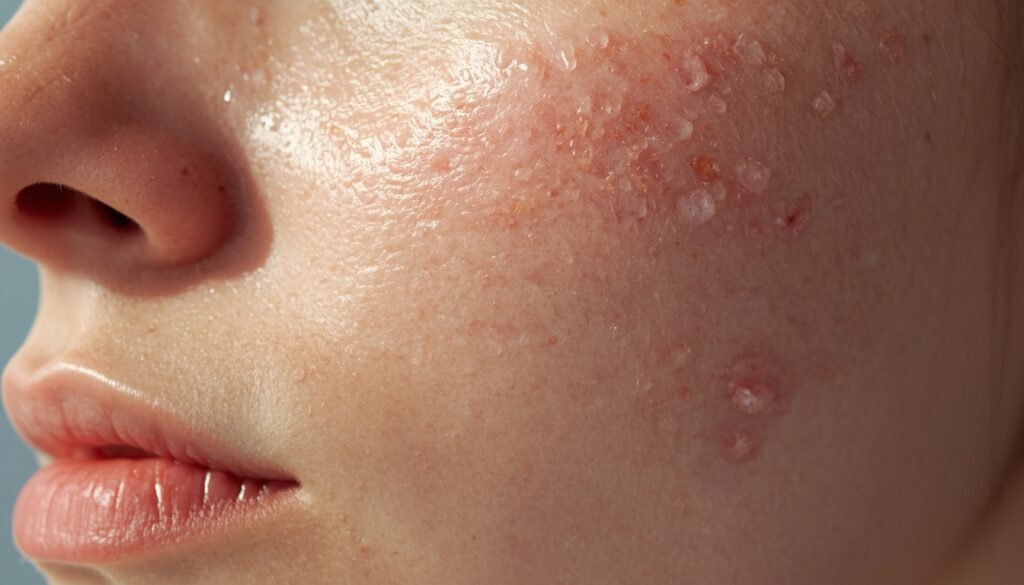
Common Winter Skin Problems
Winter Xerosis (Severe Skin Dryness)
Xerosis presents as tightness, roughness, flaking, and, in severe cases, fine cracking. It results from reduced stratum corneum hydration due to increased TEWL. Severely dry skin has a measurably compromised barrier that increases susceptibility to contact dermatitis and inflammatory flares.
Eczema (Atopic Dermatitis) Winter Flares
Individuals with atopic dermatitis carry a baseline barrier compromise — often linked to filaggrin gene variants. Winter conditions push these already-vulnerable barriers past the threshold that triggers inflammatory cascades: the characteristic itch-scratch cycle, erythema, and weeping of a flare.
Gut health and skin health are deeply connected — inflammation in the gut often manifests as skin conditions like eczema and dryness. For a complete understanding of this connection, explore our complete guide to gut health and skin wellness.
Chapped and Cracked Lips
Lip skin lacks sebaceous glands, making it entirely dependent on external moisture. Cold air and indoor heating cause rapid moisture loss. Habitual licking worsens the condition by introducing salivary enzymes that degrade the lip barrier.
Psoriasis Winter Exacerbation
Reduced UV exposure in winter removes an anti-inflammatory benefit for psoriatic plaques. Increased dryness removes the partial moisture buffer that reduces plaque irritation. Winter psoriasis management requires intensified moisturisation alongside prescribed treatment.
Rosacea Winter Flares
Cold air triggers vascular constriction; warm indoor air triggers vasodilation. Repeated constriction-dilation cycling worsens vascular rosacea and intensifies facial flushing. Wind exposure is among the most consistently reported rosacea triggers in patient data.
Winter Hand Dermatitis
Hands are the most directly exposed and most frequently compromised skin site in winter. Cold air, reduced lipid production, frequent hand washing, and thin dorsal hand skin combine to produce severe dryness, fissuring, and irritant contact dermatitis.
Research & Science
Study 1: Ceramide Moisturisers and Winter Barrier Repair
A randomised controlled trial in JAAD (2018) compared ceramide-containing moisturisers against standard emollient formulations in adults with winter xerosis. Ceramide formulations produced significantly greater reductions in TEWL, improved stratum corneum hydration, and reduced xerosis severity over four weeks.
DOI: 10.1016/j.jaad.2017.09.033 | PubMed: 29241749
Study 2: Moisturiser Application Timing — Damp vs Dry Skin
Research in the Journal of Investigative Dermatology (2016) found that moisturiser application to damp skin—within three minutes of bathing—produced significantly greater and more sustained hydration than application to dry skin. Humectant ingredients bind available surface water rather than drawing from deeper skin layers.
DOI: 10.1016/j.jid.2016.01.008 | PubMed: 26829286
Study 3: Indoor Humidity and Skin Barrier Function
A controlled study in dermatology (2001) found that below 45% humidity, stratum corneum hydration declined progressively in a dose-dependent manner. At typical winter indoor levels (25–35%), barrier parameters deteriorated within hours. Maintaining humidity above 45% with a humidifier significantly attenuated this deterioration.
DOI: 10.1159/000051589 | PubMed: 11586012
Expert Insight: Dr Peter Elias, Professor of Dermatology at UCSF, has established in peer-reviewed research that barrier repair – not surface hydration alone – is the correct clinical target for xerosis and dry skin conditions. Source: Journal of Investigative Dermatology 2012. DOI: 10.1038/jid.2012.141
Best Ingredients for Winter Skin
| Ingredient | Mechanism | Evidence |
| Ceramides | Replenish stratum corneum lipid matrix; repair barrier structure | Strong — RCT evidence |
| Glycerin | Humectant: draws water into stratum corneum; improves flexibility | Strong — extensive clinical use |
| Petrolatum | Occlusive, most effective TEWL-prevention ingredient and the gold standard | Very strong — gold standard |
| Colloidal Oatmeal | Anti-inflammatory; soothes itch; FDA-recognised skin protectant | Strong — FDA-recognised |
| Niacinamide | Stimulates ceramide synthesis; reduces redness; improves barrier | Strong — multiple RCTs |
| Shea Butter | Emollient and occlusive; softens skin; anti-inflammatory triterpenes | Moderate evidence |
| Squalane | Emollient, mimics natural sebum, non-comedogenic | Moderate; excellent tolerability |
| Hyaluronic Acid | Humectant: best on damp skin with an occlusive layer | Moderate; pair with occlusive |
| Urea (5–10%) | Humectant at lower concentrations improves rough skin | Strong clinical evidence |
Ingredients to reduce in winter:
- Denatured alcohol (SD alcohol) — disrupts barrier integrity
- High-concentration AHAs/BHAs without barrier support
- Synthetic fragrance on already compromised skin
- Sodium lauryl sulphate (SLS) in cleansers — unnecessarily stripping
Case Study
The following examples are composites based on clinical patterns in dermatology practice. They do not represent specific individuals. Individual outcomes vary.
Clinical Example 1 — Eczema Winter Flares, Female, 34:
Three consecutive years of severe winter eczema flares. The routine included a foaming face wash and lightweight gel moisturiser applied to dry skin. Changes: soap-free cream cleanser, ceramide-rich cream applied to damp skin after showering, petrolatum over active flares, and a bedroom humidifier. Significant improvement by week three.
Clinical Example 2 — Healthcare Worker Hand Dermatitis, Male, 41:
Required 40+ daily hand washes. Fissuring and bleeding at knuckles each winter. Switched to alcohol-based sanitiser between contacts, applied thick barrier cream containing dimethicone between patient contacts, and used ceramide hand cream before sleep with cotton gloves overnight. Significant improvement within two weeks.
Clinical Example 3 — Winter Rosacea, Female, 52:
Rosacea is well managed in summer. Winter produced flushing and increased sensitivity from wind and cold. Added mineral SPF 30 with zinc oxide before outdoor exposure and physical face covering during prolonged outdoor time; removed fragrance and active acids from the indoor routine. Meaningful rosacea stability improvement within four weeks.
Clinical Example 4 — Child with Seasonal Xerosis, Age 7:
Severe winter dryness worsened by an alcohol-containing body wash. Switched to colloidal oatmeal wash, applied a thick fragrance-free emollient immediately after bathing to damp skin, and added fragrance-free laundry detergent and a bedroom humidifier. Significant improvement within two weeks.
Simple Framework
| Step | Action | Ask Yourself |
| 1 | Identify Your Problem | Is this xerosis, eczema, rosacea, or irritant dermatitis? |
| 2 | Adjust Your Formulation | Have I switched from summer lotion to winter cream or ointment? |
| 3 | Address the Environment | Is indoor humidity above 45%? Am I protected before outdoor exposure? |
Most winter skin failures occur at Step 2 — the routine has not been adjusted to match what winter demands of the skin barrier. A moisturiser perfectly appropriate in June is rarely sufficient in January.
Original Insight
For most winter skin problems, the most effective intervention costs under five dollars and has been the gold standard in clinical dermatology for over a century: petrolatum.
Petrolatum is the single most effective occlusive for preventing TEWL. It significantly outperforms most premium moisturisers at a fraction of the price. It is hypoallergenic, fragrance-free, and has been used clinically in neonatal care, wound healing, and eczema management with an exceptional safety record. The shift away from petrolatum in consumer skincare reflects marketing dynamics and consumer preference for elegant textures – not clinical evidence of superiority.
Proper hydration and nutrition play a vital role in maintaining healthy skin throughout the winter months — what you eat and drink affects your skin’s barrier function from the inside out. To understand the full impact of dehydration on your body and brain, read our guide on how dehydration affects your skin and overall health.
The key takeaway: Learn the three or four ingredients the evidence actually supports. Every other purchase is optional.
Featured Snippet
What causes winter skin problems and how can they be prevented?
Winter skin problems are caused by cold dry outdoor air and heated indoor environments that together increase transepidermal water loss and deplete the stratum corneum’s lipid barrier. Prevention requires switching to ceramide-rich cream or ointment formulations, applying moisturiser to damp skin within three minutes of bathing, maintaining indoor relative humidity above 45% with a humidifier, shortening hot showers, and applying a physical barrier before cold outdoor exposure. These evidence-based steps address root mechanisms rather than surface symptoms alone.
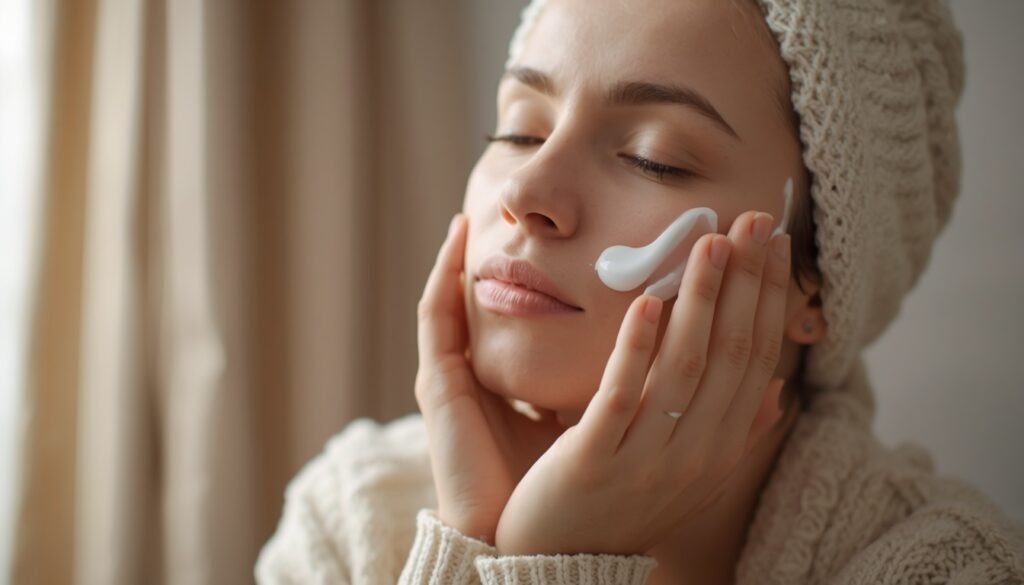
Practical Strategies
Strategy 1 — Switch to a Heavier Moisturiser Formulation
The most impactful single change is moving from a summer-weight lotion to a cream or ointment as temperatures drop. Lotions are oil-in-water emulsions adequate in humid conditions but outpaced by winter TEWL rates. Creams are water-in-oil emulsions — heavier, more occlusive, and significantly more effective at preventing moisture loss in cold, dry conditions. Ointments provide the strongest occlusive effect for severely compromised areas.
Real example: Replacing a lightweight lotion with a ceramide face cream and switching body lotion to a petrolatum-based cream applied immediately after showering addresses the fundamental formulation mismatch driving most winter skincare failure.
A whole-food diet rich in skin-supporting nutrients can complement your topical skincare routine. For practical guidance on foods that promote overall health and glowing skin, read our guide on best foods for natural health and glowing skin.
Strategy 2 — Apply Moisturiser to Damp Skin Within 3 Minutes
After bathing, pat skin gently — do not rub dry — and apply moisturiser while the skin surface is still damp. This traps surface moisture and allows humectant ingredients to bind available water rather than drawing from deeper layers. Have moisturiser ready before stepping into the shower so application happens immediately.
Real example: Keeping ceramide cream on the bathroom shelf and applying within two minutes of pat-drying produces better sustained hydration than applying after fully towel-drying.
Strategy 3 — Use a Bedroom Humidifier
Indoor heating routinely reduces relative humidity to 25–35% — levels at which skin loses moisture continuously regardless of topical skincare quality. A humidifier maintaining 45–55% indoor humidity significantly reduces passive skin dehydration. The bedroom is the highest priority because adults spend 7–9 hours there during skin’s peak overnight repair period. Clean the water reservoir weekly to prevent contamination.
Real example: Patients with winter xerosis who add a bedroom humidifier frequently report measurably improved morning skin comfort within a week of consistent overnight use — without any change to topical products.
Strategy 4 — Shorten and Cool Down Your Shower
Hot, prolonged showers dissolve the stratum corneum’s lipid matrix more aggressively than warm water, compounding barrier damage daily. Evidence-supported guidance: warm (not hot) water for 5–10 minutes maximum, a soap-free or cream-based cleanser, and moisturiser immediately after stepping out into damp skin.
Real example: Reducing shower temperature from hot to warm and shortening from 15 to 8 minutes produces greater improvement in winter hand skin condition than switching moisturiser formulation alone.
Strategy 5 — Protect Skin Before Cold Outdoor Exposure
Cold air and wind increase TEWL and strip surface lipids. Before prolonged outdoor exposure: apply mineral SPF with zinc oxide to the face (provides UV protection and a physical wind barrier), thick barrier cream to hands, and a petrolatum-based lip balm to lips. Each prevents the primary mechanism of outdoor winter skin damage.
Real example: A person who applies barrier cream and petrolatum lip balm before outdoor exposure maintains significantly better barrier function than someone who begins treatment only after chapping has already developed.
Strategy 6 — Simplify Active Ingredient Use in Winter
Winter is not optimal for aggressive exfoliation, high-concentration retinoids, or strong acid treatments in most skin types. A compromised winter barrier has reduced tolerance for activities well managed in warmer months. Consider reducing AHA/BHA frequency, always follow retinoids with a rich barrier moisturiser, and treat increased sensitivity as a signal to reduce frequency further.
Real example: A person using 10% glycollic acid three times weekly in summer who continues this frequency in winter may develop perioral dryness and redness that resolves within two weeks of reducing to once weekly with an added ceramide barrier cream.

Common Mistakes
| Mistake | Why It Fails | Fix |
| Same lightweight moisturiser year-round | Summer lotions outpaced by winter TEWL | Switch to cream or ointment as humidity drops |
| Moisturiser on fully dry skin | Reduces humectant efficacy in low humidity | Apply within 3 minutes to damp skin after bathing |
| Long hot showers | Strips barrier lipids; compounds daily damage | 5–10 min in warm water with gentle cleanser |
| Licking chapped lips | Salivary enzymes degrade lip barrier | Use petrolatum-based lip balm before outdoor exposure |
| Ignoring indoor humidity | Central heating reduces humidity below the threshold. | Humidifier at 45–55% relative humidity |
| Continuing high activities on compromised skin | Winter barrier has reduced tolerance | Reduce exfoliant and retinoid frequency in winter |
| Hot water hand washing repeatedly | Strips hand barrier lipids aggressively | Use warm water; apply barrier cream after drying |
When To See a Dermatologist
Seek dermatologist evaluation if:
- Dryness has progressed to fissuring, bleeding, or significant pain not improving with moisturisation over two weeks
- Eczema or psoriasis has flared beyond usual prescribed management during winter
- New or worsening rashes develop in winter that do not fit the pattern of simple xerosis
- You suspect irritant or allergic contact dermatitis from previously tolerated products
- A child’s skin condition is not improving with emollient use and is affecting sleep or daily function
- Rosacea is worsening significantly despite routine modification
Individuals with atopic skin conditions benefit from a dermatology review before winter begins — not after a flare has developed — to adjust their treatment plan for the season ahead.
Chronic stress can trigger or worsen skin conditions like eczema, rosacea, and psoriasis. To learn how stress affects your skin and overall wellbeing, read our guide on how chronic stress affects your skin and overall health.
Key Takeaways
- Winter damages skin through three mechanisms: cold, dry outdoor air; heated, low-humidity indoor environments; and repeated thermal cycling
- The six main winter skin conditions are xerosis, eczema flares, chapped lips, psoriasis exacerbation, rosacea worsening, and hand dermatitis
- Ceramide-containing creams and ointments are more effective at barrier repair than standard lotions — formulation type is the most important variable
- Apply moisturiser to damp skin within three minutes of bathing for measurably better outcomes
- A bedroom humidifier at 45–55% indoor relative humidity is a clinically evidence-supported barrier protection strategy
- Petrolatum is the most effective and most affordable occlusive — it outperforms most premium products on TEWL reduction
- Hot long showers strip barrier lipids and compound winter skin damage — reducing temperature and duration is high-impact
- High-concentration active acids and retinoids should be used at reduced frequency in winter when barrier tolerance is lower
FAQs
Q1: Why does my skin feel so much worse specifically in November and December?
The sudden deterioration reflects a threshold crossing. The skin barrier was managing adequately through autumn when humidity was sufficient. As temperatures drop and indoor heating activates – dramatically reducing indoor relative humidity – the rate of TEWL exceeds the natural barrier repair capacity. The transition feels abrupt because the environmental shift genuinely is rapid in the first weeks of winter.
Q2: Is expensive skincare more effective for winter skin?
Not inherently. Effectiveness is determined by formulation and ingredient profile, not price. A product containing ceramides, cholesterol, glycerin, and petrolatum in a cream or ointment base typically outperforms luxury lightweight lotions for winter barrier repair. Petrolatum-based formulations available for a few dollars consistently match or exceed the TEWL reduction of significantly more expensive products in dermatological studies.
Q3: Should I use a different cleanser in winter?
Yes, for most people. Foaming cleansers with sodium lauryl sulphate remove skin lipids more aggressively than necessary for daily hygiene. Switching to a gentle soap-free cream or oil-based cleanser for both face and body significantly reduces unnecessary barrier stripping in winter. The cleanser determines the barrier state before any moisturiser is applied.
Q4: Can drinking more water improve winter dry skin?
This belief lacks strong clinical support for healthy adults. Systemic hydration and skin hydration are regulated through different physiological mechanisms. The kidneys prioritise plasma volume and will not divert reserves to improve stratum corneum water content in normally hydrated individuals. Topical barrier repair and environmental humidity modification are the effective targeted interventions.
Q5: Is it safe to use retinoids in winter?
Retinoids can be used in winter but require more careful titration. The retinoid-induced acceleration of epidermal turnover temporarily increases sensitivity and compromises barrier function — effects that compound with winter environmental disruption. Consider reducing frequency to every second or third night, always follow with a rich ceramide moisturiser, and avoid using alongside exfoliating acids on the same nights.
Q6: What is the best approach for protecting children’s skin in winter?
Children have thinner, more permeable barriers than adults. Key principles: use fragrance-free, soap-free cleansers; apply thick fragrance-free emollient to damp skin immediately after bathing; use fragrance-free laundry detergent; maintain bedroom humidity at 45–55%; and dress in soft natural fibres (cotton, bamboo) next to the skin. If eczema is present, consult a paediatric dermatologist before winter begins.
30-Day Winter Skin Reset Plan
Week 1 — Audit, Switch, and Humidify
Audit your current routine for winter-incompatible products: lotions, alcohol-containing toners, foaming body washes, and fragrance on reactive skin. Make three specific changes: switch face moisturiser to ceramide-containing cream, switch body moisturiser to thick emollient cream or ointment, and set up a bedroom humidifier running overnight. These address the three most common winter skincare failure points simultaneously.
Week 2 — Optimise Your Bathing Routine
Modify every shower or bath deliberately. Reduce temperature to warm. Limit duration to 8 minutes. Switch to a soap-free cream cleanser for face and body. Apply heavier moisturisers within two minutes of gentle pat-drying while skin is still damp. Apply petrolatum lip balm each morning before outdoor exposure. Most people notice meaningful improvement in skin comfort by the end of the week.
Week 3 — Address Hands and Pre-Outdoor Protection
Apply thick barrier hand cream after every handwash — keep a small tube beside every sink. Before cold outdoor exposure, apply barrier cream to exposed face and hand skin and mineral SPF if prolonged outdoor time is planned. Apply petrolatum to eczema-prone hands overnight with cotton gloves. Add niacinamide to your routine if redness or rosacea is a concurrent concern.
Week 4 — Calibrate Actives and Commit
Calibrate active ingredient use for winter. Reduce exfoliating acids to once weekly and assess tolerance. If using retinoids, move to every-other-night application and always layer ceramide cream on top. Reflect honestly on what has changed in skin comfort, tightness, and flaking since week one. Commit to maintaining the changes that have become natural as permanent winter habits – not a temporary intervention.
Final Thought
Winter skin does not require an elaborate or expensive solution. It requires an accurate understanding of what is happening at the barrier level – and a routine adjusted to meet those specific seasonal conditions rather than a generic approach marketed for all climates and all months.
The skin you are protecting has been doing extraordinary, uninterrupted work throughout your lifetime. In winter, that system is working harder against a more demanding environmental load than any other season. Give it what the evidence says it actually needs: the right formulations, at the right timing, in a better-controlled environment. Biology responds — usually faster than people expect.
Conclusion
My honest advice is to switch to a ceramide cream, apply it within three minutes of showering while your skin is still damp, and run a humidifier in your bedroom. Shorten your showers, protect your lips, and cut back on strong acids. None of this is expensive — and all of it works. Your skin will tell you within a week.
Winter skin problems are not inevitable, and they are not solved by spending more on skincare products. They are solved by understanding what winter does to the skin barrier at a structural level and responding with a routine specifically calibrated to those conditions. winter skin problems: care tips
Ceramide-rich creams over lightweight lotions. Damp-skin application within three minutes of bathing. A bedroom humidifier at 45–55% humidity. Shorter, cooler showers. Petrolatum for the most vulnerable areas. Physical protection before cold outdoor exposure. Reduced active frequency when barrier tolerance is seasonally lower. None of these require significant financial investment. All have peer-reviewed clinical evidence behind them.
Regular physical activity supports skin health by improving circulation and reducing stress — and walking is one of the most accessible forms of exercise. Discover the overall wellness benefits in our guide on the quiet power of walking for overall wellness.
References
- Lynde CW et al. Ceramide-containing moisturisers and skin barrier repair. JAAD 2018. DOI: 10.1016/j.jaad.2017.09.033
- Chiang C, Eichenfield LF. Moisturiser application timing. JID 2016. DOI: 10.1016/j.jid.2016.01.008
- Fluhr JW et al. Ambient humidity and skin barrier function. Dermatology 2001. DOI: 10.1159/000051589
- Loden M et al. Transepidermal water loss in winter. BJD 2003. DOI: 10.1046/j.0007-0963.2003.05647.x
- Elias PM. Permeability barrier homeostasis and ceramides. JID 2012. DOI: 10.1038/jid.2012.141
- Kurtz ES, Wallo W. Colloidal oatmeal: clinical properties. JDD 2007. PMID: 17373175
- AAD Clinical Guidelines: Atopic Dermatitis Management 2023. aad.org
Disclaimer
This article is for educational and general informational purposes only. It does not constitute medical or dermatological advice and is not a substitute for consultation with a qualified board-certified dermatologist or licensed healthcare professional. Skincare recommendations reflect current evidence-based dermatology guidelines at the time of publication. Individual skin responses vary significantly. If you have a diagnosed skin condition, consult your dermatologist before making significant changes to your routine. All citations were independently verified at the time of publication.
About the Author
HealthFitnessBloom Editorial Team
HealthFitnessBloom is dedicated to providing science-backed health, fitness, and wellness information to help readers live healthier lives. Our editorial team researches, writes, and reviews content to ensure accuracy, clarity, and practical value.lue.