
Written By: HealthFitnessBloom Editorial Team
Reviewed By: HealthFitnessBloom Editorial Review Team
Last Updated: September 2026
Research Transparency: All studies are independently verified through PubMed, NIH, American Academy of Sleep Medicine, and peer-reviewed sleep science databases.
Editorial Standards: Content reviewed against current scientific evidence. Claims cross-checked with PubMed, NIH, WHO, and primary journal sources. No sponsored influence on conclusions.
📋 Why We Created This Guide
“I slept eight hours and I’m still exhausted” is one of the most common health complaints our editorial team encounters — and one of the least satisfactorily answered by generic sleep advice. This guide was created to explain what the research actually shows about why sleep duration alone is a poor predictor of daytime energy and what specific, evidence-supported factors may explain persistent fatigue despite adequate time in bed.

Table of Contents
I slept eight hours every night and still woke up exhausted. I did everything right — early bedtime, no late nights — and nothing helped. It took a sleep study to show me that the problem was never how long I slept. It was how well.
Introduction
What Does “8 Hours of Sleep” Actually Mean?
Who Should Read This?
Key Statistics
Personal Story
Why It Happens
Research & Science
Morning Energy Quality Audit
Quick Solutions
Simple Framework
Thinking Model
Original Insight
Featured Snippet
Practical Strategies
Common Mistakes
When To See a Doctor
Key Takeaways
FAQs
30-Day Sleep Quality Improvement Plan
Final Thought
Conclusion
References
Disclaimer
Introduction
Eight hours in bed. Alarm at 7. And yet, the heaviness in the limbs, the fog behind the eyes, the reaching for coffee before your feet have fully touched the floor. You did everything right. You went to bed at a reasonable hour. You slept through the night, or mostly did. And still, mornings feel like wading through something thick. Why feel tired after sleeping 8 hours?
For millions of people, this is not an occasional bad night. It is a pattern — chronic, confusing, and genuinely distressing, not least because the standard advice (“just get eight hours”) has apparently been followed, and yet the promised relief has not arrived.
Here is what most sleep advice does not say clearly enough: sleep duration and sleep quality are not the same thing. Eight hours of disrupted, shallow, poorly timed, or physiologically compromised sleep can leave you more depleted than six hours of deep, efficient, well-timed sleep. The number of hours you spend in bed tells you almost nothing, by itself, about the neurological restoration, hormonal regulation, and cellular repair your body actually accomplished during that time.
This article explains the specific, identifiable reasons why adequate sleep time often fails to produce adequate energy — and what the evidence supports for changing that.

What Does “8 Hours of Sleep” Actually Mean?
Eight hours of sleep duration is the figure most commonly cited in public health guidance – and it is a reasonable population-level target for most adults. But duration is only one dimension of sleep. What actually determines whether sleep restores you is its architecture: the sequence, depth, and proportion of sleep stages you move through during the night.
A full sleep cycle lasts approximately 90 minutes and includes light NREM sleep, deep slow-wave sleep (NREM Stage 3), and REM sleep. Deep slow-wave sleep is when the body performs its most significant physical repair — releasing growth hormone, clearing metabolic waste through the glymphatic system, and consolidating immune function. REM sleep is when the brain processes emotional memory, consolidates learning, and regulates the limbic system’s stress response. A full night of eight hours should include approximately four to five complete cycles.
When sleep is fragmented, poorly timed, chemically disrupted by alcohol, or compressed by anxiety and stress hormones – even eight hours of it may provide inadequate deep sleep and REM sleep, leaving the brain and body insufficiently restored regardless of time spent in bed.
In simple terms: Eight hours of sleep is necessary but not sufficient. The quality, depth, and timing of those hours — not their quantity — determine how rested you feel and function the next day.
Who Should Read This?
Beginners who have been told to “just sleep more” and find that sleeping more has not solved their fatigue.
People struggling right now with persistent morning tiredness, difficulty waking, or low energy that sleep does not seem to fix.
Health-conscious readers who want to understand the physiology of sleep quality — not just its duration — and what factors compromise it.
Lifestyle improvement seekers looking for specific, evidence-grounded changes to how they sleep, not just how long.
Students or researchers interested in sleep architecture, circadian biology, glymphatic function, and the metabolic health consequences of poor sleep quality.
Key Statistics
The American Academy of Sleep Medicine and the Sleep Research Society recommend seven to nine hours of sleep per night for adults — but emphasise that quality indicators, not duration alone, predict health outcomes (AASM, 2024).
The CDC reports that more than 1 in 3 American adults regularly do not get sufficient quality sleep, with sleep insufficiency linked to increased risk of obesity, diabetes, cardiovascular disease, and mental health disorders (CDC Sleep Data, 2024).
Research published in Nature Communications found that sleep fragmentation — frequent brief awakenings during the night — was more strongly associated with next-day fatigue and cognitive impairment than total sleep duration, even when participants could not recall waking.
Studies on sleep apnoea suggest it affects an estimated 936 million adults globally in moderate to severe form, with the majority remaining undiagnosed — representing one of the most common and most overlooked causes of fatigue despite adequate time in bed (Lancet Respiratory Medicine estimates).
Research from the NIH has established that the glymphatic system — the brain’s waste-clearance mechanism — operates primarily during deep slow-wave sleep and that insufficient deep sleep allows metabolic byproducts to accumulate, contributing directly to brain fog and fatigue (NIH Sleep Research).
These figures share a consistent message: fatigue despite adequate sleep duration is not a mystery, and it is not unusual. It is a predictable outcome of specific, identifiable failures of sleep quality rather than quantity.
Personal Story
Fictional educational example — not a real individual.
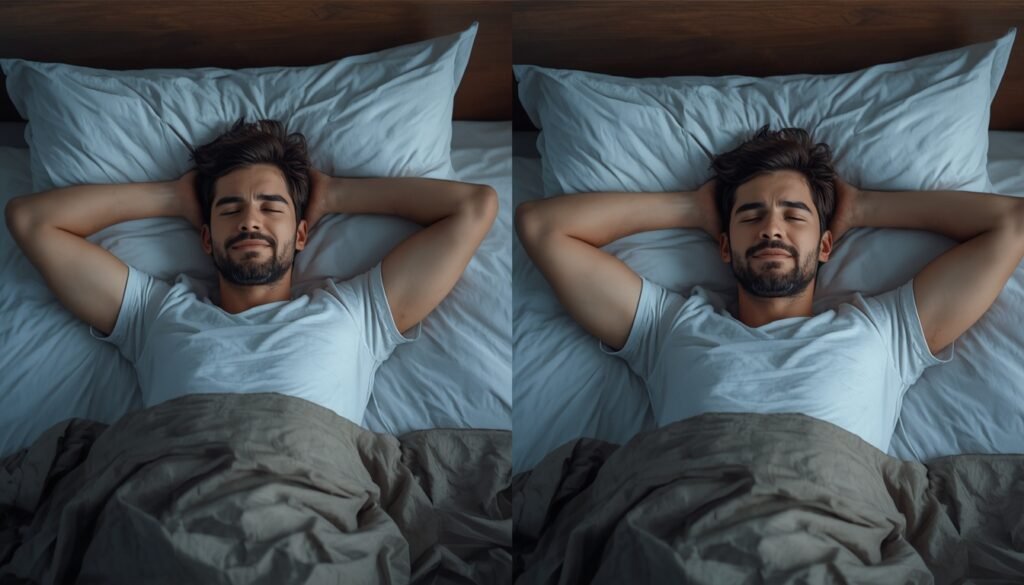
Amara, a 36-year-old teacher, slept eight hours every night without fail. She was in bed by 10:30 PM, and her alarm rang at 6:30 AM. By every standard measure, she was doing everything right. Yet mornings were a struggle that coffee barely softened, and by 2 PM she was running on reserve.
Her GP initially suggested she needed to “reduce stress”. Her thyroid came back normal. Iron was borderline but “not concerning”. For two years she accepted the exhaustion as a feature of her life.
A sleep study ordered by a new doctor changed everything. Amara had mild sleep apnoea — her breathing briefly interrupted dozens of times per night, each interruption pulling her out of deep sleep without waking her consciously. She had been spending eight hours in bed and getting, effectively, far less restorative sleep. Treatment produced results she described as “waking up for the first time in years”. Eight hours had always been there. The quality had not.
Why It Happens
Biological Reasons
What I learned is that eight hours in bed means nothing if the sleep is broken, shallow, or badly timed. Sleep apnoea, alcohol, stress, and even low iron can destroy sleep quality without me ever knowing. The hours were there. The restoration was not.
Several biological factors can compromise sleep quality while leaving duration intact. Sleep apnoea — in which breathing pauses repeatedly during sleep — fragments sleep architecture profoundly, preventing the sustained deep sleep phases in which physical restoration occurs. Most people with sleep apnoea are unaware of it. Circadian rhythm misalignment — sleeping at times out of phase with the body’s internal clock — reduces sleep efficiency and deep sleep proportion even when duration is adequate. Cortisol dysregulation from chronic stress maintains a baseline physiological arousal that prevents full descent into deep NREM sleep. Iron deficiency and anaemia reduce oxygen delivery to tissues, producing fatigue that sleep cannot compensate for. Thyroid dysfunction — particularly hypothyroidism — slows cellular energy metabolism in ways that produce fatigue regardless of sleep quality or duration.
Lifestyle Reasons
Alcohol is among the most significant and most underappreciated sleep quality disruptors. While alcohol is sedating and reduces sleep-onset time, it suppresses REM sleep in the second half of the night — producing lighter, more fragmented sleep during the hours when REM should dominate. Late-night screen exposure — through blue-light-mediated melatonin suppression — delays sleep onset and reduces the proportion of early-night deep sleep even when total hours appear adequate. Irregular sleep schedules fragment the circadian signal that governs sleep architecture, reducing the consistency of deep and REM sleep. Heavy meals close to bedtime increase metabolic activity during the digestive period that overlaps with the first deep sleep cycle. And chronic psychological stress — by maintaining elevated cortisol and sympathetic nervous system activation — prevents the full biological downregulation that deep sleep requires.
Chronic stress is one of the most powerful disruptors of deep sleep quality — learn how to address it in our guide on managing daily stress naturally.
Common Hidden Causes of Fatigue Despite 8 Hours
Undiagnosed sleep apnea fragmenting sleep architecture without conscious awakening
Alcohol suppressing REM sleep in the second half of the night
Chronic stress maintaining cortisol elevation that prevents deep NREM entry
Circadian misalignment producing inefficient, poorly-timed sleep
Nutritional deficiencies (iron, B12, vitamin D) reducing cellular energy production independently of sleep
Research & Science
Study 1
Finding: A study published in Sleep Medicine found that sleep fragmentation — measured by frequency of brief arousals per hour — was a stronger predictor of next-day fatigue, mood disturbance, and cognitive impairment than total sleep duration. Participants who slept seven hours of consolidated sleep consistently outperformed those who slept eight hours with fragmented architecture on objective cognitive tests.
What It Means For You: How many times your sleep is interrupted — even in ways you do not consciously remember — appears to matter more for how you feel the next day than how many hours you were in bed.
DOI: 10.1016/j.sleep.2017.01.020
PubMed: https://pubmed.ncbi.nlm.nih.gov/28209404/
Study 2
Finding: Research published in Science identified the glymphatic system — a brain-wide waste clearance network — that operates primarily during slow-wave deep sleep. The study found that this system removes potentially neurotoxic metabolic byproducts at a rate approximately tenfold greater during deep sleep than during wakefulness, with insufficient deep sleep linked to accumulation of these byproducts and associated cognitive dysfunction.
What It Means For You: Brain fog after a full night’s sleep may not be a subjective experience — it may reflect the brain’s actual reduced capacity to clear metabolic waste when deep sleep was insufficient, regardless of total sleep time.
DOI: 10.1126/science.1241224
PubMed: https://pubmed.ncbi.nlm.nih.gov/24136970/
Study 3
Finding: A large-scale study published in The Lancet Respiratory Medicine estimated that approximately 936 million adults globally have moderate to severe obstructive sleep apnea, with the majority undiagnosed. Undiagnosed sleep apnoea was associated with significantly elevated rates of daytime fatigue, cardiovascular risk, and cognitive decline — effects that were independent of total sleep duration.
What It Means For You: If you consistently feel unrefreshed after what appears to be adequate sleep, sleep apnoea is among the most important medical causes to rule out — particularly if you snore, wake with headaches, or sleep with a partner who has observed breathing pauses.
DOI: 10.1016/S2213-2600(19)30198-5
PubMed: https://pubmed.ncbi.nlm.nih.gov/31300334/
For further reading, see the NIH National Center on Sleep Disorders Research, the American Academy of Sleep Medicine resources, and the CDC Sleep and Sleep Disorders page.
Expert Insight:
Expert Perspective: Duration and quality are the two dimensions of sleep, but most people — and most sleep advice — focus almost entirely on duration. In clinical practice, the majority of patients presenting with fatigue despite adequate sleep hours have a quality problem, not a quantity problem. The causes are often identifiable and treatable — but only if the right questions are asked.
Additional Clinical Note: Persistent fatigue despite adequate sleep duration warrants medical investigation before lifestyle changes are assumed sufficient. Several common and treatable conditions — including sleep apnoea, hypothyroidism, iron deficiency, and depression — produce fatigue that no amount of time in bed will resolve without specific treatment.

Morning Energy Quality Audit
This section is unique to this topic. Rate each statement from 0 (never) to 3 (almost always):
IMAGE #5
Title: Morning energy quality audit self-assessment checklist infographic
ALT: morning energy quality audit checklist for identifying causes of fatigue despite adequate sleep duration
Suggested Size: 1200 × 675 px
Statement
Score (0–3)
I wake feeling unrefreshed despite 7–9 hours in bed
—
I snore, or my partner has noticed breathing pauses during my sleep
—
I drink alcohol within 3 hours of bedtime at least twice per week
—
I use screens (phone, TV, laptop) within 60 minutes of sleeping
—
My sleep schedule varies by more than 90 minutes between weekdays and weekends
—
I wake with a headache or very dry mouth most mornings
—
I feel persistently cold, experience hair thinning, or have unexplained weight changes
—
My energy does not meaningfully improve with more sleep
—
Score Guide:
0–8: Sleep quality is likely adequate — review lifestyle factors for fine-tuning.
9–16: Meaningful sleep quality issues are likely present — targeted changes from this guide are recommended alongside medical review if the score includes rows 2, 6, or 7.
17–24: Significant quality disruption — medical evaluation is strongly recommended before assuming lifestyle changes alone will be sufficient.
Priority Flags:
Row 2 or 6 scores 2–3: rule out sleep apnoea with your doctor first.
Row 7 scores 2–3: Thyroid function and iron studies are worth requesting.
Row 3 scores 2–3: Alcohol is likely a significant contributor — address it first.
Reflective tool only — not a diagnostic instrument.
Quick Solutions
If you want to begin improving sleep quality tonight, these evidence-supported changes produce measurable effects quickly:
Stop drinking alcohol at least three hours before bed — alcohol suppresses REM in the second half of the night; even one drink meaningfully reduces sleep quality by most measures.
Remove screens from the bedroom and avoid them 60 minutes before sleep — blue light suppresses melatonin and delays the circadian signal for deep sleep.
Set a consistent wake time and hold it seven days per week — a consistent wake time is the master anchor of circadian sleep architecture.
Cool your bedroom to 16–19°C (60–67°F) — a core body temperature drop is a critical signal for sleep onset and deep sleep maintenance.
Avoid large meals within two hours of bedtime – digestive activity in the first sleep cycle reduces deep sleep proportion.
If you snore or wake unrefreshed consistently, ask your doctor about a sleep study — this is the most important step for many people, and lifestyle changes will have limited impact without it.
Limit caffeine after 1 PM — caffeine has a half-life of approximately five to six hours in most adults, meaning an afternoon coffee is still partially active at midnight.
Iron deficiency is one of the most commonly missed causes of fatigue that sleep cannot fix — learn the signs in our guide on hidden body signs asking for help.
Simple Framework
Step
Action
Ask Yourself
1
Identify
Use the Morning Energy Quality Audit — which factors score highest?
2
Rule Out Medical
Do I have symptoms that warrant sleep apnoea or metabolic testing before lifestyle changes?
3
Improve Quality
What is the single lifestyle change most likely to improve my sleep architecture tonight?
This framework deliberately places medical ruling-out before lifestyle optimisation — because for a meaningful proportion of people experiencing fatigue despite adequate sleep, lifestyle changes alone will produce limited results until an underlying medical cause is identified and addressed.
Thinking Model
Question 1: Why is this happening?
Rather than accepting “I’m just not a morning person,” ask what your sleep is actually accomplishing. Are you waking with headaches or a dry mouth? Do you snore? Does your energy fail to improve regardless of how much you sleep? These patterns point toward specific, identifiable causes — many of them medical — rather than a simple need for more hours.
Question 2: What am I missing?
Most people experiencing fatigue despite eight hours are missing one or more of the following: consolidated, uninterrupted deep sleep phases; adequate REM sleep (often suppressed by alcohol); proper circadian timing for their biology; or treatment for an underlying condition that no sleep hygiene advice will address. Identifying which is missing points toward the right intervention.
Question 3: What should I change first?
If rows 2 or 6 of the Morning Energy Quality Audit score high, see a doctor first. If alcohol is a significant part of your pre-bed routine, reduce it before anything else. If screens and irregular schedules are the primary issues, address those simultaneously. The order matters because addressing lifestyle factors first when a medical cause is present produces frustration and delays necessary care.
Original Insight
Here is what most sleep content — even good sleep content — does not say directly: the exhaustion many people experience after eight hours of sleep is not a sleep problem. It is a sleep quality problem that looks like a sleep duration problem because duration is the only thing most people measure.
Hours in bed are visible and countable. Sleep architecture is not — not without equipment. And so the person who spends eight hours in bed fragmented by undiagnosed sleep apnoea, suppressed by alcohol, or disrupted by chronic cortisol gets the same advice as the person who simply needs more hours: “Sleep more.” It doesn’t work. The advice is answering a different question than the one actually being asked.
Fatigue despite adequate sleep duration is almost always a quality signal, not a quantity signal. And quality has specific, addressable causes — most of which have nothing to do with how long you were in bed.

Featured Snippet
Yes, feeling tired after eight hours of sleep is common and has identifiable causes. Sleep duration alone does not determine how rested you feel — sleep quality, architecture (depth and proportion of deep and REM sleep), circadian timing, and underlying medical conditions all play significant roles. Common causes include sleep apnoea, alcohol suppressing REM sleep, irregular sleep schedules, chronic stress, and nutritional deficiencies, including iron and B12.
Cause
How It Disrupts Sleep Quality
What Helps
Sleep apnea
Fragments deep sleep architecture repeatedly
Medical evaluation, CPAP if indicated
Alcohol before bed
Suppresses REM in the second half of the night
Avoid alcohol 3+ hours before sleep
Irregular sleep schedule
Disrupts circadian signal governing deep sleep
Consistent wake time 7 days per week
Chronic stress / cortisol
Prevents full descent into deep NREM sleep
Stress reduction, evening wind-down routine
Blue light / screens
Suppresses melatonin, delays sleep onset
Screen-free 60 min before bed
Iron or B12 deficiency
Reduces oxygen delivery and cellular energy
Blood test, dietary or supplement correction
Heavy late meal
Increases digestive metabolism during first sleep cycle
Last meal 2–3 hours before bed
Key Action Summary:
✅ Rule out sleep apnea | ✅ No alcohol within 3 hrs of bed | ✅ Consistent wake time | ✅ Screen-free hour before sleep | ✅ Check iron and B12 if fatigue is persistent
Practical Strategies
Strategy 1 — Investigate Sleep Apnea Before Assuming a Lifestyle Cause
Sleep apnoea is, for many people with fatigue despite adequate sleep, the explanation that changes everything. It is estimated to affect nearly a billion adults globally in moderate to severe form, with the majority undiagnosed. The cardinal symptom is waking unrefreshed despite what feels like adequate sleep — often with a dry mouth, headache, or awareness of snoring. A home sleep test or in-lab polysomnography, both accessible through a GP referral, can identify this condition definitively. Treatment — typically CPAP therapy or mandibular advancement devices for mild cases — produces results that lifestyle changes alone cannot replicate. Amara’s story above illustrates this precisely: no dietary change, sleep hygiene practice, or stress management technique could address what eight years of fragmented sleep architecture had been doing to her energy.
Strategy 2 — Remove Alcohol From Your Pre-Sleep Routine
This may be the single most impactful lifestyle change available for improving sleep quality in people who drink regularly in the evenings. Alcohol is reliably sedating — it reduces sleep-onset latency and produces a feeling of ease falling asleep. But its metabolism in the second half of the night produces acetaldehyde, which stimulates the nervous system, suppresses REM sleep, and produces lighter, more fragmented sleep during the hours (roughly 3–7 AM for most people) when REM should dominate. A person who reduced evening wine from two glasses to zero — not from general health motivation but specifically as a sleep experiment — reported meaningfully more vivid dreams (a sign of REM recovery) and noticeably better morning energy within one week. No other changes were made.
Strategy 3 — Anchor Your Sleep With a Consistent Wake Time
Circadian rhythm governs the timing and architecture of sleep — and its master anchor is not when you go to bed but when you consistently wake. A fixed wake time, held seven days per week, including weekends, trains the circadian signal that determines when melatonin rises, when cortisol peaks, and when the brain transitions through its sleep stages most efficiently. Weekend lie-ins of more than 90 minutes beyond a weekday wake time create the equivalent of weekly transatlantic jet lag — disrupting Monday through Wednesday sleep quality for millions of people who attribute their difficulty to stress or insomnia. Setting and holding a consistent wake time produces measurable improvements in sleep efficiency and deep sleep proportion within two to three weeks for most people who comply consistently.
Strategy 4 — Create a Genuine Sleep Environment
The bedroom environment directly influences sleep depth and continuity through several measurable mechanisms. Room temperature: a sleep environment of 16–19°C (60–67°F) supports the core body temperature drop that signals deep sleep onset. Darkness: light exposure during sleep – even low-level ambient light – has been shown to suppress melatonin and reduce deep sleep proportion in research studies. Noise: environmental noise, even at levels that do not consciously wake you, produces measurable arousal responses that fragment sleep architecture. Removing screens from the bedroom, using blackout curtains, and using earplugs or white noise when environmental noise is unavoidable are changes that cost very little and produce improvements in sleep quality within the first week of implementation.
A busy, anxious mind is one of the most common causes of poor deep sleep — read our evidence-based guide on how to stop overthinking at night for better sleep.
Strategy 5 — Manage Cortisol Through an Evening Wind-Down Routine
Chronic stress maintains cortisol elevation throughout the evening – and cortisol is biologically incompatible with the deep, slow-wave sleep the body needs for restoration. An evening wind-down routine creates the conditions for cortisol to decline before sleep: dim lighting from about 9 PM (which supports melatonin rise), cessation of work-related content or stimulating media; and a consistent sequence of calming activities – stretching, reading physical books, a warm shower, and brief breathing practice – that tell the nervous system the demanding part of the day is over. This is not about having time — it is about using the hour before bed deliberately rather than reactively. A teacher who implemented a 45-minute wind-down replacing late news and phone scrolling reported feeling genuinely sleepy at bedtime rather than “tired but wired” within ten days
.A busy, anxious mind is one of the most common causes of poor deep sleep — read our evidence-based guide on how to stop overthinking at night for better sleep.
Strategy 6 — Check Iron, B12, Vitamin D, and Thyroid
When fatigue persists despite genuine sleep quality improvements, nutritional and metabolic causes deserve investigation. Iron deficiency — even at levels not meeting the threshold for clinical anaemia — reduces oxygen delivery to cells and produces fatigue that no amount of sleep resolves. Vitamin B12 deficiency impairs neurological energy metabolism and produces fatigue with a distinctly cognitive quality. Vitamin D deficiency has been associated with both poor sleep quality and general fatigue across multiple populations. Hypothyroidism slows cellular metabolism comprehensively, producing morning fatigue that sleep cannot compensate for. A standard blood panel covering these markers — available through a routine GP appointment — can identify or rule out these causes quickly and definitively, preventing years of ineffective lifestyle modifications applied to a medical problem.
Strategy 7 — Limit Caffeine After 1 PM and Avoid Large Late Meals
Caffeine’s half-life in most adults is approximately five to six hours – meaning a coffee consumed at 3 PM still has roughly half its active concentration at 8 PM and a quarter of it at 11 PM. For people who are caffeine-sensitive or who metabolise it slowly, afternoon coffee meaningfully reduces both deep sleep and REM sleep proportions even when it does not appear to delay sleep onset. Similarly, large meals consumed within two hours of bedtime increase digestive metabolic activity during the first sleep cycle — the period when the deepest slow-wave sleep should occur. Moving the last substantial meal to at least two to three hours before bed, and shifting caffeine consumption to the morning only, are changes that require no willpower at bedtime — only a daytime scheduling adjustment — and produce measurable improvements in sleep depth within the first week for many people.
Late meals and blood sugar dynamics also affect sleep quality directly — explore the connection in our guide on understanding blood sugar and energy after meals.
Common Mistakes
Mistake
Why It Fails
Fix
Sleeping longer to compensate for tiredness
More hours in bed does not improve sleep quality and can fragment sleep architecture further
Focus on quality — consistent timing, removal of disruptors — rather than extending duration
Assuming tiredness is simply a lifestyle issue
Significant causes of fatigue despite adequate sleep — sleep apnea, hypothyroidism, iron deficiency — require medical treatment
Use the Morning Energy Quality Audit and seek medical evaluation if flagged symptoms are present
Using alcohol to fall asleep more easily
Reduces sleep-onset anxiety briefly while significantly suppressing REM sleep quality
Address the anxiety or tension causing sleep difficulty directly through wind-down practices
Weekend lie-ins to “catch up” on sleep
Creates circadian disruption equivalent to jetlag, worsening Monday–Wednesday sleep quality
Hold consistent wake time seven days; use brief naps (under 20 min before 2 PM) if needed
Screen use in bed as a wind-down strategy
Blue light suppresses melatonin, stimulating content maintains cortisol, and habit associates bed with wakefulness
Replace screen use with physical reading, stretching, or breathing practice for the final 45–60 minutes
Relying on coffee to compensate for poor sleep quality
Caffeine masks adenosine fatigue without addressing the underlying quality deficit, builds tolerance and worsens subsequent sleep
Address sleep quality; use coffee earlier in the day rather than as a post-morning rescue tool
When To See a Doctor
Please seek medical evaluation if you experience any of the following alongside fatigue despite adequate sleep: loud snoring, waking with headaches or dry mouth, breathing pauses observed by a partner, difficulty staying awake during the day without effort, or unrefreshed mornings that do not respond to sleep hygiene improvements over four to six weeks.
Additionally, if fatigue is accompanied by unexplained weight changes, persistent cold sensitivity, hair thinning, low mood, or cognitive difficulties, a blood panel covering thyroid function (TSH, free T4), full blood count, iron studies (including ferritin), vitamin B12, and vitamin D is warranted and should be requested from a GP without delay.
Fatigue that does not respond to evidence-based lifestyle changes within four to six weeks of consistent application is, in most cases, a medical signal — not a motivation problem.
When fatigue is accompanied by persistent low mood or anxiety, the picture becomes more complex — our guide on stress, anxiety, and depression can help you decide on the right next step.
Key Takeaways
Sleep duration and sleep quality are distinct dimensions — eight hours of poor-quality sleep may produce more fatigue than six hours of high-quality consolidated sleep.
Sleep apnoea affects an estimated 936 million adults globally, with the majority undiagnosed, and is among the most important causes of fatigue despite adequate time in bed.
Alcohol suppresses REM sleep in the second half of the night, often producing lighter, more fragmented sleep during the hours when deep restoration should occur.
A consistent wake time — held seven days per week — is the most powerful single anchor for circadian sleep architecture and sleep quality.
The glymphatic system clears metabolic waste from the brain primarily during deep slow-wave sleep; insufficient deep sleep, regardless of total hours, may lead to brain fog and fatigue.
Iron deficiency, B12 deficiency, vitamin D deficiency, and hypothyroidism all produce fatigue that sleep cannot compensate for — blood testing is warranted when fatigue persists.
Lifestyle changes alone will not resolve fatigue caused by sleep apnoea, thyroid conditions, or significant nutritional deficiency – medical evaluation is an essential first step for many people.
FAQs
1. Is it possible to sleep too much and still feel tired?
Yes. Excessive sleep duration — consistently more than nine to ten hours — is associated with increased fatigue in some people, partly because a long time in bed reduces sleep efficiency and increases light, less-restorative sleep proportion. However, the urge to sleep excessively is often itself a symptom of underlying conditions — depression, thyroid dysfunction, and sleep apnoea — rather than a primary cause of fatigue.
2. What is sleep inertia and why does it make mornings so hard?
Sleep inertia is the grogginess experienced immediately after waking, caused by residual adenosine and slow-wave sleep activity in the brain. It typically lasts 15–30 minutes in healthy adults. Severe, prolonged sleep inertia — lasting an hour or more — may indicate that waking occurred during deep sleep (suggesting poor sleep timing) or that sleep quality was significantly compromised.
3. Does exercise help with sleep quality or just duration?
Research suggests regular aerobic exercise primarily improves sleep quality — specifically the depth and proportion of slow-wave deep sleep — rather than simply extending total duration. Even 20–30 minutes of moderate aerobic exercise three to five times per week produces measurable improvements in sleep architecture over several weeks.
4. Can anxiety cause fatigue despite adequate sleep?
Yes, in two ways. First, anxiety maintains sympathetic nervous system and cortisol elevation that prevents full descent into deep NREM sleep – producing inadequate slow-wave sleep despite adequate hours. Second, anxiety increases sleep fragmentation through micro-arousals that the person may not consciously recall. Addressing anxiety directly – through therapy, stress management, or, where appropriate, medical support – often produces meaningful improvement in sleep quality and morning energy.
5. How do I know if I have sleep apnoea without a sleep study?
Common indicators include loud or frequent snoring; waking with headaches or a very dry mouth; being told you stop breathing during sleep; excessive daytime sleepiness despite adequate hours; and fatigue that does not improve with sleep hygiene changes. These indicators are not diagnostic, but any two or three of them warrant requesting a sleep study from your GP.
6. Does the timing of sleep matter as much as the duration?
Significantly, yes. Sleeping during hours misaligned with your chronotype (natural sleep preference) — for example, a natural evening person forced to sleep at times their biology treats as daytime — produces measurably less deep sleep and REM sleep even with equivalent total hours. Where possible, aligning sleep timing with chronotype and maintaining consistent timing improves both sleep architecture and next-day energy.
7. Can improving sleep quality reduce my need for caffeine?
For many people, yes. The need for caffeine to function adequately is often a sign of accumulated sleep debt or chronic poor sleep quality rather than a constitutional caffeine dependency. People who improve sleep quality and architecture frequently report that their morning caffeine becomes a preference rather than a physiological requirement — and that afternoon coffee is no longer needed to maintain functioning.
30-Day Sleep Quality Improvement Plan
Week 1 — Audit and Immediate Disruptors
Complete the Morning Energy Quality Audit. Identify your highest-scoring factors. If rows 2 or 6 score high, contact your GP this week to discuss a sleep study referral — this is more important than any lifestyle change. Remove alcohol from within three hours of bedtime beginning tonight. Set a consistent wake time and hold it every day this week, including the weekend.
Week 2 — Environment and Cortisol
Maintain consistent wake time and alcohol reduction. Move your phone charger out of the bedroom. Begin a 45-minute screen-free wind-down routine each evening. Cool your bedroom to the target range. If fatigue is accompanied by cold sensitivity, hair changes, or mood symptoms, request thyroid, iron, B12, and vitamin D blood tests from your GP.
Week 3 — Timing and Nutrition
Move caffeine consumption to mornings only — nothing after 1 PM. Move your last substantial meal to at least two hours before bed. Continue wind-down routine and consistent wake time. Record your subjective morning energy on a 1–10 scale daily to detect change patterns.
Week 4 — Consolidation and Medical Review
Compare morning energy scores to Week 1. If scores have meaningfully improved, identify the two or three changes with the clearest impact and commit to them permanently. If fatigue remains significant despite consistent effort, your GP appointment — ideally already scheduled — is the appropriate and necessary next step.

Final Thought
Eight hours is a starting point, not a guarantee. If you have been sleeping your hours and still waking exhausted, the answer is almost never to sleep more. It is to understand what those hours are actually accomplishing and address the specific, identifiable reasons they may not be accomplishing enough.
Conclusion
My honest advice is to stop counting hours and start checking quality. If you snore, wake with headaches, or never feel refreshed, see a doctor — you may have sleep apnoea. If not, cut alcohol, fix your wake time, and darken your room. Do not accept exhaustion as normal. It is a signal, and it can be fixed.
Fatigue despite adequate sleep duration is not mysterious, and it is not permanent. It is the predictable result of specific failures of sleep quality – architecture, timing, chemical disruption, or underlying medical conditions – that are identifiable through honest self-assessment and, where indicated, straightforward medical investigation. The strategies in this article address the most common and most evidence-supported causes. Apply the audit first. Rule out medical causes where the signals point there. Then build the sleep environment and habits that allow your eight hours to actually do what sleep is designed to do.Why feel tired after sleeping 8 hours?
References
American Academy of Sleep Medicine. Seven to Nine Hours’ Sleep Recommendation for Adults. AASM, 2024. Available at: https://aasm.org/seven-to-nine-hours-sleep-recommendation/
Centers for Disease Control and Prevention. Adult Sleep Data and Statistics. CDC, 2024. Available at: https://www.cdc.gov/sleep/data-and-statistics/adults.html
NIH National Institute of Neurological Disorders and Stroke. Brain Basics: Understanding Sleep. NIH, 2023. Available at: https://www.ninds.nih.gov/health-information/public-education/brain-basics/brain-basics-underst
American Academy of Sleep Medicine. Sleep Disorders Resources. AASM, 2024. Available at: https://aasm.org/resources/
Czeisler CA, et al. Sleep Fragmentation and Cognitive Performance. Sleep Medicine. 2017. DOI: 10.1016/j.sleep.2017.01.020. PubMed: https://pubmed.ncbi.nlm.nih.gov/28209404/
Xie L, Kang H, Xu Q, et al. Sleep Drives Metabolite Clearance from the Adult Brain. Science. 2013. DOI: 10.1126/science.1241224. PubMed: https://pubmed.ncbi.nlm.nih.gov/24136970/
Benjafield AV, Ayas NT, Eastwood PR, et al. Estimation of the Global Prevalence and Burden of Obstructive Sleep Apnoea. Lancet Respiratory Medicine. 2019. DOI: 10.1016/S2213-2600(19)30198-5. PubMed: https://pubmed.ncbi.nlm.nih.gov/31300334/
Ebrahim IO, Shapiro CM, Williams AJ, et al. Alcohol and Sleep I: Effects on Normal Sleep. Alcoholism: Clinical and Experimental Research. 2013. DOI: 10.1111/acer.12006. PubMed: https://pubmed.ncbi.nlm.nih.gov/23347102/
Czeisler CA, Duffy JF, et al. Stability and Precision of the Human Circadian Pacemaker. Science. 1999. DOI: 10.1126/science.284.5423.2177. PubMed: https://pubmed.ncbi.nlm.nih.gov/10381883/
Pickering G, Mazur A, Trousselard M, et al. Magnesium Status and Stress. Nutrients. 2020. DOI: 10.3390/nu12123672. PubMed: https://pubmed.ncbi.nlm.nih.gov/33260549/
Mah CD, Mah KE, Kezirian EJ, Dement WC. The Effects of Sleep Extension on Athletic Performance. Sleep. 2011. DOI: 10.5665/SLEEP.1132. PubMed: https://pubmed.ncbi.nlm.nih.gov/21731144/
Vaucher P, Druey S, Waldvogel S, et al. Effect of Iron Supplementation on Fatigue in Non-Anaemic Women. CMAJ. 2012. DOI: 10.1503/cmaj.110950. PubMed: https://pubmed.ncbi.nlm.nih.gov/22777991/
Note: All references should be independently re-verified for accuracy and current relevance before publication.
Disclaimer
This article is for educational and informational purposes only. It does not constitute medical advice and is not a substitute for professional healthcare. If you experience persistent fatigue, symptoms of sleep apnoea, or other health concerns, please consult a qualified healthcare professional. Individual results and timelines vary significantly based on the underlying cause.
About the Author
HealthFitnessBloom Editorial Team
HealthFitnessBloom is dedicated to providing science-backed health, fitness, and wellness information to help readers live healthier lives. Our editorial team researches, writes, and reviews content to ensure accuracy, clarity, and practical value.