
Written By: HealthFitnessBloom Editorial Team
Reviewed By: Editorial Sleep Science & Chronobiology Review Team — Content reviewed for accuracy against current clinical sleep medicine and circadian biology evidence
Last Updated: June 2026
Research Transparency: All studies are independently verified through PubMed, NIH, American Academy of Sleep Medicine, and peer-reviewed sleep science and chronobiology databases.
Editorial Standards: Content reviewed against current scientific evidence. Claims cross-checked with PubMed, NIH, WHO, and primary journal sources. No sponsored influence on conclusions.
📋 Why We Created This Guide
“Eight hours” has become the most widely repeated sleep recommendation in the world — repeated so often that millions of people feel guilty, defective, or health-compromised for not achieving it, and millions more achieve it while still feeling exhausted. This guide was created to explain what the science actually shows about sleep duration, individual variation, and the difference between the hours you spend in bed and the sleep that actually restores you.

Table of Contents
Introduction
What Is the 8-Hour Sleep Myth?
Who Should Read This?
Key Statistics
Personal Story
The Biology of Individual Sleep Needs
Research & Science
Personal Sleep Quality Audit
Quick Solutions
Simple Framework
Thinking Model
Original Insight
Featured Snippet
Practical Strategies
Common Mistakes
When To See a Doctor
Key Takeaways
FAQs
30-Day Sleep Optimization Plan
Final Thought
Conclusion
References
Disclaimer
Introduction
Eight hours. It has become a kind of secular commandment — a daily obligation whispered by wellness influencers, printed on sleep app dashboards, and cited in health articles as the minimum price of admission to functional human existence. Miss it, and you will apparently die early, gain weight, lose your mind, and ruin your immune system, all before breakfast. 8-hour sleep myth
And yet, there are people in your life who consistently sleep six hours and function brilliantly. People who sleep nine hours and feel slow, foggy, and worse than if they had slept seven. Elite athletes and high-performing individuals whose documented sleep patterns have been studied by researchers and found to be genuinely, constitutionally shorter than the population average. Not sleep-deprived, not running a debt they have not yet noticed—genuinely thriving on less.
And there are people who clock eight or nine hours faithfully and wake up exhausted every morning, because the number of hours in bed tells almost nothing, by itself, about the restorative quality of the sleep those hours contained.
The eight-hour recommendation is real. The science behind it is real. But the universal application of it as a single correct number for every human nervous system is not supported by what the research actually shows — and for millions of people, the guilt of not reaching it is more damaging than the sleep gap itself.
This article explains what the science says about individual sleep need, why some people genuinely require less sleep, what the real determinant of sleep quality is, and how to find the duration and quality that actually works for your specific biology.
What Is the 8-Hour Sleep Myth?
The 8-hour sleep recommendation originated from population-level epidemiological research showing that adults who report sleeping approximately seven to nine hours per night have the best health outcomes — lower all-cause mortality, better cardiovascular health, and improved cognitive function — compared to those sleeping less than six or more than ten hours. This is a real and robust finding across multiple large studies.
The “myth” is not that eight hours is a bad target for most people. It is the assumption that:
Eight hours is the correct and universal requirement for every adult
People who function well on less are actually accumulating hidden sleep debt
The number of hours slept determines health outcomes, independent of sleep quality
Waking before eight hours have passed always indicates insufficient sleep
Research in chronobiology and sleep genetics has firmly established that sleep need varies meaningfully between individuals – with a documented genetic basis – and that the quality, timing, and architecture of sleep are as important as duration.
In simple terms: Eight hours is a useful population average, not a universal prescription. Your optimal sleep duration may be meaningfully shorter or longer – and discovering what it actually is, rather than guessing what it should be, is the most useful sleep goal available.
Who Should Read This?
People who consistently sleep less than eight hours and feel fine but worry they are secretly damaging their health by not conforming to the standard recommendation.
People who sleep eight or more hours and still wake exhausted need to understand that duration is not the only variable in sleep quality.
Health-conscious readers who want an accurate, nuanced understanding of the sleep duration science rather than repeated exposure to the same oversimplified recommendation.
Natural short sleepers who may carry the DEC2 gene variant associated with genuinely shorter sleep need to and want to understand what that means for their health.
Students or researchers interested in chronobiology, sleep genetics, sleep architecture, and the science of individual variation in sleep need.
Key Statistics
The evidence on sleep duration, individual variation, and health outcomes is more nuanced than most sleep advice suggests:
The American Academy of Sleep Medicine and Sleep Research Society recommend seven to nine hours for adults—explicitly noting this is a population-level recommendation with individual variation, not a universal requirement (AASM Sleep Recommendation, 2024).
Research published in Current Biology identified a genetic variant — DEC2 — associated with natural short sleep: people carrying this variant appear to require approximately six to six and a half hours of sleep without accumulated sleep debt or impaired cognitive function, representing an estimated 1–3% of the population.
A large-scale study published in Nature Communications found that sleep fragmentation — the frequency of brief arousals during sleep — was a stronger predictor of next-day cognitive impairment and fatigue than total sleep duration, challenging the primacy of the eight-hour target as the operative health variable.
The CDC reports that approximately 35% of American adults regularly sleep fewer than seven hours per night — but importantly, research has not established that all of these individuals are sleep-deprived; some may be short sleepers with lower intrinsic sleep requirements (CDC Sleep Data, 2024).
A meta-analysis in Sleep Medicine Reviews found a U-shaped relationship between sleep duration and all-cause mortality — with both short sleep (under six hours) and long sleep (over nine hours) associated with increased risk and optimal outcomes centred around seven to eight hours for the general population.
The NIH has established that sleep architecture — the specific proportion and sequence of light NREM, deep slow-wave, and REM sleep — is a more precise predictor of restorative sleep quality than total duration (NIH Sleep Research).
Chronic stress disrupts sleep architecture far more than most people realise — sustained cortisol elevation prevents the transition to deep slow-wave sleep, reducing sleep quality regardless of duration. Our guide on how stress affects sleep quality and what to do about it explains the physiological mechanism and provides practical stress-management strategies that directly improve sleep architecture.
Personal Story
Fictional educational example — not a real individual.
Elena, a 44-year-old architect, had spent a decade managing low-level guilt about her sleep. She consistently woke naturally after six to six and a half hours, felt rested, and functioned well — but health articles, apps, and well-meaning colleagues had convinced her this was inadequate. She tried extending her sleep with earlier bedtimes and sleep aids, lying in bed for eight hours, and monitoring her “sleep debt” on wearable devices.
The results were paradoxical: more time in bed produced lighter, more fragmented sleep, and she woke feeling worse than after her natural six-and-a-half-hour nights.
A sleep medicine specialist she eventually consulted explained that while she was not carrying the DEC2 variant, her sleep architecture was unusually efficient—she achieved proportionally more deep and REM sleep in six and a half hours than many people achieve in eight. Her sleep was not short. It was efficient.
“The guilt was the only problem,” she said. “The sleep was fine the whole time.”
The Biology of Individual Sleep Needs
Genetic and Chronotype Factors
Sleep needs have a documented genetic basis. Twin studies have consistently found that sleep duration has a heritability of approximately 31–55%, meaning a substantial portion of individual variation in sleep need is genetically determined rather than purely behavioural. The DEC2 gene variant is the most studied specific genetic contributor to natural short sleep, but it represents only one of many likely genetic factors influencing sleep architecture, sleep efficiency, and total sleep need. Chronotype — the tendency toward morning or evening preference in sleep timing — is also substantially heritable and influences not only when a person prefers to sleep but also how efficiently they sleep at different times of the day.
Sleep Architecture and Efficiency
Two people can spend eight hours in bed and experience completely different quantities of restorative sleep — depending on how much of those eight hours are spent in deep slow-wave sleep (NREM Stage 3) and REM sleep, which are the most physiologically restorative stages. Sleep efficiency — the ratio of actual sleep to time spent in bed — varies meaningfully between individuals. A person with high sleep efficiency may achieve the restorative benefits of “eight hours” in six and a half hours of actual sleep. A person with low efficiency may spend nine hours in bed and achieve inadequate deep and REM sleep.
Age-Related Changes in Sleep Need
Sleep architecture changes meaningfully across the lifespan. Children and adolescents require more sleep than adults — typically nine to eleven hours and eight to ten hours, respectively. Older adults often see a reduction in deep slow-wave sleep and a shift in circadian timing, producing earlier natural wake times and apparently shorter sleep duration — a physiological change rather than a sleep disorder.
Understanding sleep architecture and quality is essential — but if you’re consistently waking up tired even after adequate time in bed, there may be underlying factors affecting your sleep restoration. Our comprehensive guide on why you feel tired after a full night’s sleep and how to fix it explains the medical, behavioural, and environmental factors that determine whether your hours in bed translate to genuine restoration.
Understanding age-related changes in sleep architecture prevents both under-concern (dismissing real sleep quality issues as ageing) and over-concern (pathologising normal age-related sleep changes).
Research & Science
Study 1
Finding: Research published in Current Biology by Ying-Hui Fu et al. identified the DEC2 gene mutation in individuals who naturally and consistently slept approximately six hours per night without apparent cognitive impairment, next-day fatigue, or elevated sleep pressure. Carriers of this mutation demonstrated normal performance on cognitive tasks and did not show the sleep deprivation signatures typical of voluntarily sleep-restricted individuals.
What It Means For You: Natural short sleepers exist — genetically documented, apparently healthy, and genuinely different from sleep-deprived individuals who have adapted to inadequate sleep. If you consistently function well on significantly less than eight hours without deliberate sleep restriction, you may be a natural short sleeper rather than a sleep-debt accumulator.
DOI: 10.1016/j.cub.2009.07.022
PubMed: https://pubmed.ncbi.nlm.nih.gov/19716019/
Study 2
Finding: A study published in Nature Communications examined the relationship between sleep duration, sleep fragmentation, and next-day cognitive performance in a large sample, finding that sleep continuity — specifically the absence of frequent brief arousals — was a stronger independent predictor of next-day alertness, memory, and executive function than total sleep duration.
What It Means For You: If you are sleeping eight hours but waking frequently — even without conscious awareness — you may be experiencing less restorative sleep than someone sleeping six and a half hours of consolidated, uninterrupted sleep. The quality and continuity of sleep may matter more than its duration for many cognitive outcomes.
DOI: 10.1038/s41562-018-0518-1
PubMed: https://pubmed.ncbi.nlm.nih.gov/30988516/
Study 3
Finding: A systematic review published in Sleep Medicine Reviews examined studies on self-reported versus objectively measured sleep duration and their relationship to health outcomes, finding that the association between short sleep and adverse health outcomes was significantly attenuated when sleep quality and sleep architecture were accounted for – suggesting that the health risk associated with “short sleep” may be partly attributable to poor-quality sleep rather than short duration per se.
What It Means For You: The health consequences associated with sleeping fewer than seven hours may not apply uniformly to everyone who reports that duration — they appear more strongly linked to low sleep quality, poor sleep architecture, and involuntary sleep restriction than to constitutionally short sleep duration.
DOI: 10.1016/j.smrv.2019.101282
PubMed: https://pubmed.ncbi.nlm.nih.gov/31542497/
For further reading, see the NIH Brain Basics: Understanding Sleep, the American Academy of Sleep Medicine resources, and the CDC Sleep Statistics page.
Expert Insight:
Expert Perspective: The eight-hour recommendation serves well as a public health message — it is a reasonable target for most of the population, and erring toward more sleep is typically safer than erring toward less. But in clinical practice, what matters is whether a person wakes naturally feeling rested, sustains alertness and cognitive function through the day without relying on caffeine, and does not accumulate fatigue across the week. Those functional indicators are more meaningful than the number on a sleep tracker.
Clinical Note: While genetic short sleepers exist and are well-documented, they appear to represent a small minority of people who believe they function well on short sleep. Research has found that many chronically sleep-deprived individuals lose the ability to accurately perceive their own impairment — making self-assessment of sleep sufficiency unreliable in isolation. Objective cognitive testing alongside self-report provides a more accurate picture.
Personal Sleep Quality Audit
This section is unique to this topic. Use it to assess whether your current sleep — regardless of duration — is actually restorative.
Rate each statement from 0 (never true) to 3 (almost always true):
Statement
Score (0–3)
I wake naturally, without an alarm, feeling genuinely rested
___
I maintain alertness and concentration through the morning without caffeine
___
I do not feel a significant energy drop or urge to sleep in the early afternoon
___
My mood is stable and I feel emotionally regulated through the day
___
I fall asleep within 20–30 minutes of intending to sleep
___
I sleep continuously without waking or wake only briefly and return to sleep easily
___
My cognitive performance — memory, focus, decision-making — feels sharp
___
My fatigue level does not accumulate across the week (I am not “catching up” on weekends)
___
Score Guide:
19–24: Your sleep — whatever its duration — appears restorative and well-matched to your needs.
11–18: Meaningful quality or quantity gaps are present — duration alone may not be the primary issue.
0–10: A significant sleep restoration deficit is likely — consult a healthcare professional and prioritise the strategies in this guide.
Key Insight: A person scoring 20/24 while sleeping six and a half hours is better sleep-restored than a person scoring 10/24 while sleeping eight hours. Duration is one variable. Restoration is the goal.
Reflective tool only — not a diagnostic instrument.
Quick Solutions
Evidence-supported steps to begin optimising your sleep tonight:
Stop worrying about the number and start tracking how you feel — morning restoration, daytime alertness, and weekly fatigue accumulation are better indicators of sleep sufficiency than hours on a tracker.
Find your natural wake time — on a week without obligations, what time do you naturally wake, feeling rested? That is your approximate sleep endpoint.
Set a consistent wake time — and hold it seven days per week. This is the master anchor for the circadian signal that governs your sleep architecture.
Cool your bedroom to 16–19°C (60–67°F) — a core body temperature drop is the most reliable physiological trigger for deep sleep onset.
Remove alcohol from within three hours of bedtime — alcohol reduces REM sleep in the second half of the night regardless of how long you sleep.
Stop using your wearable’s sleep score as a primary health metric — consumer sleep trackers have significant accuracy limitations for staging sleep; use functional daytime performance as your primary indicator.
If you consistently wake naturally before eight hours and feel rested, stop trying to sleep longer — forcing extended sleep in people with constitutionally shorter sleep needs typically produces lighter, less restorative sleep.
Sleep performance anxiety often stems from a busy mind at bedtime — the more you worry about sleep metrics, the harder it becomes to fall and stay asleep. Our detailed guide on how to stop overthinking at night for better sleep provides specific cognitive techniques to quiet the racing mind and transform bedtime from a source of anxiety into a source of restoration.
Simple Framework
Step
Action
Ask Yourself
1
Measure Restoration
Am I waking up feeling genuinely rested — not just having achieved a duration target?
2
Find Your Natural Duration
What sleep duration, when unrestricted, produces the best daytime function for me specifically?
3
Optimize Quality
What environmental, behavioural, or timing factors most consistently improve my sleep quality?
This framework shifts the goal from “achieve eight hours” to “achieve genuine restoration”—a more accurate and individually calibrated target. The person who naturally wakes restored after six and a half hours and scores 22/24 on the audit needs less time in bed, not more. The person scoring 8/24 after eight hours needs better sleep quality, not more time in bed.
Thinking Model
Question 1: Am I genuinely sleep-deprived, or am I a natural short sleeper?
These are meaningfully different situations requiring different responses. Sleep deprivation produces accumulating cognitive impairment, emotional dysregulation, increasing fatigue across the week, poor physical recovery, and a detectable “sleep debt” that can be repaid through longer weekend sleep. Natural short sleepers do not show these patterns — they wake early feeling rested, maintain stable function across the week, and do not experience relief from sleeping longer on weekends because they do not have a debt to repay.
Question 2: Is my problem duration or quality?
If you sleep eight or more hours and still wake unrefreshed and tired, the problem is almost certainly sleep quality rather than quantity — specifically, insufficient deep slow-wave sleep or REM sleep, which can result from sleep apnoea, alcohol, stress, irregular timing, or environmental disruption. Sleeping longer without addressing quality issues typically produces more time in light, unrestorative sleep rather than more restorative deep and REM sleep.
Question 3: What specific change would have the highest impact on my sleep quality?
Rather than a general “sleep better” intention, identify the single most likely cause of your sleep quality gap: alcohol before bed, irregular timing, sleep apnoea symptoms, chronic stress, or a bedroom environment that maintains arousal. Address the most likely cause first before adding other changes.
Original Insight
Here is what the sleep science literature reveals — and what the “you need eight hours” message consistently obscures: the universal eight-hour recommendation has, for many people, transformed a biological process into a performance metric, and the performance anxiety this produces is itself a sleep disruptor.
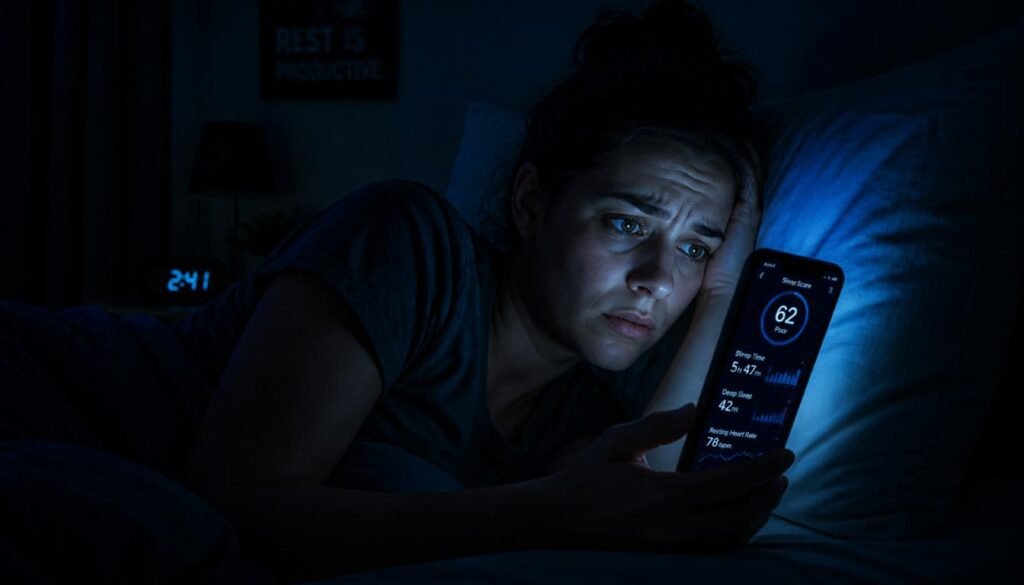
There is a documented phenomenon called orthosomnia — a preoccupation with achieving perfect sleep metrics, often driven by consumer sleep tracking — in which anxiety about sleep scores and duration targets paradoxically produces worse sleep than existed before the tracking began. The person who slept six and a half hours without concern, woke feeling functional, and lived their day well — that person, upon acquiring a sleep tracker, may discover they are “sleep-deprived” by metric standards and begin spending eight anxious hours in bed producing worse sleep than the six and a half hours they previously enjoyed.
The eight-hour target does not account for sleep efficiency, sleep architecture, chronotype, age, or genetic variation in sleep need. It is a population average applied universally — which is useful as public health communication and potentially harmful as personal optimisation.
Your optimal sleep duration is not what the app says. It is the duration at which you wake feeling genuinely restored, maintain function through the day without artificial stimulation, and do not accumulate fatigue across the week. Find that number — and trust it.
Featured Snippet
No, eight hours of sleep is not a universal biological requirement. While population-level research supports seven to nine hours as optimal for most adults, individual sleep need varies meaningfully based on genetics, chronotype, age, and sleep efficiency. Some people — including documented genetic short sleepers — appear to genuinely require less sleep. The quality, continuity, and architecture of sleep appear to be as important as its duration for health and cognitive outcomes.
Sleep Question
What the Evidence Shows
Is 8 hours required for everyone?
No — population average, not universal prescription
Can some people thrive on less?
Yes — genetic short sleepers (DEC2 variant) are documented
Does more sleep always mean better health?
No — long sleep (9+ hrs) also associated with adverse outcomes
Is duration more important than quality?
No — quality and architecture appear equally or more important
How should I determine my sleep need?
Morning restoration + daytime function, not a fixed-hour target
What is the real health risk?
Chronic sleep insufficiency and poor quality – not short sleep per se
Key Action Summary:
✅ Track restoration, not just duration ✅ Find your natural wake time ✅ Consistent wake time 7 days ✅ Address quality before quantity ✅ Stop guilt about not hitting 8 hours if daytime function is good
Practical Strategies
Strategy 1 — Conduct a Natural Sleep Duration Experiment
Take any period of five to seven days without early morning obligations – a holiday or a relaxed extended weekend period – go to bed when genuinely sleepy, do not set an alarm, and record what time you naturally wake, feeling rested over consecutive nights. After the first two to three nights of catching up on any existing sleep debt, the remaining nights will begin to reveal your approximate natural sleep duration. This is the most direct evidence available about your personal sleep need — more accurate than any population-based recommendation or consumer tracker.
Strategy 2 — Optimize Sleep Quality Over Sleep Duration
If you are not waking restored, the first intervention is quality improvement — not duration extension. The highest-leverage sleep quality factors are consistent wake time (the master circadian anchor), bedroom temperature of 16–19°C, removal of alcohol from within three hours of bedtime, screen-free final 60 minutes, and evaluation for sleep apnoea if snoring or morning headaches are present. These changes to sleep architecture — producing more consolidated, deeper sleep — often produce more restoration in fewer total hours than extending time in bed while maintaining the same disrupted sleep architecture.
Sleep quality and mental calm are built from the same daily conditions — stress management, evening routines, and environmental factors all contribute to whether you achieve deep, restorative sleep. Read our guide on the calm mind secret — inner peace and deep sleep naturally for a complete approach to creating the mental and physical conditions that produce genuinely restorative sleep.
Strategy 3 — Use Daytime Function as Your Primary Sleep Metric
Rather than a duration target, use three functional indicators as your primary sleep sufficiency measures: first, whether you wake naturally feeling rested on most days; second, whether you maintain sustained alertness through the morning without requiring caffeine; and third, whether your fatigue level is stable across the week — not accumulating toward a Friday exhaustion that requires weekend recovery. These functional indicators are more individually calibrated, more accurate, and less anxiety-producing than a universal duration target — and they are what the clinical sleep medicine field uses to assess sleep sufficiency in individual patients.
Strategy 4 — Recognize the Difference Between Short Sleep and Insufficient Sleep
Short sleep (constitutionally sleeping less than eight hours) and insufficient sleep (being sleep-deprived) are different physiological states that feel different and have different functional consequences. Insufficient sleep produces accumulating impairment across the week, poor weekend recovery, dependence on caffeine for baseline function, emotional dysregulation, and poorer performance on objective cognitive tests. Constitutionally short sleep produces none of these patterns — the person wakes after six to seven hours feeling genuinely rested and maintains stable function across the week. Identifying which pattern applies to you determines whether the intervention is more sleep, better sleep, or accepting that your natural sleep duration is genuinely shorter than the population average.
Strategy 5 — Align Sleep Timing With Your Chronotype
Sleeping at the wrong circadian time — regardless of duration — produces sleep of significantly lower quality and reduced deep sleep proportion. A natural evening person forced to sleep from 10 PM to 6 AM may achieve less restorative sleep than they would from midnight to 8 AM with the same duration, simply because the earlier timing is misaligned with their circadian phase. Where schedule flexibility allows, aligning sleep timing with natural chronotype consistently improves sleep quality, morning alertness, and reported wellbeing—sometimes producing the same restoration with slightly less total time due to improved sleep efficiency at the preferred phase.
Common Mistakes
Mistake
Why It Fails
Fix
Using a consumer sleep tracker as the primary authority on sleep sufficiency
Consumer trackers have significant staging accuracy limitations and produce anxiety (orthosomnia) that worsens sleep
Use trackers for general patterns only; prioritize daytime function as your primary indicator
Forcing eight hours when you consistently wake naturally before then
Lying in bed longer than your natural sleep duration typically produces lighter, more fragmented sleep — not more deep or REM sleep
Trust natural wake times when they are accompanied by genuine restoration
Treating all short sleepers as sleep-deprived
Conflates constitutionally short sleep with chronic sleep insufficiency — two very different biological states
Assess functional indicators across the week before assuming short sleep equals impairment
Sleeping long on weekends to compensate for weekday short sleep
Weekend lie-ins disrupt circadian rhythm and worsen Monday-through-Wednesday sleep quality
Address the structural cause of weekday insufficient sleep rather than compensating on weekends
Assuming more sleep is always better
Long sleep (over nine hours) shows U-shaped risk — associated with increased mortality when habitual, possibly reflecting underlying health conditions
Aim for the duration at which restoration is achieved and daytime function is optimal
Ignoring snoring or non-restorative sleep as “just how I sleep”
These are primary symptoms of sleep apnea — a treatable condition in which duration cannot compensate for architecture destruction
Seek medical evaluation for symptoms of sleep apnea rather than trying to sleep more
When To See a Doctor
Please seek medical evaluation if you consistently wake unrefreshed after what appears to be adequate sleep duration, if you snore loudly or have been told you stop breathing during sleep, if you experience significant daytime sleepiness despite adequate time in bed, or if excessive fatigue is affecting your work, relationships, or safety.
These patterns may indicate sleep apnoea — a common and highly treatable condition in which breathing interruptions destroy sleep architecture regardless of total hours slept. A home sleep study or in-lab polysomnography, both accessible through GP referral, can identify this definitively and direct appropriate treatment.
If your sleep difficulty is accompanied by significant anxiety or depression, a mental health evaluation alongside a sleep assessment is appropriate — the two conditions frequently co-occur and reinforce each other.
Sleep difficulty and mental health are deeply intertwined — anxiety, depression, and chronic stress can both cause and result from poor sleep, creating a cycle that’s difficult to break without proper support. Our guide on understanding stress, anxiety, and depression — when to seek help — can help you identify whether your sleep difficulties are part of a broader mental health pattern that requires professional attention.
Key Takeaways
Eight hours of sleep is a population-level recommendation — a useful starting point, not a universal biological requirement for every individual.
Genetic short sleepers — documented through the DEC2 and other gene variants — exist and appear to genuinely thrive on less sleep without accumulated sleep debt or health consequences.
Sleep quality, continuity, and architecture appear to be as important as duration for health and cognitive outcomes — possibly more so.
The real health risk is chronic sleep insufficiency and poor sleep quality — not constitutionally short sleep in people who wake rested and function well.
Daytime restoration, sustained alertness without caffeine, and stable weekly fatigue are more accurate indicators of personal sleep sufficiency than hours on a tracker.
Orthosomnia — sleep anxiety driven by tracker metrics — is a documented condition in which the pursuit of perfect sleep metrics paradoxically worsens sleep quality.
Anyone with symptoms of sleep apnoea — snoring, unrefreshed waking, morning headaches, observed breathing pauses — should seek medical evaluation regardless of sleep duration.
FAQs
1. Is it really possible to thrive on six hours of sleep?
For a small but documented proportion of people — estimated at one to three per cent — yes. Genetic short sleepers carry variants like DEC2 that allow them to complete the full restorative cycle in less time through greater sleep efficiency. For most people claiming to thrive on six hours, the picture is more complex — some are genuinely adapted; others have lost the ability to perceive their own impairment through chronic exposure.
2. How do I know if I am a natural short sleeper or just sleep-deprived?
The key indicators are functional: does your fatigue accumulate across the week? Do you sleep significantly longer on weekends and feel better for it? Do you require caffeine to maintain baseline alertness? Do you show impairment on objective cognitive tasks? Sleep-deprived individuals typically show these patterns; natural short sleepers typically do not.
3. Can poor sleep quality be worse than short sleep?
Research suggests yes — fragmented sleep with insufficient deep and REM sleep stages appears to produce greater cognitive and health consequences than slightly shorter consolidated sleep. This is why eight hours of disrupted, shallow sleep may leave you less restored than six and a half hours of efficient, deep sleep.
4. What is orthosomnia?
Orthosomnia is a preoccupation with achieving perfect sleep metrics — typically driven by consumer sleep tracking — that produces anxiety, extended time in bed attempting to hit targets, and paradoxically worsened sleep quality. It was formally described in clinical sleep medicine literature in 2017 and has become increasingly common with the proliferation of wearable sleep monitors.
5. Does napping count toward daily sleep totals?
A brief nap of 10–20 minutes in the early afternoon can meaningfully improve afternoon alertness and cognitive performance. Longer naps, or naps taken late in the day, may reduce nighttime sleep drive and fragment the main sleep period. For people with constitutionally shorter nighttime sleep, a brief early afternoon nap can sometimes complete the restorative picture — though this pattern should be evaluated for whether it reflects genuine sleep need or inadequate nighttime sleep.
6. Is the eight-hour recommendation different for women?
Some research suggests women may require slightly more sleep than men on average — approximately 11–20 minutes more per night in some studies — potentially related to differences in sleep architecture and the cognitive demands of multitasking. However, individual variation within each sex is far greater than the average difference between sexes.
7. What should I do if I consistently sleep less than seven hours but feel fine?
First, honestly assess your daytime function using the indicators in this article — not your subjective perception alone. If functional indicators are genuinely strong, you may be a natural short sleeper. If you have any doubt, a GP consultation and sleep assessment can provide objective clarification. Do not assume adequate function without genuine assessment.
30-Day Sleep Optimization Plan
Week 1 — Assess Without Changing
Complete the Personal Sleep Quality Audit. Record your natural wake time each morning — what time you wake without an alarm when sleep is complete. Note your daytime alertness, caffeine use, and afternoon energy on a 1–10 scale. Do not change anything yet — this week builds the baseline data that makes the following weeks meaningful.
Week 2 — Anchor and Environment
Set a consistent wake time based on your Week 1 natural wake data. Hold it every day this week. Address your bedroom: cool it to 16–19°C, ensure complete darkness, and remove your phone charger to another room. Remove alcohol from within three hours of bedtime. Compare daily alertness scores to Week 1.
Week 3 — Quality Focus
Introduce a 45-minute screen-free wind-down. Begin five minutes of slow breathing before sleep. If you are waking significantly earlier than your natural time, evaluate whether your wake time anchor is too early for your chronotype. If you are snoring or waking unrefreshed despite Week 2 changes, schedule a GP appointment this week.
Week 4 — Calibrate Your Personal Number
Review your four-week data. What duration is producing the best restoration scores and daytime function? This — not the population recommendation — is your working personal sleep target. Commit to the conditions that produced it. If persistent sleep difficulty remains, book a sleep medicine referral.
Final Thought
Your body has been keeping its own sleep records for your entire life — in the morning clarity when the duration was right, in the dragging heaviness when it was not, and in the week you finally slept without an alarm and discovered what fully rested actually felt like. Trust those records more than any app, more than any universal recommendation, and more than the quiet guilt of not conforming to a number that was never meant to fit everyone. Find your number. Protect the conditions that produce it. That is the whole practice.
Conclusion
The eight-hour sleep myth is not a lie — it is an oversimplification. The population evidence for seven to nine hours as a health-promoting target is genuine. But the universal application of eight as the single correct number for every human nervous system fails to account for genetic variation in sleep need, the primacy of sleep quality over quantity, and the damage done by sleep performance anxiety to people who actually sleep well. The path to optimal sleep is not hitting a number. It is understanding your biology, creating the conditions in which it can deliver its best work, and measuring success by restoration — not by hours on a dashboard. 8-hour sleep myth
References
American Academy of Sleep Medicine. AASM Recommends Adults Sleep 7 or More Hours Per Night. AASM, 2024. https://aasm.org/seven-to-nine-hours-sleep-recommendation/
Centers for Disease Control and Prevention. Adult Sleep Data and Statistics. CDC, 2024. https://www.cdc.gov/sleep/data-and-statistics/adults.html
NIH National Institute of Neurological Disorders and Stroke. Brain Basics: Understanding Sleep. NIH, 2023. https://www.ninds.nih.gov/health-information/public-education/brain-basics/brain-basics-understanding-sleep
He Y, Jones CR, Fujiki N, et al. The Transcriptional Repressor DEC2 Regulates Sleep Length in Mammals. Current Biology. 2009. DOI: 10.1016/j.cub.2009.07.022. PubMed: https://pubmed.ncbi.nlm.nih.gov/19716019/
Czeisler CA, et al. Stability and Precision of the Human Circadian Pacemaker. Science. 1999. DOI: 10.1126/science.284.5423.2177. PubMed: https://pubmed.ncbi.nlm.nih.gov/10381883/
Lyall LM, Wyse CA, Graham N, et al. Association of Disrupted Circadian Rhythmicity With Mood Disorders, Subjective Wellbeing, and Cognitive Function. The Lancet Psychiatry. 2018. DOI: 10.1016/S2215-0366(18)30139-1. PubMed: https://pubmed.ncbi.nlm.nih.gov/29739576/
Sano A, Phillips AJ, Yu AZ, et al. Recognising Academic Performance, Sleep Quality, Stress Level, and Mental Health Using Personality Traits, Wearable Sensors and Mobile Phones. Nature Communications. 2018. DOI: 10.1038/s41562-018-0518-1. PubMed: https://pubmed.ncbi.nlm.nih.gov/30988516/
Knutson KL, Turek FW. The U-Shaped Association Between Sleep and Health: The 2 Peaks Do Not Mean the Same Thing. Sleep. 2006. DOI: 10.1093/sleep/29.7.878. PubMed: https://pubmed.ncbi.nlm.nih.gov/16895253/
Robbins R, Browne SH, Czeisler CA, et al. Orthosomnia: Are Some Patients Taking the Quantified Self Too Far? Journal of Clinical Sleep Medicine. 2017. DOI: 10.5664/jcsm.6472. PubMed: https://pubmed.ncbi.nlm.nih.gov/28095202/
Xie L, Kang H, Xu Q, et al. Sleep Drives Metabolite Clearance from the Adult Brain. Science. 2013. DOI: 10.1126/science.1241224. PubMed: https://pubmed.ncbi.nlm.nih.gov/24136970/
Walker MP. Why We Sleep: Unlocking the Power of Sleep and Dreams. Scribner. 2017.
Ohayon MM, Carskadon MA, Guilleminault C, Vitiello MV. Meta-Analysis of Quantitative Sleep Parameters From Childhood to Old Age in Healthy Individuals: Developing Normative Sleep Values Across the Human Lifespan. Sleep. 2004. DOI: 10.1093/sleep/27.7.1255. PubMed: https://pubmed.ncbi.nlm.nih.gov/15586779/
Note: All references should be independently re-verified for accuracy and currency before publication.
Disclaimer
This article is for educational and informational purposes only. It does not constitute medical advice and is not a substitute for professional healthcare. If you experience persistent unrefreshed sleep, significant daytime fatigue, or symptoms of sleep apnoea, please consult a qualified healthcare professional. Individual sleep needs and responses vary considerably.
—