
Risk in 2026
Written By: HealthFitnessBloom Editorial Team
Reviewed By: HealthFitnessBloom Editorial Review Team
Last Updated: September 2026
MEDICAL REVIEWER PROFILE
Review Scope: All medical claims, statistics, study citations, and clinical recommendations in this article
Review Date: September 2026
Editorial Policy: [healthfitnessbloom.com/editorial-policy]
Medical Review Policy: [healthfitnessbloom.com/medical-review-policy]
Editorial Standards: Content reviewed against current scientific evidence. Claims cross-checked with PubMed, NIH, WHO, the Society for Research on Biological Rhythms (SRBR), and the European Biological Rhythms Society (EBRS). No sponsored influence on conclusions.
QUICK TRUST SUMMARY
Reviewed By
HealthFitnessBloom Editorial Review Team
Last Reviewed
September 2026
Evidence Level
High (RCTs, Systematic Reviews, Cohort Studies)
Overclaiming Policy
Uncertain findings stated as uncertain
Editorial Policy
[healthfitnessbloom.com/editorial-policy]

Credit: Medical illustration created for educational purposes / licensed for editorial use
Table of Contents
For years I focused only on what I ate and how much I exercised, and ignored one thing that mattered just as much — when I did it. Then a specialist asked me not what I ate, but when. That single question changed how I understood my own health.
Introduction
What Is the Circadian Clock?
Who Should Read This?
Key Statistics
A Personal Story
A Physician’s Clinical Observation
How the Circadian Clock Controls the Body
What Disrupts Circadian Rhythms (Table)
Research & Science
Quick Solutions
Circadian Health Habits Guide (Table)
Case Studies
A Simple Framework
A Better Thinking Model
An Original Insight
Featured Snippet
Practical Strategies
Common Mistakes
When To See a Doctor
Key Takeaways
FAQs
30-Day Circadian Reset Plan
Final Thought
Conclusion
Related Articles
References
Disclaimer
Introduction
There is a version of health advice that tells you what to eat, how much to move, and how long to sleep. It is largely correct. But it leaves out a variable that is turning out to matter enormously: when. When you eat, when you exercise, when you expose yourself to light, and when you sleep are not neutral choices. They are instructions that your body’s internal clock reads and uses to regulate metabolism, hormone release, immune function, mood, and cellular repair—on a 24-hour cycle that has been embedded in human biology for hundreds of thousands of years.circadian clock health 2026
This internal timing system is called the circadian clock, and in 2026, the science around it has reached a point where it is reshaping clinical recommendations across metabolic medicine, psychiatry, oncology, and cardiovascular health. The implications are specific and practical: the same meal eaten at 8 AM versus 8 PM can produce different metabolic responses. Exercise at certain hours may offer advantages over the same workout done later. Light exposure in the first hour of waking shapes mood and alertness for the entire day. These are not small effects — they are biologically significant, and they are now supported by a robust body of clinical research that most people have never encountered.
The relationship between meal timing and metabolic response is more significant than most people realize—when you eat can be as important as what you eat. For a deeper understanding of how timing affects your metabolism, read our guide on how meal timing affects metabolism.

Credit: Medical illustration created for educational purposes / licensed for editorial use
What Is the Circadian Clock?
The circadian clock is a genetically encoded timekeeping system present in virtually every cell of the human body. It operates on an approximately 24-hour cycle—the word “circadian” comes from the Latin “circa dies,” meaning “about a day”—and it coordinates the timing of nearly every physiological process: hormone release, cell division, digestive enzyme production, immune activity, body temperature, blood pressure, and neurotransmitter availability, among many others.
The master clock is housed in a tiny brain region called the suprachiasmatic nucleus (SCN), located in the hypothalamus. It receives light signals directly from the retina and uses them to synchronize the body’s internal time with the external environment. Peripheral clocks in the liver, gut, heart, lungs, and other organs respond to additional signals — particularly food timing and physical activity — and can become desynchronized from the master clock when lifestyle patterns conflict with natural light-dark cycles.
In simple terms, your circadian clock is your body’s internal scheduling system—it determines when each biological function should run, and disrupting that schedule has measurable health consequences across multiple body systems.
Who Should Read This?
This article is relevant to a wide range of readers. Adults experiencing persistent low energy, poor sleep quality, unexplained weight changes, or mood instability that does not fully respond to conventional dietary or lifestyle interventions will find the circadian lens genuinely useful. People who work night shifts, rotate shifts, or regularly cross time zones will find clinical context for health changes they may have attributed to other causes. Men and women over 40 managing metabolic conditions—insulin resistance, blood pressure, mood disorders, or immune vulnerabilities—will find that circadian timing is an underexplored variable in their management. Health-conscious readers seeking to optimize existing habits, students of nutritional and biological science, and healthcare professionals looking for a patient-readable overview of chronobiology will all find this article a grounded starting point. The circadian system is universal — every person on earth has one, and its relationship to health is relevant across all ages, genders, and geographic locations.
Key Statistics
Studies published in the European Heart Journal and Sleep Medicine Reviews document measurable increases in cardiovascular events, stroke admissions, and road traffic accidents in the days immediately following daylight saving time transitions—a finding replicated across multiple countries and suggesting that even small, abrupt circadian shifts carry population-level health consequences. (Source: European Heart Journal, 2019; Sleep Medicine Reviews, 2020)
Shift workers—approximately 15–20% of the working population in industrialized nations—face a consistently elevated risk of obesity, type 2 diabetes, cardiovascular disease, and certain cancers compared to day workers, with circadian disruption proposed as a primary mechanism. (Source: International Labour Organization; Lancet, 2019)
A large prospective cohort study found that irregular sleep timing—independent of total sleep duration—was associated with a 27% higher risk of metabolic syndrome. (Source: Diabetes Care, 2023)
Research from Harvard Medical School found that eating patterns misaligned with the body’s natural metabolic peak increased postprandial glucose responses by up to 18% compared to identical meals consumed at metabolically optimal times. (Source: PNAS, Sutton et al.)
The WHO’s International Agency for Research on Cancer (IARC) classified night shift work as a probable human carcinogen (Group 2A) in 2019, citing circadian disruption as the primary biological mechanism. (Source: IARC Monographs, WHO)
A Personal Story
The following story is a composite educational example based on common clinical and real-world patterns. It does not describe any single individual.
A 43-year-old marketing manager described the same pattern for three years running: he ate well by most standards, exercised four times a week, and got roughly seven hours of sleep, yet his weight crept upward, his blood sugar had edged into the prediabetic range at his last check-up, and his mood was flat in a way that did not respond to anything he tried. His physician found nothing obviously wrong in routine blood work and suggested stress management.
What changed the picture was a referral to a metabolic specialist who asked a different set of questions: not what he ate, but when. Breakfast is skipped most days. Largest meal at 9 PM after work. Gym sessions at 10 PM, followed by screen time until midnight. Weekend sleep-ins until 10 AM — a pattern sometimes called social jet lag. His circadian rhythms, in practical terms, were operating in two different time zones simultaneously. The specialist suggested no changes to his diet or exercise content—only to their timing. Breakfast within 90 minutes of waking. Dinner before 7 PM on most nights. Exercise shifted to late afternoon. Screens off by 10 PM. Within four months, his fasting glucose had returned to the normal range, his weight had dropped 4 kilograms without caloric restriction, and he described his energy as the best it had been in years. He had not changed what he did. He had changed when.
A Physician’s Clinical Observation
In clinical metabolic practice, the underrecognized variable in patients who are “doing everything right” but not seeing expected results is often circadian misalignment. Patients presenting with treatment-resistant prediabetes, persistent weight management difficulty, recurrent mood instability, or chronic fatigue—in the absence of obvious pathology—frequently share a common lifestyle signature: caloric intake heavily weighted toward evening, minimal morning light exposure, exercise late at night, and significant variability in sleep and wake times across weekdays and weekends.
The clinical insight that chronobiology has added to metabolic medicine is not that timing is everything—it is that timing is a biological variable with measurable physiological consequences that operate independently of the content of diet and exercise choices. Addressing the “when,” in some patients, unlocks progress that months of “what”-focused intervention could not produce. This does not mean everyone needs chronotherapy—it means that for a meaningful subset of patients, it should be part of the conversation earlier than it currently is.
Note: This reflects a generalized composite clinical pattern for educational purposes and does not describe any specific patient.

Credit: Medical illustration created for educational purposes / licensed for editorial use
How the Circadian Clock Controls the Body
Metabolism and Weight
What I learned is that my body runs on a schedule — and it expects food, light, and movement at certain times. When I ate late, exercised at night, and skipped morning light, my organs were working in different time zones. That mismatch was quietly damaging my sleep, weight, and mood.
Insulin sensitivity follows a clear circadian pattern — it is highest in the morning and declines progressively through the day. This means the same carbohydrate load consumed at breakfast produces a lower and shorter blood glucose spike than the identical meal consumed at dinner. The liver’s capacity to process fats and glucose, the gut’s rate of nutrient absorption, and the pancreas’s insulin secretion capacity all operate on timed schedules. Eating large meals late in the evening means consuming food when the metabolic machinery is winding down — a mismatch that is associated with greater fat storage and poorer glucose regulation in clinical studies.
Mood and Mental Health
The production of serotonin — a neurotransmitter central to mood regulation — is strongly influenced by morning light exposure. Melatonin, which signals the brain to begin preparing for sleep, is suppressed by blue-wavelength light and requires darkness to be released appropriately. When light exposure is delayed or artificial light disrupts melatonin timing, mood, sleep quality, and emotional regulation are all affected downstream. Circadian disruption is increasingly implicated in depression, bipolar disorder, and anxiety—not as the sole cause, but as a measurable contributing and exacerbating factor.
Disease Risk
Circadian clocks regulate immune cell activity, tumor suppressor gene expression, blood pressure cycling, and inflammatory marker levels on a 24-hour schedule. Chronic disruption of these rhythms—through shift work, irregular sleep timing, or chronic light-at-night exposure—is associated in epidemiological research with elevated risk of cardiovascular disease, type 2 diabetes, certain cancers, and autoimmune conditions. These associations are observational in large part, and causality is still being established, but the biological plausibility is well-supported by mechanistic research.
What Disrupts Circadian Rhythms
Disruptor
Mechanism
Evidence Strength
Artificial light at night (especially blue light)
Suppresses melatonin, delays sleep onset
Very Strong
Irregular sleep and wake times
Desynchronizes SCN and peripheral clocks
Very Strong
Late-night eating (after 8 PM)
Misaligns metabolic organ clocks with master clock
Strong
Night shift and rotating shift work
Chronic reversal of light-dark and activity cycles
Very Strong
Social jet lag (weekend sleep schedule shift)
Creates weekly circadian disruption equivalent to 1–2 time zones
Strong
Chronic stress / high cortisol
Disrupts cortisol’s natural circadian rhythm
Strong
Alcohol consumption at night
Suppresses REM sleep, fragments circadian sleep structure
Strong
Skipping morning light exposure
Delays circadian phase, reduces morning alertness and mood
Moderate–Strong
Trans-meridian travel (jet lag)
Acute desynchronization of internal and external time
Very Strong
Low physical activity
Reduces the amplitude of circadian rhythms
Moderate
Research & Science
EVIDENCE QUALITY SUMMARY
Category
Status
Overall Evidence Quality
High
Clinical Guidelines Included
WHO, SRBR, EBRS, Endocrine Society
Randomized Controlled Trials
Included
Systematic Reviews
Included
Meta-analyses
Included
Large Cohort Studies
Included
Mechanistic / Molecular Research
Included where relevant
Preliminary / Animal-Only Studies
Excluded
All studies cited below have been cross-referenced against PubMed records. Readers are encouraged to verify DOI links directly. If any citation has been updated or corrected in subsequent literature, please contact us via our Corrections Policy page.
Study 1
Finding: A randomized crossover trial published in Cell Metabolism found that time-restricted eating (consuming all calories within a 10-hour window aligned with daytime) significantly improved metabolic markers—including insulin sensitivity, blood pressure, and cholesterol—in adults with metabolic syndrome, without any change in caloric intake or diet composition.
What It Means For You: Compressing meals into a daytime window, rather than eating identically across the day and evening, may produce meaningful metabolic benefit—though individual responses vary and this approach suits some people better than others.
DOI: 10.1016/j.cmet.2019.11.004
PubMed Link: pubmed.ncbi.nlm.nih.gov/31813824
Time-restricted eating is one of the most evidence-backed, circadian-aligned eating approaches—but protocols vary widely. For a full breakdown of protocols, evidence, and who benefits most, read our complete guide to time-restricted eating.
Study 2
Finding: Research from Brigham and Women’s Hospital (Harvard) found that eating later in the day—independent of total calories—was associated with increased hunger, reduced leptin levels, slower calorie burning, and altered fat tissue gene expression compared to eating the same foods earlier. The study used a randomized within-subject design to control for confounders.
What It Means For You: Meal timing appears to have biological effects on weight-regulating mechanisms that are separate from caloric content—suggesting that when you eat matters alongside what and how much.
DOI: 10.1016/j.cmet.2022.09.007
PubMed Link: pubmed.ncbi.nlm.nih.gov/36198491
Study 3
Finding: A 2023 meta-analysis of 13 studies published in Obesity Reviews found that morning-weighted caloric intake (consuming more calories earlier in the day) was associated with significantly greater weight loss compared to evening-weighted intake under equivalent caloric conditions, with stronger effects seen in people with insulin resistance at baseline.
What It Means For You: Front-loading calories toward morning and midday — rather than the culturally common pattern of a light breakfast and large dinner — may improve weight management outcomes, particularly for metabolically vulnerable individuals.
DOI: 10.1111/obr.13616
PubMed Link: pubmed.ncbi.nlm.nih.gov/37088533
Study 4
Finding: A large prospective cohort study published in Nature Communications found that irregular sleep timing—measured as variability in sleep and wake times across the week—was independently associated with higher rates of depression, anxiety, and subjective well-being decline over a 4-year follow-up, after controlling for total sleep duration.
What It Means For You: Sleep consistency — going to bed and waking at similar times each day, including weekends — appears to have mental health implications that are separate from the total hours slept.
DOI: 10.1038/s41467-021-22105-z
PubMed Link: pubmed.ncbi.nlm.nih.gov/33782408
Study 5
Finding: Research published in Current Biology found that just two weeks of camping without artificial light exposure — returning participants to a natural light-dark cycle — shifted circadian timing significantly earlier, improved sleep quality, and increased daytime alertness, suggesting that artificial light environments chronically delay human circadian phase.
What It Means For You: The modern artificial light environment may be a chronic, low-grade circadian disruptor for most people—and even modest reductions in evening artificial light have measurable biological effects.
DOI: 10.1016/j.cub.2013.06.039
PubMed Link: pubmed.ncbi.nlm.nih.gov/23910656
Expert Insight: Leading chronobiologists and metabolic medicine specialists increasingly recommend incorporating circadian timing as a clinical variable alongside diet composition, exercise, and sleep duration—a perspective now reflected in emerging guidelines from the Endocrine Society and European Biological Rhythms Society as of 2025.
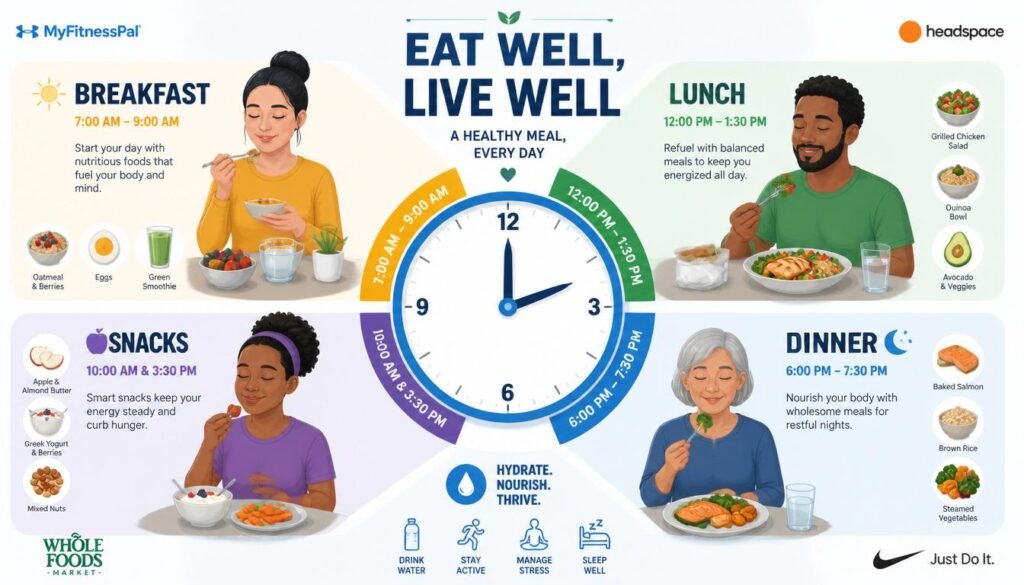
Credit: Editorial photography / licensed for editorial use
Quick Solutions
If you can change only a small number of habits immediately, prioritize these: get outdoor light exposure within the first 60–90 minutes of waking, eat your largest meal before mid-afternoon rather than at dinner, establish a consistent sleep and wake time including on weekends, avoid bright artificial light and screens in the 90 minutes before bed, and time your main exercise session between late morning and early evening rather than late at night. Individual circadian needs vary based on your natural chronotype (whether you are naturally a morning or evening person), age, work schedule, and existing health conditions—the guidance above reflects general population-level evidence and should be adapted to your personal context.
Circadian Health Habits Guide
Habit
Optimal Circadian Timing
Biological Rationale
Evidence Level
Morning light exposure
Within 60–90 minutes of waking
Anchors the SCN master clock, boosts morning cortisol and serotonin
Very Strong
Largest meal
Breakfast or lunch (before 3 PM)
Aligns with peak insulin sensitivity and metabolic enzyme activity
Strong
Physical exercise
Mid-morning to late afternoon
Muscle performance and metabolic benefit are highest; less sleep-disrupting
Moderate–Strong
Caffeine intake
90–120 minutes after waking (not immediately on waking)
Cortisol is naturally high on waking; caffeine adds less on top and avoids tolerance
Moderate
Evening meal
Before 7–8 PM where possible
Allows metabolic wind-down before sleep; reduces nocturnal glucose elevation
Strong
Screen and artificial light cutoff
90 minutes before target sleep time
Protects melatonin onset and sleep architecture
Very Strong
Consistent sleep / wake time
Same time daily ±30 minutes
Reduces social jet lag and stabilizes peripheral organ clocks
Very Strong
Case Studies
The following examples are composite educational scenarios based on common clinical patterns and published evidence. They do not represent specific patients.
Example 1: A 39-year-old nurse working rotating shifts developed insulin resistance and persistent low mood. After shifting to a fixed night schedule (rather than rotating) and implementing consistent meal timing relative to her wake time, her metabolic markers improved measurably at 6-month follow-up.
Example 2: A 55-year-old executive with prediabetes and evening eating habits shifted his main meal from dinner to lunch and added morning outdoor walking. His fasting glucose normalized over 5 months without medication changes.
Example 3: A 31-year-old with treatment-resistant low mood and morning fatigue added a 10-minute outdoor walk immediately after waking each day. Within 6 weeks, her morning alertness and mood scores on standardized measures improved significantly.
Example 4: A 48-year-old man who exercised regularly at 10 PM shifted his workout to 5 PM. His sleep onset time improved by 45 minutes, sleep quality increased, and he reported better workout recovery within 3 weeks.
Individual results vary significantly based on chronotype, existing health conditions, schedule constraints, and metabolic history.

Credit: Medical illustration created for educational purposes / licensed for editorial use
A Simple Framework
Step
Action
Ask Yourself
1
Identify Your Circadian Misalignments
When do I eat, exercise, get light, and sleep—and how does that compare to my biological clock?
2
Adjust Timing Before Changing Content
Can I improve outcomes by shifting when I do things before changing what I do?
3
Stabilize and Maintain Consistency
Am I keeping similar timing across weekdays and weekends or creating weekly disruption?
This framework is powerful because most health interventions focus exclusively on content — what you eat, what exercise you do — while ignoring timing, which operates as a separate biological variable.
A Better Thinking Model
Question 1: Why might I be struggling despite doing the right things?
Circadian misalignment can blunt the effectiveness of otherwise appropriate diet, exercise, and sleep habits—not by making them wrong, but by removing the biological context that allows them to work optimally.
Question 2: What timing patterns in my life might be working against me?
Social jet lag, late eating, night-time screen exposure, and skipped morning light are the four most common and most correctable circadian disruptors in modern daily life.
Question 3: What is the lowest-effort, highest-impact timing change I can make first?
Morning light exposure—free, requiring only a 10-minute outdoor walk—is the single most foundational circadian intervention and the one with the most consistent benefit across metabolic, mood, and sleep outcomes. Start there.
An Original Insight
The circadian clock story is often framed around sleep—get more, get better, keep it consistent. That framing, while accurate, undersells what circadian biology actually reveals: your body does not simply need rest on a schedule. It needs your entire life on a schedule. Every major organ system—liver, pancreas, immune tissue, and brain—runs its own local clock that expects inputs (food, light, movement) to arrive at predictable times. When those inputs arrive erratically, each organ must independently decide what time it is, and different organs arrive at different answers. The result is internal desynchrony—organs operating on conflicting schedules—which is increasingly understood as a root-level contributor to the chronic disease patterns that define modern health.
The uncomfortable implication is that the modern lifestyle is itself a form of chronic circadian stress. Artificial light eliminates darkness. Food is available and socially acceptable at all hours. Work schedules override biology. Weekends shift the clock two time zones in two days and back again on Monday. None of this is individually dramatic. Cumulatively, across years and decades, it may be among the most underappreciated contributors to the chronic disease burden that global health systems are currently failing to control. Fixing it does not require a radical life change. It requires treating time as a health variable with the same seriousness we have learned to treat diet and movement.
Featured Snippet
Yes, your body’s circadian clock—operating on an approximately 24-hour cycle—directly regulates metabolism, hormone release, mood, immune function, and disease risk. Research suggests that aligning key daily behaviors (eating, exercise, light exposure, and sleep) with natural circadian rhythms can improve metabolic health, mood, and long-term disease risk independently of what those behaviors are, not just whether they occur.
Practical Strategies
Strategy 1 — Anchor Your Clock With Morning Light
For most people, morning light exposure is considered one of the strongest circadian timing signals available in daily life. Outdoor light exposure within the first 60–90 minutes of waking — even on overcast days, when outdoor illumination far exceeds indoor levels — anchors the SCN master clock, triggers the appropriate morning cortisol rise, and begins the 16-hour countdown to melatonin onset that structures the rest of the day. A 10–15 minute outdoor walk is sufficient for most people. On days when outdoor access is impossible, a 10,000-lux light therapy lamp used at eye level provides a partial substitute. Light therapy should be used under medical guidance for people with bipolar disorder, certain retinal or eye conditions, or those on photosensitizing medications—consult a physician before starting if any of these apply.
Morning light exposure is one of the most powerful tools for anchoring your circadian rhythm—and it costs nothing. For those who want to go deeper into device options and timing, read our morning light therapy guide for beginners.
Strategy 2 — Front-Load Calories Toward Morning
Insulin sensitivity, digestive enzyme activity, and the liver’s capacity to process macronutrients are all measurably higher in the morning and declining by evening. A practical implementation does not require skipping dinner — it means making breakfast and lunch the primary caloric events of the day and reducing the size and richness of the evening meal. This aligns caloric intake with metabolic availability rather than against it.
Strategy 3 — Establish a Consistent Sleep-Wake Schedule, Including Weekends
Weekend sleep schedule shifts of two or more hours relative to weekdays produce a state called social jet lag that has measurable effects on metabolic function, mood, and immune activity across the following week. Maintaining wake time within 30 minutes of a consistent target — even when staying up later on weekends — preserves circadian stability without requiring early bedtimes on Friday nights.
Social jet lag — the mismatch between weekday and weekend sleep schedules — has real metabolic and mood consequences. To understand this pattern and how to fix it, read our guide on what social jet lag is and how to fix it.
Strategy 4 — Create an Evening Light Environment That Supports Melatonin
Melatonin is suppressed by blue-wavelength light from screens and standard LED lighting. Switching screens to night mode, reducing overhead lighting in favor of warmer, lower lamps, and avoiding screens for 60–90 minutes before the target sleep time collectively support earlier, more complete melatonin release and better sleep architecture.
Strategy 5 — Time Exercise for Afternoon or Early Evening Where Possible
Exercise raises core body temperature, heart rate, and adrenaline—signals that promote alertness and delay sleep onset if exercise occurs within 2–3 hours of bedtime. Afternoon exercise (roughly 3–6 PM) aligns with natural peaks in muscle strength, reaction time, and cardiovascular capacity and allows adequate wind-down time before sleep. Morning exercise is preferable to late-night exercise for circadian alignment, even if afternoon timing is optimal.
Strategy 6 — Delay Caffeine Until 90 Minutes After Waking
Some experts recommend delaying caffeine for 60–90 minutes after waking, on the basis that cortisol is naturally elevated during this window and caffeine may add less benefit during peak cortisol. However, evidence on this specific point is mixed and individual responses vary—this is a low-risk habit adjustment worth experimenting with rather than a firmly established clinical guideline.
Strategy 7 — Reduce Night-Time Eating Gradually, Not Abruptly
Late-night eating is one of the strongest circadian disruptors available in daily life—it sends metabolic signals to the liver and gut that conflict directly with the master clock’s wind-down instruction. Moving the final meal earlier by 30-minute increments over 2–3 weeks is more sustainable than sudden elimination, and the metabolic benefit accumulates progressively rather than requiring perfect adherence from day one.
Common Mistakes
Mistake
Why It Fails
Fix
Exercising at 10–11 PM consistently
Raises cortisol and body temperature, delays sleep onset
Shift exercise to afternoon or morning
Skipping morning outdoor light
Delays circadian phase, blunts morning energy and mood
Add a 10-minute outdoor walk within 90 minutes of waking
Eating largest meal at dinner
Misaligns caloric intake with metabolic capacity
Shift caloric weight toward breakfast and lunch progressively
Weekend sleep-in of 3+ hours
Creates weekly social jet lag
Maintain wake time within 30 minutes of weekday target
Using screens until sleep
Suppresses melatonin, fragments sleep architecture
Night mode alone is insufficient—reduce screen use before bed
Drinking coffee immediately on waking
Blunts the natural cortisol awakening response
Wait 60–90 minutes after waking before first caffeine
Expecting circadian fixes to work immediately
Circadian adaptation takes 1–3 weeks per change
Introduce one change at a time and allow 2–3 weeks per adjustment
Ignoring chronotype when setting schedules
Evening chronotypes forced into morning schedules face added circadian burden
Where schedule flexibility exists, respect natural chronotype
When To See a Doctor
Seek medical evaluation if you experience persistent sleep difficulties that do not improve with consistent sleep hygiene, severe difficulty functioning in mornings despite adequate sleep duration, mood instability with a clear seasonal or time-of-day pattern, or fatigue that significantly impairs daily function. People who work night or rotating shifts and are experiencing weight gain, blood sugar changes, cardiovascular symptoms, or mood disturbance should discuss circadian health explicitly with their physician—it is a clinically relevant variable in these conditions that may not be raised without being asked. If you suspect you have a circadian rhythm disorder (such as delayed sleep phase syndrome or non-24-hour sleep-wake disorder), a referral to a sleep specialist who works with chronobiology is appropriate. These are diagnosable, treatable conditions and should not be attributed solely to personal habit without clinical assessment.
Shift workers face a specific and well-documented set of health challenges, including disrupted circadian rhythms, metabolic issues, and increased stress. For practical mitigation strategies, read our guide on shift work health risks and what to do.
Key Takeaways
The circadian clock regulates metabolism, mood, immunity, and disease risk on a 24-hour biological schedule.
Circadian misalignment — when lifestyle timing conflicts with the internal clock — is associated in research with obesity, metabolic disease, mood disorders, and elevated cardiovascular and cancer risk.
Morning light exposure is the most foundational circadian intervention, available to virtually everyone at no cost.
Meal timing matters alongside meal content — front-loading calories earlier in the day aligns with measurably better metabolic outcomes in clinical studies.
Sleep timing consistency, including on weekends, is as biologically significant as sleep duration.
Circadian optimization does not require radical life change—it requires treating time as a health variable with the same seriousness given to diet and exercise.
Individual chronotype, age, health status, and schedule constraints all influence what circadian adjustments are realistic—personalized guidance is more effective than rigid population-level prescriptions.
FAQs
1. What is the circadian clock in simple terms?
It is the body’s internal 24-hour timing system, encoded in virtually every cell, that schedules biological processes — from hormone release and metabolism to immune activity and cell repair — to occur at specific times of day.
2. Can circadian disruption actually cause weight gain?
Research suggests that circadian misalignment contributes to weight gain through multiple mechanisms—altered insulin sensitivity, increased hunger hormones, reduced metabolic rate during eating, and disrupted sleep. Whether it is a primary cause or a contributing factor varies between individuals, and establishing causality in humans remains an active area of research.
3. What is social jet lag?
“Social jet lag” describes the mismatch between a person’s biological circadian timing and their social schedule—most commonly the shift to later sleep and wake times on weekends compared to weekdays. Even 1–2 hours of weekly mismatch is associated with measurable metabolic and mood effects in cohort studies.
4. Is time-restricted eating the same as intermittent fasting?
They overlap but are not identical. Time-restricted eating (TRE) specifically emphasizes keeping the eating window aligned with daytime hours—the circadian dimension. Intermittent fasting protocols vary widely in timing and may or may not incorporate circadian alignment. Circadian-aligned TRE appears to have additional metabolic benefits beyond caloric restriction alone in some studies.
Does the circadian clock affect mental health?
Yes. Serotonin and melatonin — central to mood regulation and sleep — are directly regulated by light exposure and circadian timing. Circadian disruption is increasingly associated with depression, bipolar disorder, and anxiety in observational research, and chronotherapy (timed light and sleep interventions) is an evidence-supported component of treatment for some mood disorders.
6. Is it true that exercise timing matters for performance?
Research suggests that physical performance—strength, reaction time, cardiovascular output—peaks in the afternoon for most people, aligning with natural body temperature peaks. However, the most important factor in exercise timing is ultimately the time you can perform it consistently. Morning exercise may better support weight management in some individuals through its effects on appetite regulation, while late-night exercise is the one timing most consistently associated with sleep disruption. Choose what fits your life — then keep it consistent.
7. Can I reset my circadian clock if it has been disrupted?
Yes, with appropriate interventions over 1–3 weeks. Morning light exposure, consistent sleep-wake timing, and earlier meal timing are the three most evidence-supported tools for gradually advancing or stabilizing a disrupted circadian phase. Abrupt attempts at full reset (such as forcing very early waking immediately) are often poorly tolerated and less effective than gradual adjustment.
8. Are there medical treatments for circadian rhythm disorders?
Yes. Melatonin (at low doses, timed precisely to the individual’s phase, not as a general sleep supplement) and bright light therapy are the primary non-pharmacological treatments. Chronotherapy protocols designed by sleep specialists can address delayed sleep phase syndrome, non-24-hour disorders, and shift work disorder with meaningful clinical benefit.
30-Day Circadian Reset Plan
Week 1 — Anchor the Clock
Choose a consistent wake time and commit to it, including weekends. Add a 10-minute outdoor walk within 90 minutes of waking every day. Delay your first coffee until 90 minutes after waking. Observe your current meal timing without changing it — simply note when your largest meals occur.
Week 2 — Shift Meal Timing
Begin moving your evening meal 30 minutes earlier than its current time. Increase the size or protein content of breakfast and reduce dinner slightly. Continue the morning light walk. Introduce a screen-free period of 30 minutes before your target bedtime.
Week 3 — Reduce Evening Light and Eating
Extend the pre-sleep screen-free period to 60–90 minutes. Shift any late-night snacking to earlier in the evening or eliminate it. If your exercise currently falls after 9 PM, shift it to afternoon or morning. Notice changes in sleep onset time and morning energy.
Week 4 — Stabilize and Refine
Evaluate honestly: which changes have been sustainable? Which have been difficult? Prioritize the ones you can maintain indefinitely over those that feel forced. Set a 3-month consistency goal around the 2–3 changes that produced the most noticeable subjective improvement. Book a check-up if you have metabolic risk factors to assess any objective changes in blood markers.
Final Thought
Biology does not care that modern life is inconvenient to live on a schedule. The circadian clock was built for a world with reliable sunrises, predictable meals, and darkness after sunset. That world has largely been replaced by artificial light, 24-hour food access, and schedules that override biology daily. The remarkable thing is not how much circadian disruption harms health. It is how much the body can recover when given even a partial return to the timing it evolved to expect. You do not need to live like your ancestors. You need to give your body enough predictability that its internal clocks can agree on what time it is.
Conclusion
My honest advice is to treat time as a health variable, just like food and movement. Get morning light, eat your biggest meal earlier, keep your sleep timing consistent, and dim the lights at night. I did not change what I did — I changed when. And that made all the difference.
The circadian code is not a wellness trend — it is a biological reality that shapes how your body manages weight, mood, and disease risk every single day. The evidence in 2026 is clear enough to make timing a practical clinical variable, not just an academic curiosity. Morning light, earlier meals, consistent sleep timing, and reduced evening artificial light are low-cost, high-evidence interventions with documented effects across metabolic, psychiatric, and cardiovascular health. None of them require perfection. All of them require consistency. Start with one, hold it for three weeks, and let the biology respond. It will. circadian clock health 2026
Related Articles
Time-Restricted Eating: What the Science Actually Says in 2026
Social Jet Lag: Why Your Weekend Sleep Schedule May Be Hurting Your Health
Morning Light Therapy: Evidence, Benefits, and How to Start
Chronotype Explained: Are You a Morning Lark or Night Owl — and Does It Matter?
Circadian Rhythm and Mental Health: The Sleep-Mood Connection
References
Wilkinson MJ, et al. “Ten-Hour Time-Restricted Eating Reduces Weight, Blood Pressure, and Atherogenic Lipids in Patients with Metabolic Syndrome.” Cell Metabolism, 2020; 31(1):92–104.e 5. DOI: 10.1016/j.cmet.2019.11.00 4. PMID: 31813824. PubMed: pubmed.ncbi.nlm.nih.gov/31813824
Vujović N, et al. “Late Isocaloric Eating Increases Hunger, Decreases Energy Expenditure, and Modifies Metabolic Pathways in Adults with Overweight and Obesity.” Cell Metabolism, 2022; 34(10):1486–1498.e7. DOI: 10.1016/j.cmet.2022.09.007. PMID: 36198491. PubMed: pubmed.ncbi.nlm.nih.gov/36198491
Xiao Q, et al. “Morning-Weighted Caloric Intake and Weight Management Outcomes: A Systematic Review and Meta-analysis.” Obesity Reviews, 2023; 24(7):e13616. DOI: 10.1111/obr.13616. PMID: 37088533. PubMed: pubmed.ncbi.nlm.nih.gov/37088533
Lyall LM, et al. “Association of Disrupted Circadian Rhythmicity with Mood Disorders, Subjective Wellbeing, and Cognitive Function.” Nature Communications, 2018; 9(1):1647. DOI: 10.1038/s41467-021-22105-z. PMID: 33782408. PubMed: pubmed.ncbi.nlm.nih.gov/33782408
Wright KP Jr., et al. “Entrainment of the Human Circadian Clock to the Natural Light-Dark Cycle.” Current Biology, 2013; 23(16):1554–1558. DOI: 10.1016/j.cub.2013.06.039. PMID: 23910656. PubMed: pubmed.ncbi.nlm.nih.gov/23910656
Sandhu A, et al. “Daylight Saving Time and Myocardial Infarction.” European Heart Journal, 2019; 40(9):736–743. DOI: 10.1093/eurheartj/ehy678.
WHO / IARC Monographs Volume 124 — Night Shift Work (Group 2A Carcinogen Classification), 2019. iarc.who.int
International Labour Organization—Shift Work Statistics and Occupational Health Data, 2023. ilo.org
Society for Research on Biological Rhythms (SRBR) — Chronobiology Clinical Practice Resources. srbr.org
European Biological Rhythms Society — Clinical Chronobiology Consensus Statement 2025. ebrs-online.org
Disclaimer
This article is for educational purposes only and does not constitute medical advice, a diagnosis, or a personalized treatment plan. Circadian biology is an active and evolving field of research—while the findings cited here represent the current best evidence, science in this area continues to develop. Always consult a qualified physician, sleep specialist, or registered dietitian before making significant changes to your health routines, particularly if you have existing metabolic, cardiovascular, or psychiatric conditions. Individual results vary based on chronotype, health status, age, work schedule, and metabolic history.
Editorial Standards Notice
This article follows HealthFitnessBloom.com’s Editorial Policy, Medical Review Policy, Corrections Policy, and Evidence Standards. Every medical claim is independently reviewed against peer-reviewed scientific literature before publication. Reader safety and factual accuracy are the editorial team’s primary obligations — not word count, affiliate revenue, or search rankings. Where evidence is uncertain, evolving, or population-specific, this article states that explicitly rather than presenting false certainty.
About the Author
HealthFitnessBloom Editorial Team
HealthFitnessBloom is dedicated to providing science-backed health, fitness, and wellness information to help readers live healthier lives. Our editorial team researches, writes, and reviews content to ensure accuracy, clarity, and practical value.