
- Written By: HealthFitnessBloom Editorial Team
Medically Reviewed By: HealthFitnessBloom Editorial Review Team
Last Updated: September 2026
Table of Contents
There comes a morning when you look in the mirror and something has quietly changed — thinner skin, stiffer knees, hair that no longer feels the same. I noticed it too, and I started asking questions. What I found about collagen surprised me, and it changed how I took care of my body.
Introduction
What Is Collagen?
Who Should Read This?
Key Statistics
A Story Many Readers Recognize
Why Collagen Declines
What the Research Says
Seven Steps You Can Take Today
Case Study
The 3-Step Optimization Framework
The One Thing Most Articles Miss
Does Collagen Supplementation Really Work?
Seven Practical Strategies
Common Mistakes
When to See a Doctor
Key Takeaways
FAQs
30-Day Action Plan
Conclusion
Introduction
There’s a morning that arrives for most people somewhere between thirty-five and forty-five. You look in the mirror and something has shifted — not dramatically, but unmistakably. The skin around your eyes is thinner. Your knees ache on the stairs in a way they didn’t used to. Your hair doesn’t carry the density it once did. collagen benefits
You’re not unwell. You’re noticing, with growing clarity, that something structural is changing inside your body — and what you’re noticing is largely the consequence of collagen decline.
Collagen is the most abundant protein in the human body — roughly 30% of total protein content. It’s the primary structural material in your skin, joints, bones, tendons, ligaments, blood vessels, and gut lining. It begins declining in your mid-twenties, quietly, at approximately 1% per year.
The supplement industry noticed long before most doctors talked about it: the global collagen market exceeded $9 billion in 2024. Shelves carry powders, capsules, drinks, and creams, all promising to restore what time has taken. Some have genuine science behind them. Many don’t. This article covers the genuine science: what collagen is, why it declines, and what the research actually shows about supporting it.
“This article covers the genuine science of collagen — for a broader look at how traditional nutrition and modern research intersect, see our guide on the longevity paradox and traditional nutrition.”

What Is Collagen?
In simple terms, collagen is a structural protein that provides tensile strength, elasticity, and architectural integrity to tissues throughout the body — skin, joints, bones, tendons, ligaments, cartilage, blood vessels, and gut lining. There are at least 28 identified types; Types I, II, and III account for most of the body’s total collagen. Production begins declining from the mid-twenties onwards, influenced by age, UV exposure, diet, sleep, smoking, and chronic stress. In simple terms: collagen is the scaffolding of your body, and the rate of its decline is significantly within your influence.
The Three Types That Matter Most
Type I — the most abundant; found in skin, tendons, ligaments, bones, and teeth. Provides firmness and is most associated with visible skin ageing.
Type II — found primarily in cartilage. It provides joint cushioning and shock absorption and works through an entirely different mechanism than Type I.
Type III — found alongside Type I in skin, blood vessels, and internal organs; more abundant in younger skin and wound-healing tissue.
In simple terms: collagen isn’t one substance — it’s a family of structural proteins, each with a specific role. Supporting it effectively means knowing which type addresses your specific goal.
Who Should Read This?
Adults over 25 wanting to understand collagen decline before it becomes visible
People noticing changes in skin texture, elasticity, or fine lines
Anyone with joint discomfort, stiffness, or slower recovery from activity
Athletes wanting to support connective tissue through training and recovery
People with a family history of osteoporosis or osteoarthritis
Vegetarians and vegans navigating collagen support
Anyone who bought a collagen supplement and wants to know if it’s actually working
Key Statistics
Finding
Source
Collagen loss begins at ~1% per year from the mid-twenties, accelerating significantly during and after menopause
Proksch et al., Skin Pharmacology and Physiology (2014), DOI: 10.1159/000351376
By age 40, most adults have lost 10–20% of peak skin collagen; by 60, the loss reaches 30–40%
Fisher et al., American Journal of Pathology (2009), DOI: 10.2353/ajpath.2009.080599
A 2019 meta-analysis found oral collagen supplementation significantly improved skin elasticity and hydration vs. placebo
Choi et al., Journal of Drugs in Dermatology (2019), DOI: 10.36849/JDD.2019.2558
A 2017 RCT found vitamin C-enriched gelatin before exercise significantly increased collagen synthesis markers
Shaw et al., AJCN (2017), DOI: 10.3945/ajcn.116.144543
The global collagen supplement market was valued at ~$9.1B in 2024, projected to reach $17B by 2030 — reflecting demand that has outpaced the clinical research base
Grand View Research (2024)
A Story Many Readers Recognize
Editorial Disclosure: This is a composite narrative drawn from common patterns in dermatological and nutritional research, not a single individual.
There’s always a specific year. You can’t pinpoint the moment — it happened gradually — but looking back, there’s a year when the mirror started showing you something different.
The skin on the backs of your hands changed texture; when pressed, it returned more slowly. The fine lines you’d noticed for years deepened in a way sleep and moisturiser no longer fixed. Your knees, always reliable, began to ache after long walks.
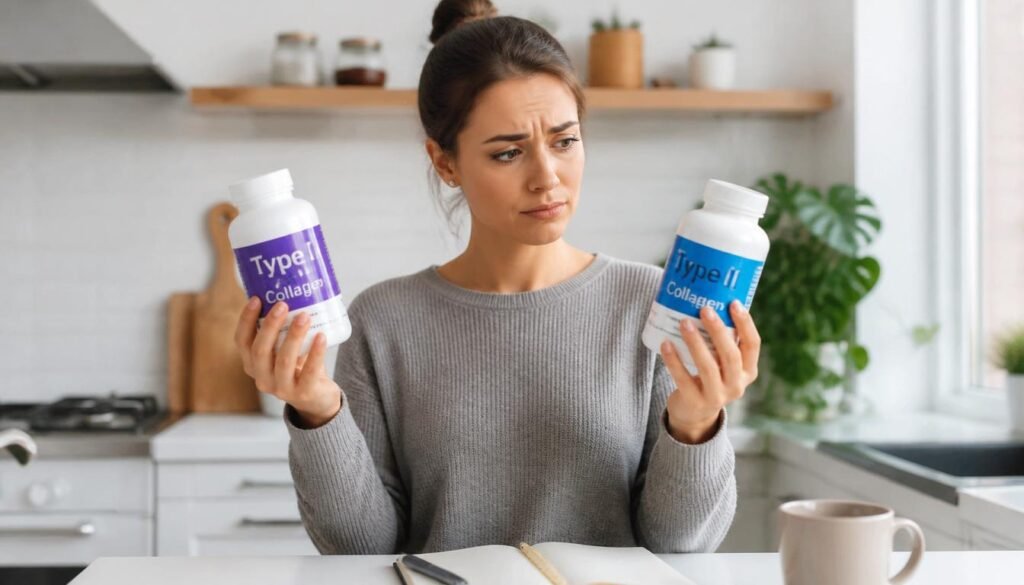
You started researching. You found a wall of claims – marine, bovine, Type I, II, III, peptides, creams, and powders – and couldn’t find a clear answer to the one question that mattered: does any of this actually work, and if so, which part, at what dose, taken how?
That question is what this article answers.
a medical researcher in white lab coat pointing at a chart showing collagen synthesis and degradation in skin, bright laboratory, professional atmosphere, stock photo style, 8K, sharp focus

Why Collagen Declines
The Internal Cause — Fibroblast Aging
What I learned is that collagen loss is not just about age — it is about sun, sleep, sugar, and stress. I was doing almost everything that speeds up the decline without knowing it. Once I understood the real causes, I could finally do something about them.
Fibroblasts — the cells that synthesise collagen — become less numerous and less productive with age, while the enzymes that break down collagen (matrix metalloproteinases) keep working at their normal rate. The result is a widening gap between production and degradation. In simple terms, think of collagen as a fabric being continuously rewoven. When you’re young, weaving outpaces unravelling. With age, that balance shifts.
The External Causes
UV radiation is the single most significant external driver of skin collagen loss, directly activating collagen-degrading enzymes. Smoking interferes with collagen synthesis and increases oxidative stress in connective tissue. Chronic elevated blood sugar triggers glycation — glucose attaching to collagen fibres, stiffening and cross-linking the matrix. Chronic stress elevates cortisol, which suppresses synthesis and activates degradation simultaneously. Poor sleep reduces the nocturnal growth hormone release that drives collagen repair during deep sleep.
The Nutritional Gap
Vitamin C is required for the enzymatic step that stabilises the collagen triple helix — without it, newly synthesised collagen is structurally unstable (this is the biochemistry behind scurvy). Protein insufficiency reduces the glycine, proline, and hydroxyproline that form the collagen backbone. Zinc and copper are cofactors needed to cross-link collagen fibres into their functional form.
“Since elevated blood sugar accelerates collagen glycation, our guide on understanding blood sugar and balanced eating explains how to manage this through diet.”
What the Research Says
Study 1 — Oral Collagen Peptides and Skin Aging
Finding: A 2019 meta-analysis of 11 RCTs found oral collagen supplementation significantly improved skin elasticity, hydration, and wrinkle appearance vs. placebo.
What it means for you: Oral collagen may support skin elasticity and hydration. Effect sizes varied, and some included studies were industry-funded — a known limitation.
DOI: 10.36849/JDD.2019.2558
Study 2 — Vitamin C-Enriched Gelatin and Collagen Synthesis
Finding: A 2017 RCT found that 15g of vitamin C-enriched gelatin before exercise significantly increased circulating collagen synthesis markers vs. placebo.
What it means for you: Collagen may be most effective when timed before exercise, with vitamin C as a necessary cofactor. The study population was small.
DOI: 10.3945/ajcn.116.144543
Study 3 — Undenatured Type II Collagen and Joint Health
Finding: An RCT in individuals with knee discomfort found significant improvements in joint comfort and mobility with undenatured Type II collagen over 180 days, via a proposed oral immune tolerance mechanism.
What it means for you: This is a separate evidence base from hydrolysed peptides — different mechanism, dose (~40 mg), and goal (joints, not skin). Selecting the correct type matters.
DOI: 10.1186/s12970-016-0119-2
Evidence Synthesis: The evidence base has grown meaningfully since 2015. Multiple independent RCTs support hydrolysed Type I/III peptides for skin outcomes and undenatured Type II for joint comfort through a distinct mechanism. Limitations include variable effect sizes, small study populations, and industry funding in some trials. Apply with calibrated expectations and correct type selection.

Seven Steps You Can Take Today
Assess your vitamin C intake first. Vitamin C is the rate-limiting step in collagen synthesis – bell peppers, kiwi, broccoli, strawberries, and citrus are the most concentrated sources.
Apply broad-spectrum SPF 30+ every morning. UV is the single biggest driver of skin collagen degradation — and this has more evidence than most supplements.
Review your daily protein intake. Adults generally need at least 0.8–1.0 g per kg body weight for basic tissue maintenance.
Choose your collagen type by goal. Skin: hydrolysed type I/III, 5–15g daily with vitamin C. Joints: undenatured type II, ~40 mg on an empty stomach.
Time collagen before exercise. Based on the Shaw et al. (2017) trial, taking it with vitamin C ~1 hour before exercise may maximise the synthesis response.
Address the accelerants first. UV, smoking, poor sleep, high blood sugar, and chronic stress all degrade collagen at rates supplementation alone is unlikely to offset.
Create a dated baseline. Photograph skin in consistent lighting and rate joint comfort 1–10, note hair thickness — this is the only reliable way to assess change over 8–12 weeks.
Case Study
Editorial Disclosure: A fictional educational example based on common clinical patterns. Not a real individual. Individual results vary significantly.
A 38-year-old woman noticed progressive skin texture changes and increasing knee stiffness after sitting. She’d used a high-end collagen cream for 18 months with no change, and took a Type I bovine powder inconsistently, stirred into coffee, with no vitamin C.
The problems: Her cream’s molecules were too large to reach the dermis—providing surface hydration, not synthesis support. Her oral supplement lacked the vitamin C cofactor. And she was using one product (Type I) for two goals — skin and joints — that require entirely different types and doses.
The revised approach: Daily SPF 50, increased dietary vitamin C (bell peppers/kiwi daily), 10g hydrolysed type I/III peptides with vitamin C before her morning walk, and 40mg undenatured type II collagen on an empty stomach in the evening. Collagen cream discontinued.
Outcome: By ~12 weeks, she reported improved skin hydration and texture, reduced joint stiffness by week 10, and somewhat faster hiking recovery by week 12. This illustrates patterns from published trials — no specific outcome can be predicted for any individual.
H2: The 3-Step Collagen Optimization Framework
Step
Action
Ask Yourself
1. Assess
Identify your primary goal and baseline
Skin, joints, bones, or all three? Have I addressed UV, sleep, blood sugar, and stress first?
2. Build the Foundation
Establish nutritional support
Is my vitamin C, protein, zinc, and copper intake adequate?
3. Supplement with Precision
Choose the correct type, dose, cofactors, and timing
Hydrolysed type I/III for skin, or undenatured type II for joints? With vitamin C? Before exercise? Committing to 8–12 weeks?
Most people disappointed with collagen skipped Step 1, partially addressed Step 2, and jumped to Step 3 with the wrong type for their goal.
The One Thing Most Collagen Articles Miss
Walk into any pharmacy, and collagen is presented as one thing — a cream, a powder, or a capsule. Take it, apply it, and feel better. Almost none of these explain that specificity is everything.
Collagen cream applies molecules generally too large to penetrate the dermis – the effect is surface hydration, not collagen synthesis. Oral hydrolysed peptides, broken into small fragments, are absorbed and can reach fibroblasts — but the trial evidence supporting this is primarily for skin outcomes using hydrolysed types I/III. If you’re taking that and expecting joint cartilage improvement, you’re using the wrong type for the wrong tissue.
Undenatured type II collagen works through oral immune tolerance — an entirely different mechanism, at ~40 mg rather than 10–15 g — and is studied for joint inflammation, not skin elasticity. The one thing most articles miss: the right type, for the right tissue, at the right dose, with the right cofactors, at the right time. Without that, you may be spending real money on a product that isn’t misrepresented — just misapplied.

Does Collagen Supplementation Really Work?
📦 Snippet Answer: Yes — with specificity, most products don’t communicate. Hydrolysed collagen peptides at 5–15 g daily show consistent evidence for improved skin elasticity and hydration. Undenatured type II collagen at ~40 mg daily has separate evidence for joint comfort via a different mechanism entirely.
Effect sizes vary across studies, individual responses differ, and a meaningful proportion of available studies have industry funding — a limitation worth keeping in mind. Collagen supplementation isn’t a reversal of ageing — it’s a nutritional intervention with a real biological rationale, most effective when the correct type, dose, cofactors, and timeline are applied. In simple terms, the science is real, but type, dose, timing, and cofactors matter more than most products tell you.
Seven Practical Strategies
1. Build Your Vitamin C Foundation First
Confirm at least 200–500mg daily, ideally from food. No vitamin C, no stable collagen — regardless of what else you’re taking. This is biochemistry, not a caveat.
2. Match Your Collagen Type to Your Goal
Skin: hydrolysed type I/III, 5–15g with vitamin C. Joints: undenatured type II, ~40 mg on an empty stomach. Bones/connective tissue: hydrolysed peptides plus calcium, vitamin D, magnesium, and weight-bearing exercise.
3. Time Collagen Before Exercise
Based on the Shaw et al. trial, taking collagen with vitamin C ~1 hour before exercise may maximise the synthesis response for connective tissue.
4. Protect Existing Collagen From UV
Daily broad-spectrum SPF 30+ is the most evidence-supported intervention for slowing skin collagen loss – and supplementation without it is a race against the biggest accelerant.
5. Manage Blood Sugar to Protect Collagen Quality
Chronically elevated blood sugar causes glycation, stiffening and cross-linking of collagen fibres. Reducing refined carbs and staying active protects existing collagen in ways no supplement can undo afterwards.
6. Optimize Sleep for Nocturnal Repair
Most collagen synthesis happens during slow-wave sleep, driven by nocturnal growth hormone. Consistently under 7 hours impairs this — improving sleep is a free collagen support strategy.
“Since chronic stress and poor sleep both impair collagen repair, our guide on managing daily stress naturally offers practical tools that support both.”
7. Use Food-Based Collagen Sources
Bone broth, slow-cooked meat on the bone, and cartilaginous cuts provide collagen peptides and the micronutrients synthesis requires – a meaningful, lower-cost complement to targeted supplementation.
“Bone broth and whole-food collagen sources pairwell with aaa fibre-maxingh diet — see our fibre-maxxing for gut health guide for practical ways to combine both.”
Common Mistakes
Mistake
Why It Fails
Better Fix
Buying collagen cream for synthesis
Molecules too large to reach the dermis
Redirect budget to oral hydrolyzed peptides
Wrong collagen type for the goal
Type I/III and Type II work via different mechanisms
Match type precisely to skin vs. joint goals
Taking collagen without vitamin C
Vitamin C is required to stabilize new collagen
Always pair collagen with a vitamin C source
Expecting results in 2–3 weeks
Skin collagen turnover takes 6–8 weeks
Commit to 8–12 weeks with dated baselines
Ignoring UV, sleep, blood sugar, smoking
These degrade collagen faster than supplements rebuild it
Address accelerants first, then layer supplementation
When to See a Doctor
Progressive joint pain with swelling, warmth, redness, or morning stiffness over 30 minutes — possible inflammatory arthritis
Sudden skin integrity loss, unusual bruising, or easily torn skin
Fractures from minor impacts, or unexplained back pain in adults over 50 — possible osteoporosis
Extreme joint flexibility, recurrent dislocations, or fragile healing skin — possible hypermobility/ Ehlers-Danlos syndrome
Persistent wound healing difficulty or unexplained bruising, especially in older adults
Any concern significantly affecting daily function or wellbeing
Nutrition and supplementation have appropriate limits; these symptoms warrant professional evaluation.
Key Takeaways
Collagen is ~30% of total body protein, structurally supporting skin, joints, bones, blood vessels, and gut lining
Production declines ~1% yearly from the mid-20s, accelerating after menopause
Types I, II, and III are most clinically relevant — and choosing the right one for your goal is the key variable
UV radiation is the biggest external driver of skin collagen loss — daily SPF is the most evidence-backed defence.
Vitamin C is a required cofactor — without it, new collagen is structurally unstable
Hydrolyzed peptides have the best evidence for skin; undenatured Type II for joints, via a different mechanism
Timing collagen before exercise may maximize connective tissue synthesis
Collagen cream doesn’t reach the dermis — it’s surface hydration, not synthesis support
UV, smoking, poor sleep, and high blood sugar all accelerate degradation regardless of supplementation
Allow 8–12 weeks minimum, assessed with dated baselines, before evaluating results
FAQs
1. Is collagen supplementation safe for most people?
Hydrolysed peptides at 5–15 g daily and undenatured type II at ~40 mg are generally well tolerated. People with kidney conditions or fish/bovine allergies should check with a healthcare provider first.
2. What’s the difference between collagen peptides and regular collagen?
Regular collagen (bone broth, gelatine) requires full digestive breakdown. Hydrolysed peptides are pre-broken into smaller fragments that absorb more efficiently — the research base is primarily on peptides.
3. Can vegetarians/vegans support collagen without animal products?
There’s no plant-derived collagen, but adequate protein, vitamin C, zinc, and copper support the body’s own synthesis. Plant-based “collagen support” blends (vitamin C + proline + glycine) haven’t been directly compared to peptides in trials.
4. How long until I see results?
Skin trials generally use 8–12 weeks; skin collagen turnover takes 6–8 weeks. Joint studies often run 12+ weeks. Use dated photos and logs, not memory.
5. Does marine collagen work better than bovine?
Both are predominantly Type I with similar amino acid profiles. Marine peptides are smaller, possibly slightly more absorbable, but head-to-head evidence isn’t conclusive; the choice often comes down to preference and allergies.
6. Can collagen support gut health?
Early research on glycine and intestinal tight junctions is promising but hasn’t reached systematic-review level yet — a developing area worth watching.
Your 30-Day Collagen Action Plan
Day 1: Answer in writing — what’s your primary goal (skin/joints/bones)? Is your vitamin C adequate? Are accelerants (sun, sleep, blood sugar, and smoking) addressed? Record a dated baseline: skin texture, joint comfort (1–10), hair thickness, and recovery.
Week 1: Increase vitamin C to 200–500mg daily. Apply SPF 30+ every morning, including overcast days. Review protein intake against 0.8 g/kg.
Week 2: Introduce targeted supplementation — 10g hydrolyzed Type I/III with vitamin C (skin/connective tissue) and/or 40 mg undenatured type II on an empty stomach (joints). Take collagen ~1 hour before exercise if active.
Weeks 3–4: Review accelerant management honestly — sun protection, 7+ hours’ sleep, and blood sugar. At week four, log observations (not conclusions) and book a week-8 comparison against your baseline before motivation fades.
Conclusion
My honest advice is not to buy the first collagen product you see. First fix your vitamin C, wear sunscreen, and sleep properly. Then choose the right type for your goal — skin or joints — and give it at least three months. That is what worked for me, and it can work for you.
Collagen isn’t a wellness trend — it’s the structural reality of your body. Its decline isn’t a failure; it’s biology. The question is the rate and what you do about it using what the research actually shows rather than what the market prefers to claim. collagen benefits
Oral collagen peptides are a legitimate intervention with a growing evidence base – when the right type, dose, cofactors, and timeline are applied. Sun protection outperforms any supplement for skin collagen. Vitamin C is the foundation everything else depends on. Sleep is where repair actually happens.
You don’t need to reverse biology – you need to support it intelligently, with the specificity that turns a shelf of promising products into a targeted plan your body can actually use. The next step is applying it, consistently, for the 8–12 weeks the science requires.
“For the broader daily habits that supporthealthy ageingg from the inside out, see our guide on daily habits that improve your health over time.”
About the Author
HealthFitnessBloom Editorial Team
HealthFitnessBloom is dedicated to providing science-backed health, fitness, and wellness information to help readers live healthier lives. Our editorial team researches, writes, and reviews content to ensure accuracy, clarity, and practical value.