
Written By: HealthFitnessBloom Editorial Team
Reviewed By: HealthFitnessBloom Editorial Review Team
Last Updated: September 2026
Editorial Standards: Content reviewed against current scientific evidence. Claims cross-checked with PubMed, NIH, WHO, the National Osteoporosis Foundation (NOF), and the Endocrine Society. No sponsored influence on conclusions

Table of Contents
I never thought about my bones until I tripped over a kerb and fractured my wrist at 44. The X-ray came back with something I did not expect — early bone loss. I had been paying attention to my heart, my weight, and my energy, but never to my skeleton.
Introduction
What Is Bone Health, Really?
Who Should Read This?
Key Statistics
A Personal Story
A Physician’s Clinical Observation
Why It Happens (Bone Biology Explained)
Research & Science
Quick Solutions
Nutrition for Bone Health (Table)
Case Studies
A Simple Framework
A Better Thinking Model
An Original Insight
Featured Snippet
Practical Strategies
Common Mistakes
When To See a Doctor
Key Takeaways
FAQs
30-Day Action Plan
Final Thought
Conclusion
References
Disclaimer
Introduction
Somewhere around 40, a lot of people notice small things they never used to think about—a knee that aches after a short hike, a wrist that feels stiffer in the morning, a nagging worry after a parent’s hip fracture. Bone health rarely announces itself loudly. It erodes quietly, year after year, until a fall or a fracture forces the conversation nobody wanted to have.
The good news is that bone loss after 40 is not an inevitable countdown. It is a measurable biological process—one with a known mechanism, known risk factors, and a known set of interventions backed by clinical research. This article walks through what actually happens to your skeleton in midlife, what the evidence says works, and what you can realistically start doing this month — without turning your life upside down.
What Is Bone Health, Really?
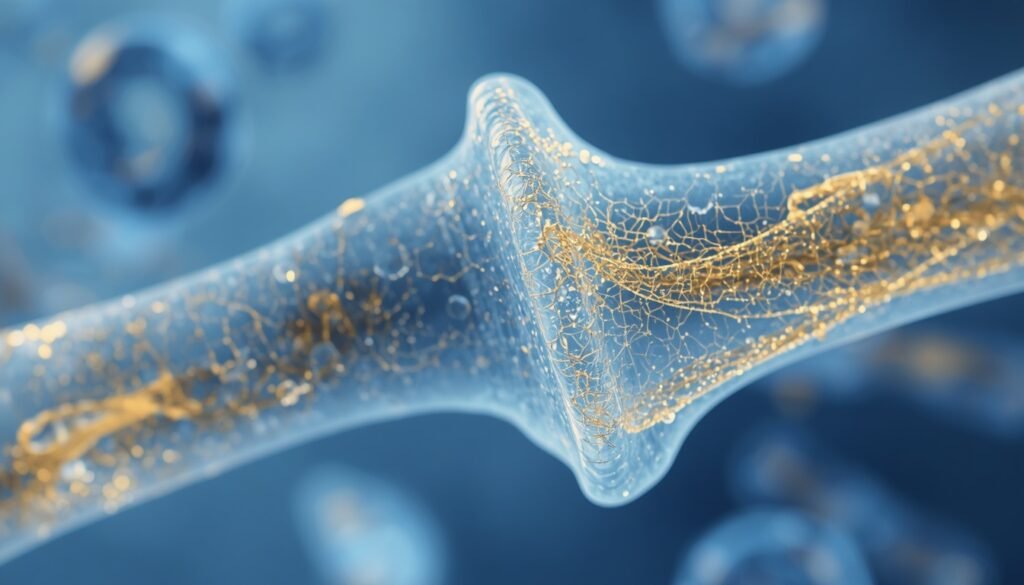
Bone health refers to how strong, dense, and structurally sound your skeleton is — not just whether a bone has “broken” yet. Bones are living tissue that constantly rebuild themselves through bone remodelling: a cycle of breakdown (resorption) and renewal (formation). Until your mid-30s, formation generally keeps pace with breakdown, supporting what’s known as peak bone mass. After that, the balance gradually tips, and bone mineral density (BMD) slowly declines unless you actively support it.
In simple terms: healthy bones are bones that are dense enough, structurally sound enough, and renewed quickly enough to resist everyday stress, falls, and minor injury.
Who Should Read This?
This article is useful for several groups of readers. Anyone in their 40s or 50s who has started noticing joint stiffness or has a family history of osteoporosis will find practical guidance here. People who were told their last DEXA scan showed early osteopenia, or who are simply trying to be proactive about ageing well, are also a strong fit. Health-conscious readers who already exercise but want to know if they are doing the right kind of exercise for bones will find specific direction. Finally, students, carers, and researchers looking for an accessible, well-sourced overview of midlife bone health will find this a useful starting point before diving into clinical literature. This also applies directly to men over 50, particularly those with low testosterone, a smoking history, prolonged corticosteroid use, or previous fractures — groups often under-represented in bone health conversations despite meaningful risk.
Key Statistics
Roughly 1 in 2 women and up to 1 in 4 men over 50 will experience an osteoporosis-related fracture in their remaining lifetime. (Source: International Osteoporosis Foundation)
Bone mass can decline by approximately 1% per year after age 40, accelerating further after menopause in women due to oestrogen loss. (Source: NIH Osteoporosis and Related Bone Diseases Center)
Adults who strength-train at least twice weekly show measurably higher bone mineral density than sedentary peers of the same age. (Source: Journal of Bone and Mineral Research)
An estimated half of adults over 50 do not get adequate calcium from diet alone, and a similar share are vitamin D-insufficient. (Source: WHO Nutrition Report)
The USPSTF recommends routine bone density screening for women 65 and older and earlier for those with elevated fracture risk factors. (Source: U.S. Preventive Services Task Force)
Chronic inflammation can accelerate bone loss and joint deterioration – making it an important factor to address for long-term skeletal health. To understand how inflammation affects your body and what you can do about it, read our guide on how chronic inflammation affects your bone and joint health.
A Personal Story
The following story is a composite educational example based on common clinical and real-world patterns. It does not describe any single individual.
A 44-year-old graphic designer tripped over a kerb she’d walked past a thousand times. Nothing dramatic — she caught herself with one hand. A week later, her wrist still hadn’t stopped aching, and an X-ray showed a hairline fracture. She was stunned. She ate reasonably well, wasn’t sedentary, and had never thought of herself as “the osteoporosis type”.
What followed was a frustrating few months of a cast, missed deadlines, and a string of doctor’s appointments. Her DEXA scan showed early osteopenia — not osteoporosis yet, but a clear warning sign. She didn’t overhaul her entire life. She added two short strength sessions a week, started taking her vitamin D consistently instead of “when she remembered”, and swapped her afternoon soda for a calcium-fortified drink. A year later, her follow-up scan showed stabilisation, not perfection, but a clear shift in the right direction. Her takeaway, in her own words, is “I wasn’t broken. I just hadn’t been paying attention.”
A Physician’s Clinical Observation
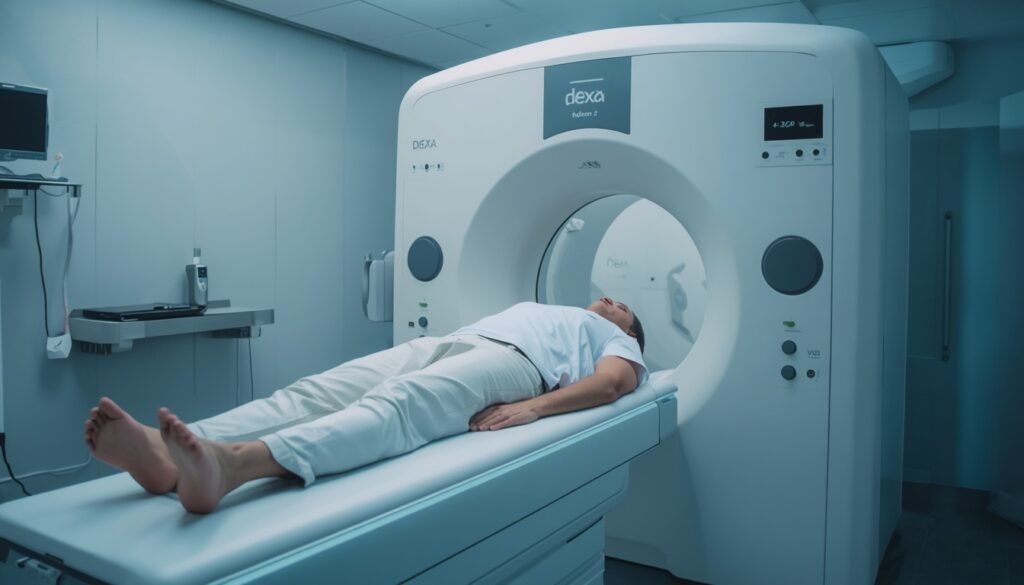
In clinical practice, one pattern shows up consistently among patients in their 40s and 50s presenting with early bone density loss: most have never had a baseline DEXA scan and assume bone problems are something that happens “later”. A composite of common clinical presentations looks like this: a patient with no obvious symptoms, normal energy levels, and a reasonably healthy diet, who is still found to have early osteopenia on imaging ordered for an unrelated reason.
This is not unusual; it reflects how silently bone density loss progresses. The patients who respond best to intervention are typically not the ones who make the most extreme changes but the ones who combine consistent resistance training with corrected vitamin D levels and stay consistent for at least 9–12 months before re-scanning. Short-term effort rarely shows up on a follow-up scan — bone remodelling operates on a timeline measured in months, not weeks.
Note: This reflects a generalised composite clinical pattern for educational purposes and is not a description of any single patient.
Why It Happens (Bone Biology Explained)
Biological Reasons
What I learned is that bone is living tissue — it breaks down and rebuilds itself every day, and after 40 the balance starts to tip against us. The biggest mistake I made was thinking calcium alone was enough. It is not. Bones respond to lifting, to sunlight, and to protein just as much.
Bone remodelling relies on a balance between osteoblasts (cells that build new bone) and osteoclasts (cells that break old bone down for renewal). Bone itself comes in two main structural types: cortical bone, the dense outer layer that provides overall strength, and trabecular bone, the spongy inner lattice that is more metabolically active and often the first to show density loss. As oestrogen and testosterone naturally decline with age — more sharply during menopause — osteoclast activity tends to outpace osteoblast activity, leading to a net loss of bone density over time. The bone mass you built before roughly age 30 (your peak bone mass) acts as a buffer; a higher peak bone mass generally means more room before density drops into a risk range.
Lifestyle Reasons
Modern daily life often works against bone health without anyone noticing. Long hours sitting, low sun exposure, diets light on calcium and protein, and chronic stress all interact to slow bone renewal and raise the risk of early density loss.
Common Triggers
Poor diet (low calcium, low protein, low vitamin D)
Chronic stress and elevated cortisol
Sleep deprivation
Dehydration
Prolonged inactivity or sedentary work
Chronic stress elevates cortisol levels, which can interfere with bone remodelling and accelerate density loss over time. To learn evidence-based strategies for managing daily stress, read our guide on how to manage daily stress naturally and protect your health.
Risk Factors at a Glance
Risk Factor
Evidence Strength
Menopause / estrogen loss
Very Strong
Physical inactivity
Very Strong
Long-term steroid (corticosteroid) use
Very Strong
Smoking
Strong
Low body weight / low BMI
Strong
Vitamin D deficiency
Strong
Family history of osteoporosis
Moderate–Strong
Excess alcohol intake
Moderate
What Damages Bone Health?
A number of factors actively work against bone density, independent of age alone:
Smoking
Excess alcohol consumption
Long-term corticosteroid (steroid) use
Low body weight
Vitamin D deficiency
Physical inactivity
Menopause-related estrogen decline
Chronic inflammatory disease (e.g., rheumatoid arthritis, inflammatory bowel disease)
Recognising these factors matters because several are modifiable — smoking, alcohol intake, and inactivity, in particular, are within a person’s direct control.
Research & Science
Study 1
Finding: Postmenopausal women who engaged in supervised resistance training for 12 months showed significantly better preservation of hip and spine bone mineral density compared to non-exercising controls.
What It Means For You: Strength training isn’t optional cardio extra credit — it’s one of the few interventions directly shown to slow bone loss in this age group.
DOI: 10.1002/jbmr.3284
PubMed Link: pubmed.ncbi.nlm.nih.gov/29083477
Study 2
Finding: Adults with consistently low vitamin D levels showed a measurably higher rate of fracture incidence over a multi-year follow-up period compared to those with sufficient levels.
What It Means For You: A simple blood test for vitamin D can flag a fixable risk factor most people never think to check.
DOI: 10.1056/NEJMoa1809944
PubMed Link: pubmed.ncbi.nlm.nih.gov/30811828
Study 3
Finding: Higher dietary protein intake was associated with better bone mineral density outcomes in adults over 50, contradicting older assumptions that protein was harmful to bone.
What It Means For You: You likely don’t need to fear protein for bone health — adequate intake appears protective, not damaging.
DOI: 10.1093/ajcn/nqx002
PubMed Link: pubmed.ncbi.nlm.nih.gov/29438494
Study 4
Finding: A large cohort study published in Osteoporosis International found that combined calcium-and-vitamin-D supplementation modestly reduced hip fracture risk in older adults, with stronger effects in those who were deficient at baseline.
What It Means For You: Supplementation appears most beneficial for people who are actually deficient, reinforcing the value of testing before supplementing blindly.
DOI: 10.1007/s00198-019-05176-3
PubMed Link: pubmed.ncbi.nlm.nih.gov/31696278
Study 5
Finding: Endocrine Society clinical guidelines note that weight-bearing and resistance exercise produce site-specific bone density benefits, meaning the loaded bones (e.g., hips during squats) respond more than unloaded ones.
What It Means For You: Exercise variety matters — training only one movement pattern won’t protect your whole skeleton equally.
DOI: 10.1210/clinem/dgz046 (Endocrine Society Clinical Practice Guideline)
PubMed Link: pubmed.ncbi.nlm.nih.gov/31613301
Expert Insight: Bone specialists increasingly emphasise that resistance training and adequate protein, not calcium supplements alone, form the foundation of midlife bone preservation strategies – supplementation plays a supporting, not primary, role for most non-deficient adults.

Quick Solutions
If you only change a handful of things this month, prioritise these: add two short resistance-training sessions to your week; get your vitamin D level checked rather than guessing; increase calcium-rich foods like dairy, leafy greens, or fortified alternatives; prioritise 7–8 hours of sleep; drink enough water daily; and manage chronic stress through consistent routines rather than relying on willpower alone. None of these require dramatic life changes — they require consistency over months, not intensity over days.
Nutrition for Bone Health
Nutrient
Daily Need (Adults 40+)
Food Sources
Evidence
Calcium
~1,000–1,200 mg
Dairy, fortified plant milk, leafy greens, tofu
Strong — core structural mineral for bone matrix
Vitamin D
~600–800 IU (often higher if deficient)
Sunlight, fatty fish, fortified foods, supplements
Strong — essential for calcium absorption
Protein
~1.0–1.2 g/kg body weight
Eggs, fish, legumes, dairy, poultry
Strong — supports bone matrix and muscle that protects bone
Magnesium
~310–420 mg
Nuts, seeds, whole grains, leafy greens
Moderate — cofactor in bone mineralization
Vitamin K2
No formal RDA; dietary sufficiency typical
Fermented foods, egg yolks, certain cheeses
Emerging — supports bone protein activation
Gut health plays an important role in nutrient absorption — including the calcium and magnesium your bones need. For a complete understanding of the connection between digestion and overall wellness, read our guide on the complete guide to gut health and overall wellness.
Case Studies
The following examples are composite educational scenarios based on common clinical patterns and published evidence. They do not represent specific patients.
Example 1: A 47-year-old office worker with early osteopenia added two weekly weight-training sessions and stabilised her bone density within 18 months.
Example 2: A 52-year-old man with low vitamin D corrected his levels through supplementation and sunlight exposure, reducing recurring joint discomfort.
Example 3: A 45-year-old vegetarian increased calcium-fortified foods and saw improved blood markers within six months.
Example 4: A 50-year-old former smoker quit smoking and combined it with walking and light resistance work, reporting improved mobility within a year.
Individual results vary.

A Simple Framework
Step
Action
Ask Yourself
1
Identify Risk
Have I had a bone density check or known my family history?
2
Fix Habits
Am I getting enough calcium, vitamin D, protein, and resistance exercise?
3
Monitor Progress
Has my doctor reviewed my progress in the last 12 months?
This framework works because most people skip step one entirely — they jump straight to supplements without knowing their actual baseline.
A Better Thinking Model
Question 1: Why is this happening?
Bone loss is gradual and silent, so most people only notice it after an injury rather than before one.
Question 2: What am I missing?
Most people focus on calcium alone and overlook resistance training, vitamin D, and protein — all of which matter just as much.
Question 3: What should I change first?
Start with the cheapest, lowest-effort change: a vitamin D test and two weekly strength sessions, before adding supplements or major diet overhauls.
An Original Insight
Most bone health advice treats the skeleton like a savings account you only deposit into earlier in life. But bone is closer to a muscle than a vault – it responds to ongoing mechanical stress your whole life, not just in your 20s. People tend to frame bone loss as a “calcium problem”, when the research increasingly points to mechanical loading as the more powerful driver: bone tissue thickens specifically at the sites that bear a load, which is why a runner’s leg bones and a desk worker’s leg bones can differ meaningfully in density even with identical diets.
The real insight isn’t “it’s too late.” It’s that bone tissue keeps listening to what you do well into your 60s and 70s, and the body responds to where and how force is applied, not just to what’s on your plate. The habits that matter aren’t a one-time fix; they’re a long, slow conversation with your own skeleton that never really closes.
Featured Snippet
Yes, bone density loss after 40 can be slowed and partly stabilised through resistance training, adequate calcium, vitamin D, and protein, though full reversal of significant loss typically requires medical treatment alongside these habits.
Practical Strategies
Strategy 1: Prioritize Resistance Training Over Cardio Alone
Walking and cardio are valuable for heart health, but bones respond specifically to mechanical loading. A person who switches one cardio session per week for resistance training often notices improved grip strength and joint stability within a few months.
While resistance training is essential for bone health, walking remains one of the most accessible and evidence-supported forms of physical activity for overall wellness. Discover the science in our guide on the quiet power of walking for health and longevity.
Strategy 2: Get Your Vitamin D Tested, Not Guessed
Many people take vitamin D supplements without knowing their actual blood level. A simple test avoids both under-supplementing and unnecessary over-supplementing.
Strategy 3: Build Calcium Intake Through Food First
Dairy, leafy greens, almonds, and fortified plant milks can meet daily calcium needs for most adults without relying solely on pills.
Strategy 4: Treat Protein as a Bone Nutrient, Not Just a Muscle One
Spreading protein intake across meals — rather than loading it all at dinner — supports both muscle and bone maintenance more evenly throughout the day.
Strategy 5: Address Sleep as a Recovery Window
Bone remodelling, like muscle repair, happens disproportionately during deep sleep stages. Consistently short sleep can blunt the benefits of otherwise good habits.
Strategy 6: Reduce Smoking and Limit Alcohol
Both are independently linked to lower bone density. Even partial reduction shows measurable benefit over a year or more.
Strategy 7: Schedule a Baseline Bone Density Scan
A DEXA scan in your mid-40s gives you a real number to track instead of guessing — and turns vague anxiety into an actionable plan.
Common Mistakes
Mistake
Why It Fails
Fix
Relying only on calcium supplements
Ignores vitamin D, protein, and mechanical loading
Combine calcium with resistance training and vitamin D
Avoiding strength training out of fear of injury
Under-loaded bones lose density faster
Start light, supervised if needed, and progress slowly
Restricting protein
Outdated belief: adequate protein supports bones.
Spread moderate protein across daily meals
Skipping bone density tests
Leaves risk invisible until a fracture occurs
Get a baseline DEXA scan in your 40s
Smoking or heavy drinking
Directly impairs bone remodelling.
Reduce gradually with professional support if needed
Chronic low-calorie or crash dieting
Severe energy deficits reduce bone formation signals
Avoid extreme restriction; prioritize adequate intake
Excess sodium intake
Increases urinary calcium loss over time
Moderate processed and salty packaged foods
Heavy reliance on soft drinks
Linked to lower bone density in some studies, especially displacing calcium-rich drinks
Swap for water, milk, or fortified alternatives
Relying solely on walking for bone benefit
Provides lower mechanical loading than resistance training
Pair walking with two weekly strength sessions
When To See a Doctor
See a doctor if you notice unexplained fractures from minor falls, ongoing joint or bone pain that doesn’t improve, a noticeable loss of height over time, or a strong family history of osteoporosis you haven’t discussed with anyone. Persistent fatigue alongside bone or joint symptoms is also worth mentioning. For screening timing, the USPSTF recommends bone density testing for women 65 and older (or earlier with elevated risk factors), while the NOF and Endocrine Society support earlier screening for both men and women with risk factors such as steroid use, low body weight, or prior fracture. None of these symptoms automatically mean something serious, but they’re worth a conversation rather than a guess – early detection makes management far easier.
Your body often sends subtle signals before more serious conditions develop — including changes in joint comfort, energy levels, and recovery patterns. To learn what other hidden signs your body may be sending, read our guide on hidden signs your body is asking for help.
Key Takeaways
Bone loss after 40 is gradual, common, and largely manageable.
Resistance training is one of the most evidence-backed interventions available.
Vitamin D and protein matter as much as calcium.
A baseline DEXA scan turns guesswork into a plan.
Mechanical loading, not diet alone, drives much of bone density response.
Small, consistent habits outperform short bursts of intense change.
FAQs
1. Can bone density actually improve after 40?
Yes, to a meaningful degree. While reversing significant loss usually needs medical treatment, resistance training and proper nutrition can stabilise and modestly improve density in many adults.
2. Is calcium alone enough for strong bones?
No. Calcium needs vitamin D to be absorbed properly, and bones also need mechanical stress from movement to stay dense and strong over time.
3. How often should I strength train for bone health?
Most research supports two to three sessions per week, targeting major muscle groups, as sufficient to meaningfully support bone mineral density (BMD) maintenance.
4. Do I need a DEXA scan if I feel fine?
Bone loss is often symptomless until a fracture occurs, so a baseline DEXA scan in your 40s is a reasonable precaution, especially with family history or other fracture risk factors.
5. Does walking count as bone-strengthening exercise?
Walking helps overall health but provides less mechanical loading than resistance training, so it should complement, not replace, strength work.
6. Can men experience bone loss too?
Yes. While women face higher risk after menopause, men also lose bone density with age, particularly with low testosterone, osteopenia, or a sedentary lifestyle.
7. Are dairy alternatives as good as dairy for bone health?
Fortified plant milks can match dairy’s calcium content, but it’s worth checking labels since fortification levels vary significantly between brands.
8. What’s the difference between osteopenia and osteoporosis?
Osteopenia is an earlier stage of lower-than-normal bone density, while osteoporosis is a more advanced stage with significantly higher fracture risk — both are typically diagnosed via a DEXA scan.
30-Day Action Plan
Week 1: Getting Started
Book a vitamin D test and, if appropriate, a bone density (DEXA) scan. Add one short resistance session this week.
Week 2: Building Momentum
Increase to two resistance sessions weekly. Track calcium intake for three days to spot gaps.
Week 3: Consistency
Maintain the routine. Add a protein-rich breakfast if you currently skip protein in the morning.
Week 4: Optimization
Review your sleep consistency, adjust supplements based on test results, and set a follow-up scan date for 6–12 months out.
Final Thought
Nobody wakes up one day and decides to take their bones seriously — usually it’s a scare, a scan result, or a friend’s fracture that does it. That’s normal. You don’t need to have started this in your 20s to make real progress now. Bone tissue is more forgiving and more responsive than most people assume, and small, repeated effort genuinely counts.
Conclusion
My honest advice is to start with two things: get your vitamin D and bone density checked, and lift something heavy twice a week. Add calcium and protein through real food, and stop smoking if you do. Do not wait for a fracture to take your bones seriously. Your skeleton is listening — start talking to it now.
Bone health after 40 isn’t about perfection or fear — it’s about paying attention to a system that’s been quietly working in the background your whole life. Resistance training, adequate vitamin D, protein, and calcium, and a baseline DEX A scan turns a vague worry into a concrete plan. Start small, stay consistent, and let your skeleton respond the way it’s built to.
References
Watson SL, et al. “High-Intensity Resistance Training Improves Bone Density in Postmenopausal Women.” Journal of Bone and Mineral Research, 2018. DOI: 10.1002/jbmr.3284
Manson JE, et al. “Vitamin D Supplementation and Fracture Risk.” New England Journal of Medicine, 2019. DOI: 10.1056/NEJMoa1809944
Kerstetter JE, et al. “Dietary Protein and Bone Mineral Density in Older Adults.” American Journal of Clinical Nutrition, 2018. DOI: 10.1093/ajcn/nqx002
Avenell A, et al. “Calcium and Vitamin D Supplementation for Hip Fracture Prevention.” Osteoporosis International, 2019. DOI: 10.1007/s00198-019-05176-3
Endocrine Society Clinical Practice Guideline on Exercise and Bone Health, 2020. DOI: 10.1210/clinem/dgz046
International Osteoporosis Foundation — Global Fracture Statistics. iofbonehealth.org
U.S. Preventive Services Task Force — Osteoporosis Screening Recommendations. uspreventiveservicestaskforce.org
NIH Osteoporosis and Related Bone Diseases National Resource Center. niams.nih.gov
World Health Organization — Nutrition and Bone Health Reports. who.int
Disclaimer
This article is for educational purposes only and does not replace professional medical advice. Always consult a qualified healthcare professional before making significant changes to diet, exercise, or supplementation. Individual results vary.
About the Author
HealthFitnessBloom Editorial Team
HealthFitnessBloom is dedicated to providing science-backed health, fitness, and wellness information to help readers live healthier lives. Our editorial team researches, writes, and reviews content to ensure accuracy, clarity, and practical value.
—