
Written by HealthFitnessBloom Editorial Team — Health and wellness content researchers focused on evidence-based psychology, digital wellbeing, and mental health. Research for this article included peer-reviewed literature published between 2024 and 2025
Table of Contents
I used to think scrolling was harmless — just a way to pass time. But I started noticing that after every session, I felt worse about my own life without knowing why. When I learned about social comparison, everything finally made sense.
Introduction
What Is Social Media Comparison? — Quick Answer
What Is Social Media Comparison? — Full Explanation
Who Should Read This?
Key Statistics You Should Know
A Personal Account of the Comparison Spiral
Why Social Media Makes Comparison Worse
What Research Says
Immediate Steps When the Comparison Spiral Starts
Real-Life Example — How Fatima Broke Her Comparison Habit
The 3-Step Framework for Healthier Social Media Use
4 Questions to Ask Yourself When Comparison Hits
The One Thing Most Articles About Social Media Comparison Miss
Does Deleting Social Media Actually Help?
7 Practical Strategies You Can Start Today
Common Mistakes People Make
When to Seek Professional Support
Key Takeaways
Frequently Asked Questions
Your 30-Day Digital Wellbeing Plan
Final Thought
Conclusion
References
Disclaimer
Introduction
You open the app for thirty seconds. By the time you close it, something has shifted. Someone you went to school with is on a holiday you cannot afford. Someone your age has achieved something you have been working toward for years and has not yet reached. Someone’s body, relationship, career, or home looks like a version of the life you wanted—and you are sitting exactly where you are, which suddenly feels considerably smaller than it did thirty seconds ago. how to stop comparing yourself on social media
This is not a character flaw. It is not ingratitude or insecurity or the absence of ambition. It is the entirely predictable outcome of a platform architecture designed to maximise engagement by presenting a curated stream of other people’s best moments — delivered directly to a brain wired, by millions of years of evolution, to measure its own standing by comparison to the people around it.
Social comparison is one of the oldest and most fundamental mechanisms of human psychology. It is how we understand where we stand, what to aim for, and what we have already achieved. Used well, it is motivating. Deployed at the scale and frequency that social media enables — against a pool of comparisons that is not the local community but the entire world, filtered through professional photography and strategic presentation — it produces something measurably different. The research on what that something is has become considerably clearer in the last few years.
This article covers that research honestly. It also covers what actually helps — not through digital detox extremism or motivational advice, but through specific, evidence-grounded strategies for using social media in a way that does not systematically undermine your sense of your own life.

What Is Social Media Comparison? — Quick Answer
Social media comparison is the process of evaluating your own life, appearance, achievements, or circumstances against the curated presentations of others on social media platforms. Research identifies two primary types: upward comparison — measuring yourself against people who appear to be doing better — and downward comparison — measuring yourself against those who appear to be doing worse. On social media, upward comparison dominates, because platforms algorithmically amplify high-performing, aspirational content. Research published in 2025 confirmed that upward comparisons on social media mediate the association between platform use and lower self-esteem and depressive symptoms.
What Is Social Media Comparison? — Full Explanation
In simple terms: social media comparison is what happens when your brain uses other people’s highlight reels to evaluate the quality of your own unedited life. The mechanism is ancient — social comparison theory, first proposed by Leon Festinger in 1954, describes the universal human tendency to evaluate ourselves in relation to others. What social media does is not invent this tendency. It amplifies it, accelerates it, and directs it toward a pool of comparisons that is designed to be aspirational rather than representative.
The person you are comparing yourself to is not showing you their ordinary Tuesday. They are showing you the photograph they took thirty-seven times before posting. The achievement they mentioned does not include the three years of invisible effort that preceded it. The relationship that looks effortless has the same arguments yours does—they are simply not on the feed.
In simple terms: social media comparison is not a reflection of reality. It is a comparison of your entire life against everyone else’s best moments — and no life looks good by that standard.
Who Should Read This?
This article is for you if you are:
Someone who consistently feels worse about their own life after spending time on social media
A person who notices their self-esteem or mood shifting noticeably in response to other people’s posts
Anyone who has tried to reduce social media use and found the pull toward it stronger than the intention
People who use social media for professional or social reasons and need strategies for managing comparison rather than eliminating platforms
Parents or teachers trying to understand the mechanisms driving social media’s impact on young people
Anyone who has noticed that comparison extends beyond social media into how they evaluate their life in general
Key Statistics You Should Know
📊 Statistic
Source
What It Means
Upward social comparison on social media mediated the association between platform use and lower global self-esteem and depressive symptoms across two independent studies
Le Blanc-Brillon et al., Frontiers in Psychology, 2025; DOI: 10.3389/fpsyg.2025.1597241
The harm is not from social media use itself but from the comparison it produces — which means changing how you use it matters more than eliminating it
Social media addiction is significantly associated with anxiety, depression, FoMO, loneliness, and lower self-esteem in students across multiple studies in a 2025 meta-analysis
Jing et al., PLOS ONE, 2025; DOI: 10.1371/journal.pone.0329466
The cluster of effects — anxiety, loneliness, and low self-esteem together — suggests a shared mechanism rather than independent harms
Adolescents spending more than 3 hours per day on social media show significantly elevated risk of depression and anxiety compared to peers with lower use
International Journal of Mental Health and Addiction, 2025
Dose matters — time on platform is a meaningful variable, not just the content encountered
Upward comparisons were identified as exerting the most detrimental effects on psychological wellbeing in a systematic review of 14 studies across clinical and subclinical populations
Frontiers in Education / McCarthy and Morina, 2025
Comparing up is measurably more harmful than comparing down — and social media algorithms reliably direct attention upward
5.40 billion people — 66% of the world’s population — were internet users as of January 2025, with social media use embedded in daily life across all age groups
CNNIC / PLOS ONE, 2025
The scale of the exposure means even small individual effects aggregate to enormous population-level consequences
A Personal Account of the Comparison Spiral
The following narrative is a representative account based on experiences commonly reported by people affected by social media comparison. Details have been adapted for educational purposes.
For most of my twenties I thought I was using social media normally. I was not posting obsessively. I was not stalking anyone. I was just scrolling — the way everyone scrolls — for fifteen or twenty minutes here and there across the day. And I genuinely thought it was neutral. Background noise. A way of staying connected.
It was not neutral. I noticed it one morning when I woke up and checked my phone before I had technically started the day, and by the time I put it down, I had already mentally catalogued three people who were doing something I was not, two relationships that appeared to be better than mine had been recently, and one body that made me conscious of my own in a way I had not been thirty seconds earlier. I had not been awake for four minutes.
The thing about the comparison spiral is that it is almost entirely invisible while it is happening. The scroll feels passive. The comparisons feel automatic. The mood shift is gradual enough that you attribute it to something else — the weather, the coffee, or the general difficulty of Tuesdays. It takes paying close attention, over time, to connect what you encountered on the feed to what you feel about your own life twenty minutes later.
Honest truth: I still use social media. I probably always will, for professional and practical reasons. But I now treat it as an environment with known hazards — the way you might handle a busy road or a loud environment — rather than as a neutral background to my day. That reframing, small as it sounds, changed everything about how I leave a session feeling.
Why Social Media Makes Comparison Worse
The Algorithmic Reason
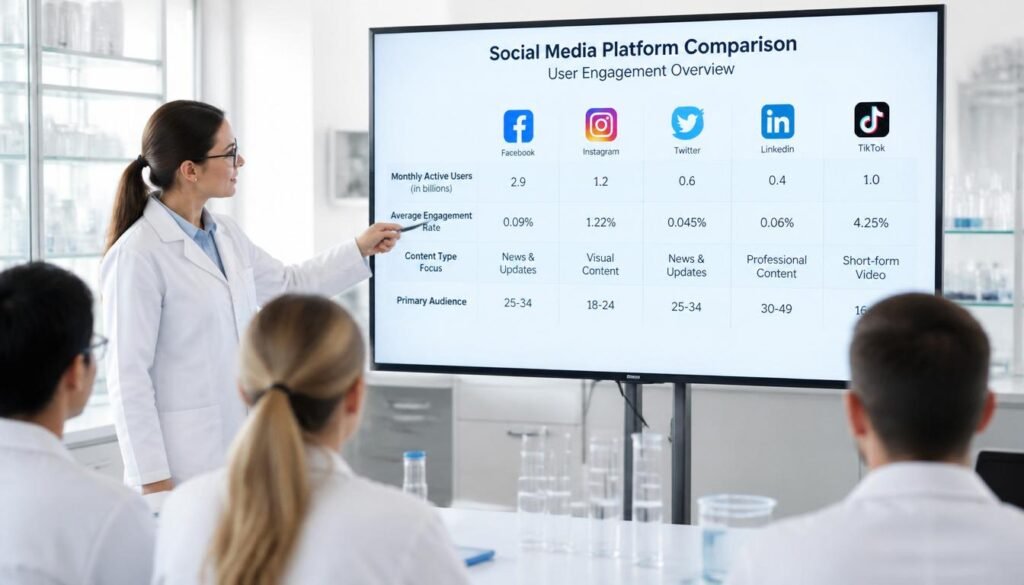
What I did not realise for years was that the apps are not showing me reality — they are showing me what keeps me scrolling. The happiest photos, the biggest achievements, the perfect bodies. Nobody posts their bad days. Once I understood this, I stopped blaming myself.
Social media platforms are not neutral mirrors of what people post. They are active curation systems that prioritise engagement — and content that generates strong emotional responses, including envy, aspiration, and social anxiety, tends to generate high engagement. Algorithms learn, through billions of interactions, that aspirational content keeps people scrolling. The result is that your feed does not show you a representative sample of human experience. It shows you a curated selection of the most visually impressive, socially successful, and emotionally stimulating material from the largest possible pool of creators – weighted toward comparison-inducing content because comparison-inducing content performs.
This is not a conspiracy. It is the logical output of systems optimised for time-on-platform. But understanding it changes the relationship with the feed — from passive reception of reality to critical engagement with a deliberately constructed environment.
In simple terms: social media algorithms are comparison machines. They do not present the world as it is. They present the world as it performs best — and performance optimises for envy and aspiration.
The Psychological Reason
The comparison mechanism activated by social media exploits a cognitive system that evolved for a fundamentally different context. In the ancestral environments in which human psychology developed, social comparison happened within a group of perhaps 50 to 150 people — people whose lives you knew in full, whose struggles were visible, whose successes were roughly comparable to your own circumstances. The information was accurate, and the pool was representative.
Social media comparison happens against a global pool of billions, filtered through professional photography, strategic self-presentation, and algorithmic selection for the most impressive content. The brain’s comparison mechanism was not designed for this input. It processes the curated highlight reel as if it were representative reality — producing feelings of inadequacy, falling behind, and social exclusion that would make complete sense in the ancestral context and make no sense at all in the actual one.
In simple terms: your brain is running ancient social comparison software on a data set it was never designed to process — and the output is reliably inaccurate and reliably distressing.
Common Signs Social Media Comparison Is Affecting You
Mood that is noticeably worse after social media sessions than before
Increased dissatisfaction with your own appearance, relationship, career, or home after scrolling
Compulsive checking of specific accounts despite knowing it makes you feel worse
Reduced motivation that follows comparisons with people who appear further ahead
A sense that your real life is less interesting or valuable than the lives you observe online
Difficulty being present in your own experiences because you are framing them through how they would appear on a feed
Reduced satisfaction with genuine achievements because they are measured against an online pool rather than your own progress
What Research Says About Social Media Comparison
Study 1 — Social Comparison on Social Media and Mental Health: Two Independent Studies
A 2025 study published in Frontiers in Psychology by Le Blanc-Brillon and colleagues at the Université de Montréal conducted two independent studies — one during the COVID-19 pandemic and one post-pandemic — examining the mediating role of social comparisons in the relationship between social networking site use and mental health outcomes. Across both studies and two platforms (Instagram and Facebook), upward social comparison mediated the association between platform use and lower global self-esteem and depressive symptoms. The researchers found that both exposure to and extremity of upward comparisons contributed meaningfully to the effects of social media on self-esteem and mood, though they noted that effect sizes were modest – accounting for 6 to 9% of the variance – underscoring the need to understand individual and contextual variables that may mitigate harm.
What this may mean for you: The research confirms that it is not social media use itself but the comparison it generates — specifically upward comparison — that drives psychological harm. This means the intervention target is the comparison, not only the platform. Individual responses vary significantly based on personal comparison orientation and baseline self-esteem.
DOI: https://doi.org/10.3389/fpsyg.2025.1597241
Study 2 — Social Media Addiction, Anxiety, Depression, FoMO, and Self-Esteem: A 2025 Meta-Analysis
A 2025 systematic review and meta-analysis published in PLOS ONE by Jing and colleagues analysed studies on the correlations between social media addiction and anxiety, depression, fear of missing out (FoMO), loneliness, and self-esteem among students. The meta-analysis confirmed significant positive associations between social media addiction and each of these outcomes. The clustering of effects — anxiety, depression, loneliness, and reduced self-esteem occurring together — suggests that the mechanism is not specific to any single psychological process but operates through a broader disruption of social and self-evaluative functioning.
What this may mean for you: The harms of problematic social media use are not isolated to mood or self-esteem alone — they are interconnected across multiple dimensions of wellbeing simultaneously. Addressing one dimension while ignoring others is likely to produce limited improvement. Individual responses and thresholds for harmful use vary significantly.
DOI: https://doi.org/10.1371/journal.pone.0329466
Study 3 — Upward Comparison and Appearance Anxiety: A 2025 Study
A 2025 study published in Behavioural Sciences examined the impact of upward social comparison on social media on appearance anxiety. The research found that frequent upward comparisons can exacerbate appearance anxiety, lead to self-objectification, and perpetuate a cycle of negative emotions. Critically, the study also noted that upward comparison is not uniformly harmful — in certain contexts, it can act as a catalyst for personal growth and self-improvement. The key variable was whether the comparison generated motivation or inadequacy – a distinction shaped by individual psychological factors, including self-compassion and perceived controllability of the gap.
What this may mean for you: Not all comparison is harmful. The research suggests that whether upward comparison produces aspiration or inadequacy depends significantly on how you relate to the comparison — particularly whether you have a foundation of self-compassion and whether the gap between you and the comparison target feels bridgeable. Individual responses vary considerably.
DOI: https://doi.org/10.3390/bs15010008
“Social comparison on social media is not a new psychological phenomenon — it is an ancient one deployed at unprecedented scale and frequency, against a curated rather than representative pool, by systems designed to maximise engagement rather than well-being. Understanding the mechanism is the beginning of managing it.”
— Perspective consistent with current social psychology, digital well-being, and platform design literature, 2024–2025

Immediate Steps When the Comparison Spiral Starts
Name what just happened — specifically. Not “I feel bad” but “I just spent eight minutes looking at someone’s holiday photographs, and I am now comparing their circumstances to mine.” Naming the mechanism interrupts the automatic processing and creates a moment of agency between the stimulus and its effect.
Put the phone face down and wait three minutes before picking it up again. The emotional intensity of a comparison-triggered mood shift typically peaks within two to three minutes and then begins to decline. Physically interrupting the session before the follow-up scroll — which reinforces the spiral — breaks the behavioural chain at its most vulnerable point.
Do one thing in your immediate physical environment. Stand up. Make a drink. Look out a window. The comparison spiral operates almost entirely inside your head and on a screen. Physical engagement with your actual environment — even briefly — interrupts the abstraction that comparison requires.
Remind yourself of the mechanism, not the content. Not “their life is better than mine” — which the algorithm has manufactured — but “I just processed a curated selection of one person’s best moments against the full complexity of my own life, and that comparison was never going to be accurate.” This is not positive thinking. It is accurate thinking.
Do not immediately open another app. The urge to switch from one platform to another after a comparison-heavy session is the brain seeking relief through more stimulation. It typically produces more comparison. A genuine break — phone down, different activity — is more effective than platform switching.
Note the time and what you were doing before you opened it. Comparison spirals are significantly more likely to occur during periods of low mood, boredom, or already-present self-doubt. Identifying the state you were in when you picked up the phone helps identify the vulnerability — and the next time that state arrives, you have information about what is likely to happen next.
Real-Life Example — How Fatima Broke Her Comparison Habit
The Problem
Fatima, a 29-year-old marketing professional, had noticed over the course of approximately a year that her relationship with social media had shifted from something she used to something that used her. She was checking Instagram first thing in the morning and last thing at night. Her mood had become noticeably linked to what she encountered in the feed—elevated briefly by positive interactions and flattened significantly by the achievements and appearances of people she followed. She did not describe the problem as addiction or mental illness. She described it as “never quite feeling like enough.”
The Mistake
Fatima’s first response was to delete Instagram entirely for thirty days. The thirty days produced meaningful relief. On day thirty-one, she reinstalled the app and within forty-eight hours was engaging in the same patterns with the same mood consequences. She had addressed the access without addressing the habit, the underlying comparison orientation, or the emotional triggers that made her most vulnerable to the comparison spiral.
The Solution
Working with a therapist who specialised in digital wellbeing, Fatima identified three specific contexts in which her comparison-driven Instagram use was most harmful: first thing in the morning before she had established her own mood for the day; late at night when her self-critical thinking was already elevated; and specifically when she was looking at accounts of people she perceived as peers rather than the general feed. She restructured her phone use around those three contexts – no social media before 9am, no social media after 9pm, and an intentional unfollow of accounts whose content consistently left her feeling worse rather than better.
The Result
Within six weeks, Fatima described her relationship with Instagram as “functional” rather than compulsive — she used it for professional purposes and occasional connection, found herself looking at it less without actively restricting herself, and reported that the “never feeling like enough” quality had significantly reduced. She attributed the change not to less social media but to more honest social media — using it deliberately rather than automatically. Individual results vary enormously. Fatima’s improvement reflected both her engagement with the process and the specific support she received.

The 3-Step Framework for Healthier Social Media Use
Step
Action
Ask Yourself
1
Audit
Which accounts, platforms, and usage patterns consistently leave me feeling worse—and am I honest about that?
2
Restructure
Can I change when, where, and how I use social media rather than only how much?
3
Reorient
Am I using social media to connect and create — or primarily to consume and compare?
The framework is deliberately focused on restructuring rather than elimination, because the research on digital detox outcomes shows that complete removal typically produces temporary relief followed by resumed use with unchanged underlying patterns. The goal is a different relationship with the platform — one in which you are using it deliberately rather than being used by it automatically. That shift is behavioural, habitual, and contextual rather than willpower-based.
That shift is behavioural, habitual, and contextual rather than willpower-based. For a deeper understanding of how to build a calmer start to your day, read our guide on morning habits for energy, focus, and calm.
4 Questions to Ask Yourself When Comparison Hits
Am I comparing my entire life to someone else’s highlight reel?
This is the foundational cognitive correction available in the moment of comparison. The person’s post does not show the anxiety before the holiday, the credit card debt that funded it, the argument in the hotel room, or the ordinary days that surround the extraordinary one. Your brain is comparing your full unedited existence — which includes all of those things — to a photograph taken, filtered, and posted specifically because it was the best representation available. That comparison was always going to produce one result. It was not an accurate one.
Would I be comparing this way if I had not just opened the app?
This question identifies the platform as the trigger rather than the content. Most people do not walk through their day in a state of constant comparison-driven inadequacy. The feeling is reliably produced by the act of opening the app in a vulnerable moment, scrolling through algorithmically curated aspirational content, and closing it with a mood that did not exist thirty seconds earlier. Identifying the platform as the mechanism rather than the content or the comparison target changes what the intervention needs to be.
Is this comparison generating aspiration or inadequacy?
Research suggests that not all upward comparison is harmful. Comparisons that generate a sense of “I could work toward that” produce a different psychological state than comparisons that generate “I will never have that”. The distinction is worth identifying in the moment — not to force optimism, but to understand whether the comparison is usable or merely diminishing. If the answer is reliably inadequacy rather than aspiration to a specific account or content type, that is information about what to do with your follow list.
What was I doing and how was I feeling before I opened this app?
The comparison spiral is most powerful when it arrives in already-vulnerable emotional territory. Boredom, low mood, self-doubt, loneliness, and anxiety all create conditions in which the brain is already primed toward negative self-evaluation — and the social media feed arrives with perfectly targeted material to confirm and amplify whatever is already present. Identifying the pre-scroll emotional state reveals the vulnerability that the comparison exploits — and gives you the choice to address the actual state rather than medicate it with more scrolling.
Identifying the pre-scroll emotional state reveals the vulnerability that the comparison exploits. For more on managing the anxiety that makes the spiral worse, see our guide on how to manage stress and anxiety naturally.
The One Thing Most Articles About Social Media Comparison Miss
Most articles on this topic focus on content. Unfollow people who make you feel bad. Curate a positive feed. Follow accounts that inspire you. Use social media mindfully.
That advice is not wrong. But it misses what the research actually shows is the more significant variable.
The problem is not primarily the content. The problem is the orientation.
Research identifies something called social comparison orientation — a stable individual tendency to compare oneself to others in general, across contexts. People with a high social comparison orientation do not only compare more on social media. They compare more in meetings, at family gatherings, and walking down the street. Social media amplifies this tendency dramatically — because it provides an unlimited, algorithmically optimised pool of comparison targets. But the tendency precedes the platform.
This means that curating your feed addresses the fuel but not the fire. The more fundamental intervention is working on your relationship with comparison itself — on building a stable enough sense of your own value and direction that comparison loses some of its power, regardless of what the feed contains.
That work is not a social media strategy. It is a self-worth strategy. And it is the one that produces changes that last beyond the next time you update your follow list.
Comparison loses power not when you remove its targets. It loses power when your sense of yourself no longer depends on the outcome.

Does Deleting Social Media Actually Help?
Yes — temporarily. Research and clinical experience consistently show that removing social media access produces immediate improvements in mood, sleep, and self-reported wellbeing for most people who try it. The difficulty is that these improvements tend not to persist fully after reinstallation, because the underlying comparison orientation, the emotional triggers that drive compulsive use, and the habitual patterns of checking remain unchanged. Complete deletion can be an appropriate and effective intervention for people whose use has become severely harmful — and the temporary relief it provides can create space for the more fundamental work of changing the relationship with comparison. But as a standalone solution, it addresses access rather than mechanism. For most people, restructuring use – different timing, different accounts, and different intention – produces more durable improvement than removal followed by reinstallation with identical patterns. Individual responses vary, and professional guidance is appropriate if use has become significantly harmful.
7 Practical Strategies You Can Start Today
Strategy 1 — Conduct an Honest Mood Audit for One Week
For the next seven days, rate your mood on a scale of 1 to 10 immediately before and immediately after every social media session. Not your general mood — specifically your mood about your own life, your sense of your own adequacy, your feeling about where you are relative to where you want to be. At the end of seven days, review the data honestly. The accounts and session types that consistently move the number downward are your actual problem — not social media in general.
Strategy 2 — Introduce Friction Between You and the App
The comparison spiral begins with the effortless, automatic reach for the phone. Introducing any friction into that sequence — moving the app to a folder, turning off notifications, leaving the phone in another room during meals — disrupts the automaticity without requiring willpower at the moment of temptation. Research on habit change shows that friction is more effective than intention at the moment of strongest urge.
Strategy 3 — Define and Enforce Time Boundaries
Decide in advance — not in the moment — when you will and will not use social media. A rule made in advance (“no social media before 9am and after 9pm”) requires one decision that then governs every subsequent situation. A rule made in the moment requires a fresh decision under conditions of maximum temptation every time. Most people find the former more sustainable by a significant margin.
Strategy 4 — Curate Ruthlessly and Without Guilt
Unfollow or mute any account that consistently leaves you feeling worse about your own life. Not because you dislike the person. Not because the content is objectively bad. Because the specific comparison it generates in you is reliably harmful to your mood and self-evaluation. You are not obligated to follow anyone. Your feed is an environment you choose — choose it based on what it produces in you, not on social obligation.
Strategy 5 — Create More Than You Consume
The comparison spiral is almost exclusively a consumption experience. Creating — writing, photographing, building, making — shifts the orientation from evaluation to expression. You cannot simultaneously be in a comparison spiral and genuinely absorbed in making something. People who use social media primarily to share their own genuine experience rather than to monitor others’ tend to report significantly different emotional relationships with the platforms.
Strategy 6 — Build Off-Screen Sources of Self-Worth
The comparison spiral has the most power over people whose sense of their own value is primarily social — dependent on feedback, recognition, and favourable comparison with others. Building self-worth through mastery, contribution, and internal standards – through getting better at something, being genuinely useful to specific people, and pursuing goals that are meaningful regardless of whether anyone else sees them – creates a psychological foundation that is less vulnerable to comparison-triggered destabilisation. This is not a social media strategy. It is the most durable form of comparison resistance available.
Building self-worth through mastery, contribution, and internal standards creates a psychological foundation less vulnerable to comparison. For practical tools, explore our emotional fitness guide.
Strategy 7 — Seek Professional Support If the Pattern Is Significantly Harmful
For some people — particularly those with pre-existing anxiety, depression, low self-esteem, or body image concerns — social media comparison is not a mild inconvenience. It is a significant, daily source of psychological harm that self-help strategies alone are insufficient to address. A therapist experienced in cognitive behavioural approaches, schema therapy, or digital wellbeing can address the comparison orientation and underlying self-worth beliefs in ways that produce more fundamental change. If social media comparison is significantly affecting your mood, self-image, or daily functioning, professional support is both appropriate and effective.
Common Mistakes People Make With Social Media Comparison
Mistake
Why It Fails
Better Fix
Deleting social media as the sole intervention
Removes access temporarily but leaves the comparison orientation and emotional triggers unchanged — use resumes with identical patterns
Restructure use AND address the underlying comparison orientation simultaneously
Curating the feed without examining the pattern
Removing specific triggers helps but does not address why comparison produces such strong effects in the first place
Combine feed curation with honest reflection on what comparison is actually costing you
Using willpower to resist checking in the moment
Willpower is most depleted exactly when temptation is strongest — in-the-moment resistance fails consistently
Introduce friction and time boundaries decided in advance, not in the moment of urge
Treating all social media use as equivalent
Passive scrolling and active comparison produce measurably different psychological effects than creating and genuinely connecting
Distinguish between your uses of social media and address specifically the patterns that produce harm
Expecting rapid resolution
Comparison orientation is a stable psychological trait, not a habit that changes in a week
Set a realistic timeline of weeks to months for meaningful change – and measure progress in mood data, not in perfection of behaviour.
Most people reading this will recognise multiple patterns in themselves. That recognition is not a cause for additional self-criticism — it is accurate information about where to direct specific attention.
That recognition is not a cause for additional self-criticism — it is accurate information. For more on breaking free from overthinking, see our guide on how to stop overthinking at night.
When to Seek Professional Support
Please consider seeking professional support if any of the following applies:
Social media comparison is producing persistent low mood, anxiety, or significant self-esteem disruption that does not resolve after a period away from platforms
Your body image is significantly and regularly affected by social media content in ways that affect eating, exercise, or daily functioning
You are spending multiple hours daily on social media in a way that feels compulsive rather than chosen – and that you have not been able to meaningfully reduce through self-directed strategies
The comparison spiral has begun to affect your relationships, work performance, or quality of daily life
You recognize that your self-worth is deeply dependent on social validation — likes, followers, or favorable comparison — in ways that are causing distress
Social media comparison has contributed to or is worsening existing anxiety, depression, or eating disorder symptoms
A mental health professional experienced in cognitive behavioural therapy, acceptance and commitment therapy or digital well-being can provide targeted support that this article cannot. Individual circumstances vary, and professional guidance is the most reliable resource for determining what level of support is appropriate.

Key Takeaways
Upward social comparison on social media is the primary mechanism through which platform use reduces self-esteem and increases depressive symptoms — confirmed in 2025 research
Social media algorithms are designed to maximize engagement, not wellbeing — they prioritize aspirational content because it performs, not because it is representative
Your brain compares curated highlight reels against your entire unedited life — a comparison that was never designed to produce accurate information
Social media addiction is significantly associated with anxiety, depression, FoMO, loneliness, and reduced self-esteem simultaneously — the harms are interconnected
The problem is not primarily the content but the comparison orientation — a stable psychological tendency that precedes and survives any particular platform
Complete deletion typically produces temporary relief but not durable change without addressing the underlying mechanism
Restructuring use — timing, accounts, intention — produces more sustainable improvement than elimination followed by reinstallation
Building self-worth through mastery, contribution, and internal standards is the most durable available protection against comparison-triggered harm
Not all upward comparison is harmful — the distinction between aspiration-producing and inadequacy-producing comparison is worth identifying
Professional support is appropriate when comparison significantly affects mood, self-image, body image, or daily functioning
Frequently Asked Questions
Is it normal to feel bad after using social media?
Yes – and research confirms it is predictable rather than individualistic. Studies consistently show that passive social media use and upward comparison reliably produce negative mood and self-esteem effects in most people to varying degrees. The experience of feeling worse after scrolling is not a sign of unusual sensitivity or psychological weakness. It is the expected output of a system designed to surface aspirational content to a brain wired to compare. Individual variation in the degree of effect is significant, but the direction of effect is well-documented.
Can social media comparison cause depression?
The research suggests that social media comparison is a contributing factor to depression risk, particularly in younger users and those with high social comparison orientation or pre-existing vulnerability. It is unlikely to be a sole cause but is documented as a meaningful contributor in a cluster of effects that includes anxiety, FoMO, loneliness, and reduced self-esteem. If you are experiencing significant depressive symptoms, please seek professional assessment rather than attributing them solely to social media use.
How many hours of social media use is too much?
Research suggests that adolescents spending more than 3 hours per day show significantly elevated mental health risk. For adults, the relationship is less linear and more dependent on how the time is spent — passive comparison-heavy scrolling appears more harmful at any duration than active, intentional use. A more useful question than ‘total hours’ is, ‘Does my social media use leave me feeling better or worse about my life, and is the current pattern one I am choosing deliberately?
Does it help to follow more positive or inspiring accounts?
It helps modestly. Research shows that the content of what you follow affects comparison outcomes — following accounts that generate aspiration rather than inadequacy and unfollowing accounts that reliably trigger negative comparison produces measurable mood improvement. However, the effect is limited if the underlying comparison orientation remains unchanged — because a high social comparison orientation will generate comparison-based distress from almost any aspirational content, regardless of how positive the framing is.
Why do I keep going back to social media even when I know it makes me feel bad?
Because the mechanism operates through dopamine and intermittent reinforcement — the same neurological process that makes slot machines compelling. Every scroll carries the possibility of a positive stimulus — a satisfying post, social validation, or content that genuinely connects or entertains. The brain does not optimise for average outcomes. It optimises for the possibility of reward. The negative experience produced by comparison does not override this mechanism — it coexists with it. Understanding this explains why intention-based restriction fails — the pull is neurological, not rational.
Should I quit social media entirely?
For some people, in some periods — particularly those experiencing significant mental health impacts from use — a complete break is an appropriate and helpful intervention. For most people, the more sustainable goal is a fundamentally different relationship with the platforms — deliberate rather than automatic, creating rather than only consuming, and curated for what it produces rather than for what is expected socially. If you have tried restructuring without improvement, a qualified professional can help determine whether more significant steps are appropriate for your specific situation.
Your 30-Day Digital Wellbeing Plan
Today — Start Here
For the next 24 hours, rate your mood immediately before and after every social media session on a scale of 1 to 10 – just for one day, to begin building honest data about your own patterns
Identify the single account or platform that most reliably leaves you feeling worse — and unfollow, mute, or remove it today
This Week — Build Momentum
Move every social media app into a folder on the second page of your phone — not deleted, but not immediately visible — and notice whether the friction changes how automatically you reach for it
Establish one time boundary: no social media before 9am — just this one rule, for seven days — and note what the morning feels like differently
This Month — Create Lasting Change
Review the mood data you collected in week one and identify your highest-risk session types, times, and accounts — and make one specific structural change based on that data rather than on general advice
At the end of 30 days, ask yourself honestly: has my sense of my own life changed at all? Not whether the platforms have changed — whether your relationship with what you find there has. That question, answered honestly, is the most useful indicator of whether the work is producing what matters.

Final Thought
The comparison that social media enables is not going anywhere. The platforms are not going to optimise for your well-being rather than for their engagement metrics. The algorithms are not going to stop surfacing aspirational content. The human tendency to measure yourself against the people around you is not going to switch off; it is millions of years old, and it is not negotiable.
What is negotiable is the relationship between what you encounter and how much it determines what you think about your own life.
That relationship is not fixed. It changes with honest practice, with the gradual accumulation of self-worth that does not depend on comparison to win, and with enough clarity about the mechanism that you can see it for what it is – even while you are inside it.
The feed is not reality. Your life is. And no algorithm has ever been designed that captures the full texture of a real one.
Conclusion
My honest advice is not to delete everything, but to use it differently. Check how you feel before and after scrolling. Unfollow accounts that make you feel small. Spend more time making your own life than watching others’. That is what changed things for me.
Social media comparison is one of the most extensively documented and most widely experienced forms of psychological harm in the contemporary digital environment. The research is clear: upward social comparison on social media reduces self-esteem and increases depressive symptoms. The mechanism is the platform’s algorithmic amplification of aspirational content directed at a brain designed for a radically different comparison environment. The harm is real, it is measurable, and it is not a personal failing. how to stop comparing yourself on social media
The path toward a healthier relationship with social media is not primarily about how much time you spend on it. It is about whether your sense of your own life is determined from the inside out—by your own values, your own progress, and your own standards—or from the outside in, by a feed that was never designed with your wellbeing in mind. For a broader framework of building the psychological resilience and self-worth that makes comparison less powerful regardless of context, our guide on emotional fitness and psychological resilience provides the foundational tools that complement everything covered here.
For a broader framework of building psychological resilience and self-worth, our guide on emotional fitness and psychological resilience provides the foundational tools.
References
Le Blanc-Brillon J, Fortin JS, Lafrance L, Hétu S. (2025). The associations between social comparison on social media and young adults’ mental health. Frontiers in Psychology, 16, 1597241. DOI: https://doi.org/10.3389/fpsyg.2025.1597241
Jing Z, Yang W, Lei Z, Junmei W, Hui L, Tianmin Z. (2025). Correlations between social media addiction and anxiety, depression, FoMO, loneliness and self-esteem among students: A systematic review and meta-analysis. PLOS ONE, 20(9), e0329466. DOI: https://doi.org/10.1371/journal.pone.0329466
Wu et al. (2025). The Impact of Upward Social Comparison on Social Media on Appearance Anxiety: A Moderated Mediation Model. Behavioral Sciences, 15(1), 8. DOI: https://doi.org/10.3390/bs15010008
Corke L, Maksyutynska K, Jones JM, George TP. (2025). The Relationship Between Social Media Use and Mental Health Disorders in Adolescents and Young Adults: A Scoping Review. Journal of Dual Diagnosis. DOI: https://doi.org/10.1177/10401237251344098
Social media use and mental health: A systematic review and meta-analysis. (2022). PMC / IJERPH. https://www.ncbi.nlm.nih.gov/pmc/articles/PMC9620890/
American Psychological Association. (2023). Health advisory on social media use in adolescence. https://www.apa.org/topics/social-media-internet/health-advisory-adolescent-social-media-use
Disclaimer
This content is for general informational and educational purposes only. It does not constitute medical, psychological, or professional advice. The personal narrative in this article is a representative account based on experiences commonly reported by people affected by social media comparison — details have been adapted for educational purposes. Research cited is referenced for informational purposes only. Individual responses to social media use and comparison vary significantly. This article is not a substitute for professional psychological support. If social media use is significantly affecting your mental health, mood, self-esteem, or daily functioning, please consult a qualified mental health professional. Do not delay seeking professional help based on information read in this article
About the Author
HealthFitnessBloom Editorial Team
HealthFitnessBloom is dedicated to providing science-backed health, fitness, and wellness information to help readers live healthier lives. Our editorial team researches, writes, and reviews content to ensure accuracy, clarity, and practical value.