
Written by HealthFitnessBloom Editorial Team — health and wellness content researchers focused on evidence-based nutrition, brain science, and lifestyle optimisation. Research for this article included peer-reviewed literature published between 2015 and 2026.
Table of Contents
I used to think I just loved bold flavours, but one day I stopped mid-bite and asked myself why I needed hot sauce on everything. The eggs were fine without it — but something in me wanted the burn anyway. That question led me into the science, and what I found was fascinating.
Introduction
What Is a Spicy Food Craving?
Who Should Read This?
Key Statistics You Should Know
My Personal Experience With Spicy Food
Why It Happens
What Research Says
Quick Solutions That Actually Work
Real-Life Example — How Marcus Managed His Spicy Food Habit
The 3-Step Framework That Actually Works
4 Questions to Ask Yourself Before You Reach for the Hot Sauce
The One Thing Most Articles About Spicy Food Cravings Miss
Does Spicy Food Actually Release Dopamine?
7 Practical Strategies You Can Start Today
Common Mistakes People Make
When to See a Healthcare Professional
Key Takeaways
Frequently Asked Questions
Your 30-Day Action Plan
Final Thought
Conclusion
References
Disclaimer
Introduction
It burns the moment it touches your tongue. Your eyes water. Your forehead breaks into a sweat. And yet, you do not stop. You reach for another bite, then another, and somehow it feels genuinely good.
If you have ever sat at a table thinking this is too hot and kept eating anyway, you are not alone. Research suggests that a significant majority of the global population regularly consumes chilli peppers, and in the United States, 60 per cent of consumers report eating spicier food than they did the previous year. That is not a cultural accident. That is neuroscience. why you crave spicy food
The craving for spicy food is one of the more fascinating examples of how the human brain rewires itself around a sensation most people would instinctively avoid. It involves pain receptors, pleasure chemicals, behavioural conditioning, and emotional memory. Once you understand the mechanics, the craving begins to make complete sense — and more importantly, you gain real tools to work with it consciously.
This article explains the science clearly, without overclaiming. It also offers practical strategies grounded in research – not just motivational advice – for anyone who wants a healthier, more intentional relationship with health.
“Cold turkey approaches almost always fail precisely because they skip this step entirely. If you want to understand how sugar cravings and reward habits work in the brain, the same principles apply across almost every food-based habit loop.”
What Is a Spicy Food Craving?
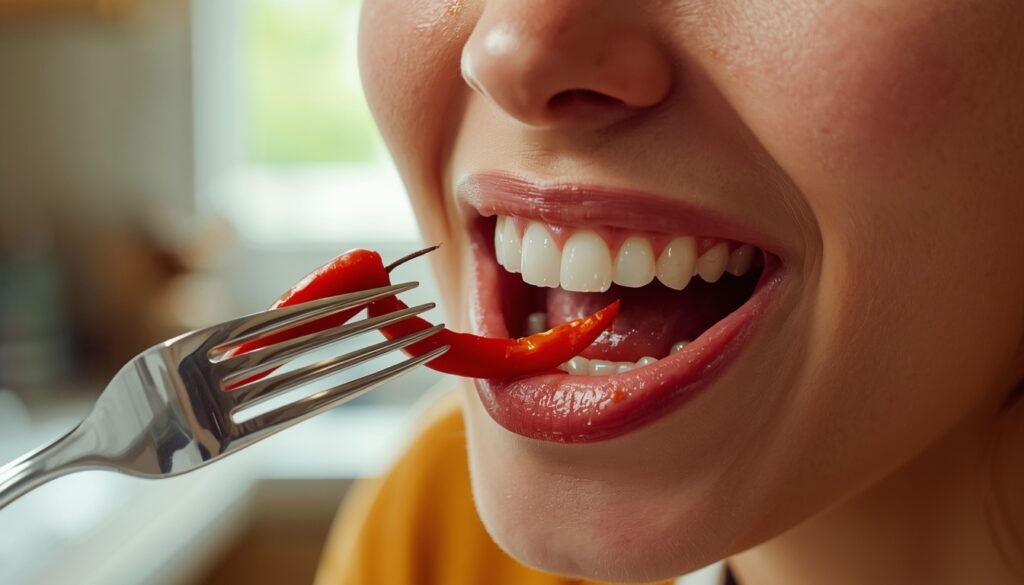
In simple terms, a spicy food craving is a learned neurological response in which the brain associates capsaicin — the active compound in chilli peppers — with a pleasurable reward signal. Capsaicin activates pain receptors called TRPV1, which triggers the release of endorphins and dopamine. Over time, the brain begins to anticipate and seek that reward, producing what most people experience as a genuine, recurring craving.
In simple terms, your brain learnt that the burn leads to pleasure – and now it wants to repeat that experience.
Who Should Read This?
This article is for you if you are:
Someone who eats spicy food daily and wonders why stopping feels difficult
A person experiencing heartburn or digestive discomfort but still reaching for hot sauce
Anyone curious about the brain science behind food cravings
People trying to reduce spicy food intake without feeling deprived
Parents trying to understand why their teenager is drawn to increasingly spicy foods
Anyone who has attempted to cut back on spicy food and found it harder than expected
Key Statistics You Should Know
📊 Statistic
Source
60% of US consumers report eating spicier food than they did the previous year
ScienceDirect Food Quality Study, 2025
People who consumed spicy food 6–7 days per week showed a 14% lower adjusted risk of total mortality
BMJ Cohort Study, Lv et al., 2015; DOI: 10.1136/bmj.h3942
Capsaicin activates TRPV1 receptors at the same threshold as temperatures above 43°C
Neurochemical Research, Abdel-Salam et al., 2023
TRPV1 activation by capsaicin increases dopamine release in the nucleus accumbens — the brain’s reward centre.
ScienceDirect, Metabolic Pathways of Capsaicin, 2024
Chili pepper is the most widely consumed spice in the world
Neurochemical Research, 2023
My Personal Experience With Spicy Food
I used to believe I simply liked bold flavours. That was the story I told myself every time I added a third spoonful of chilli paste to something already quite spicy. It took years before I was honest enough to admit that the flavour was no longer the point.
It started gradually. A little extra hot sauce here. Always ordering the hottest option on the menu. Then one afternoon I sat down with an unreasonable amount of sriracha on my eggs and stopped mid-bite to actually ask myself – why? Not critically. Just genuinely curious. The eggs were perfectly good without it. But without the heat, the meal felt strangely incomplete.
That moment sent me into research I had not expected to find so illuminating. What I discovered was both surprising and oddly reassuring. I was not dealing with a willpower problem. My brain had simply learned — through many positive experiences with spicy food — that heat signals reward. The craving was not random. It was trained.
Honest truth: some days I still reach for the hot sauce on pure autopilot. Some days I catch the moment first. I do not always get it right, and I think that is worth saying plainly. But understanding what is actually happening in the brain changed the nature of every choice I made afterward.

Why It Happens
The Psychological Reason
What I learned is that my brain had learned to connect the burn with relief and reward. It was not about taste anymore — it was a trained habit. The spice was giving me a dopamine hit, and my brain wanted more. Once I saw the pattern, I could finally work with it.
The brain is fundamentally a pattern-recognition and reward-prediction system. Every time spicy food is followed by endorphin release and a sense of relief or mild euphoria, the brain stores that sequence as a positive experience worth repeating. Over time, even the anticipation of spicy food — the smell, the sight, the memory — can trigger early dopamine release before the first bite is taken. Psychologist Dr Paul Rozin of the University of Pennsylvania described this phenomenon as benign masochism — the brain recognises that no real tissue damage is occurring despite the pain signal, which converts the discomfort into a form of safe thrill.
In simple terms, your brain is not responding to the flavour — it is chasing the reward that follows the pain.
The Behavioral Reason
Behaviour is shaped heavily by repetition, context, and emotional association. If spicy food was central to family meals growing up, the brain formed early connections between heat and safety, belonging, and comfort. If spicy food became a coping mechanism during stressful periods — because endorphins provide genuine temporary emotional relief — the brain may now automatically reach for heat when stress levels rise. The craving is not purely physical. It is a conditioned behavioural response layered with emotional memory, social context, and personal history.
In simple terms, the craving is often an emotional response wearing the appearance of a food preference.
Common Triggers
Stress or emotional tension — seeking endorphin-mediated relief
Established daily habit — eating spicy food at the same time each day
Boredom — seeking sensory stimulation
Social and cultural contexts — peer dynamics or cultural meal traditions
Visual or olfactory cues — seeing or smelling spicy food
Low mood — seeking the dopamine signal
Post-exercise state — already-elevated endorphin levels reinforce the association
What Research Says About Spicy Food Cravings
Study 1 — Capsaicin, TRPV1, and the Brain’s Reward System
A 2024 review published in the Journal of Photochemistry and Photobiology examined the metabolic pathways and neurochemical effects of capsaicin in detail. The review confirmed that TRPV1 activation by capsaicin excites dopaminergic neurones and increases dopamine release in the nucleus accumbens — the brain’s primary reward centre. This finding provides a direct neurochemical explanation for why spicy food feels rewarding rather than simply painful.
What this may mean for you: The pleasure you experience after eating spicy food is not imagined. It reflects a measurable biological event in the brain’s reward circuitry — though individual responses to this process vary significantly.
DOI: https://doi.org/10.1016/j.jphotobiol.2024.112979
Study 2 — Capsaicin and Neuroprotection via TRPV1
A 2023 review published in Neurochemical Research by Abdel-Salam and Mózsik examined capsaicin’s wide-ranging effects on the nervous system through TRPV1 activation. The review documented that capsaicin’s interaction with TRPV1 triggers a cascade involving substance P release, endorphin production, and downstream dopamine activity — explaining both the pain and pleasure components of the spicy food experience. The authors also noted capsaicin’s potential neuroprotective effects in animal models.
What this may mean for you: The neurological response to capsaicin is more complex than a simple burn. It activates multiple brain pathways simultaneously, which may partly explain why the experience feels so compelling and hard to resist.
DOI: https://doi.org/10.1007/s11064-023-03983-z
Study 3 — Spicy Food Consumption and Longevity
A large-scale prospective cohort study published in the BMJ followed 487,375 adults over a median of 7.2 years. The study found that compared with those who ate spicy food less than once per week, individuals who consumed spicy food 6 to 7 days per week showed a 14 per cent lower adjusted risk of total mortality. The associations were particularly notable for deaths related to cancer, heart disease, and respiratory disease.
What this may mean for you: Moderate regular consumption of spicy food is not associated with harm in most healthy adults, and some large-scale data suggests potential long-term health associations. However, these are observational findings and do not establish direct causation. Individual responses and health circumstances vary significantly.
DOI: https://doi.org/10.1136/bmj.h3942
“Capsaicin is one of the most neurologically interesting compounds in the human diet — it simultaneously activates pain pathways and the brain’s reward circuitry, which is a rare and compelling combination that helps explain why so many people find spicy food genuinely difficult to resist.”
— Perspective synthesized from peer-reviewed neuroscience and nutrition literature, 2023–2024

Quick Solutions That Actually Work
Drink cold milk, not water. Milk contains casein, a protein that binds directly to capsaicin molecules and removes them from TRPV1 receptors. Water does not bind to capsaicin — it spreads it further across the oral mucosa, intensifying the burn rather than relieving it.
Wait before reaching for more heat. Peak capsaicin burn typically subsides within 8 to 12 minutes. Most people add more heat before the first wave has fully resolved. Waiting allows the complete experience — including the relief phase — to finish without escalation.
Pause before the hot sauce. One second of conscious awareness before adding heat is enough to interrupt an automatic habit loop. Ask simply: am I hungry, stressed, or bored? The answer matters more than it seems.
Eat something starchy before a spicy meal. Rice, bread, or a plain cracker before spicy food can slow capsaicin absorption and reduce the intensity of the initial burn, which may reduce the compulsive reach for more heat.
Identify your peak craving time. Most people crave spicy food at predictable times — late afternoon, post-exercise, or during stress. Knowing your pattern means you can prepare a conscious response rather than simply reacting.
Reduce heat gradually rather than stopping suddenly. Moving from a high heat level to mild in one step is neurologically difficult. Dropping one level at a time over two to three weeks is more sustainable and far less likely to produce the flat, unrewarded feeling that drives relapse.
Stay hydrated throughout the day. Mild dehydration amplifies most food cravings, including spicy food. Drinking sufficient water — particularly 20 minutes before eating — can measurably reduce craving intensity for many people.
Real-Life Example — How Marcus Managed His Spicy Food Habit
The Problem
Marcus, a 34-year-old graphic designer, had reached the point of consuming spicy food at nearly every meal — approximately two bottles of hot sauce per week by his own estimate. The issue was no longer enjoyment. He was experiencing persistent acid reflux, disrupted sleep following evening meals, and early signs of gastric irritation confirmed by his doctor. Despite being aware of the problem, every attempt to reduce his intake lasted fewer than three days.
The Mistake
Marcus attempted complete elimination — stopping all spicy food at once. Without the neurochemical stimulation his brain had come to anticipate, he felt flat, unmotivated, and unusually irritable. He described the first week as feeling weirdly low. He attributed this to personal weakness and abandoned the attempt. The underlying issue was that he had addressed only the behaviour, not the neurological pattern driving it.
The Solution
Working with a nutritionist, Marcus came to understand that his brain had built a genuine reward circuit around spicy food. The approach shifted from elimination to gradual substitution. He reduced heat intensity by one level per week, introduced other genuinely pleasurable flavour profiles — umami, smokiness, and tanginess — to maintain sensory engagement, and began a daily 15-minute walk to support his dopamine baseline through a different pathway.
The Result
Within six weeks, Marcus reported a significant improvement in reflux symptoms. Within three months, he was eating spicy food two to three times per week instead of three times daily — and by his account, enjoying it considerably more because it had returned to being an occasional pleasure rather than a daily compulsion. Individual results vary. Marcus worked alongside healthcare professionals throughout this process.

The 3-Step Framework That Actually Works
Step
Action
Ask Yourself
1
Pause
What do I actually need right now?
2
Identify
Is this hunger, habit, stress, or boredom?
3
Replace
What is one satisfying alternative to more heat?
This framework is useful because it inserts a moment of conscious choice between the trigger and the automatic response. The aim is not to eliminate spicy food — it is to make the decision deliberate rather than reflexive. Research on habit change consistently shows that even a brief interruption between cue and behaviour begins to loosen automatic patterns over time. The craving does not disappear immediately, but it gradually loses the urgency that makes it feel unmanageable. Cold turkey approaches almost always fail precisely because they skip this step entirely.
4 Questions to Ask Yourself Before You Reach for the Hot Sauce
What am I feeling right now?
Before adding heat, take a moment to check in with your emotional state. Stressed? Tired? Bored? Lonely? Many spicy food cravings are emotional states wearing the appearance of a food preference. Naming the emotion does not eliminate the craving — but it creates distance between the feeling and the automatic response, which is where real choice begins.
Is this a genuine preference or a conditioned habit?
There is a meaningful difference between choosing spicy food because you genuinely want it and reaching for it because the brain has learned to expect it. Building the capacity to distinguish between these two states is a form of self-knowledge that develops with practice, not instantly. Most people find that asking the question — even without a clear answer — begins to shift the pattern.
“Most people find that asking the question — even without a clear answer — begins to shift the pattern. For a deeper look at the science of dopamine and how habits form, our dedicated guide explains the full neurological cycle.”
What triggered this feeling?
Consider the last hour. Did something stressful happen? Have you been sitting still for a long time? Did you see or smell something spicy? Identifying the trigger is not about self-criticism. It is about understanding your own patterns well enough to work with them rather than simply reacting to them every time.
What is one genuinely satisfying alternative?
Not a punishment substitute. Something you actually enjoy. Strong ginger tea. Smoky paprika. A tangy pickle. Black pepper. Your brain is seeking stimulation and reward — those do not need to come exclusively from capsaicin. Having a prepared answer to this question before the craving arrives makes the moment of choice far easier.
The One Thing Most Articles About Spicy Food Cravings Miss
Every article about spicy food cravings describes the same basic sequence: capsaicin activates pain receptors, endorphins are released, and the brain learns to like it. That explanation is accurate. But it is incomplete.
It focuses entirely on the burn.
What it misses is this: you are not craving the burn. You are craving the relief that comes after the burn.
The most rewarding moment in the spicy food experience is not the peak of the pain. It is the gradual fade — the moment the heat begins to subside and the body floods with the endorphin response it has been building. The burn is the mechanism. The relief is the reward. This is why swapping extremely spicy food for mild food almost never satisfies the craving. Mild food cannot produce the same neurological payoff, because the relief is only as satisfying as the discomfort that preceded it.
Understanding this changes the approach entirely. You are not managing a taste preference. You are managing a relief-seeking loop.
You do not crave the burn. You crave what your brain feels after surviving it.
Does Spicy Food Actually Release Dopamine?
Yes. Research suggests that capsaicin activates TRPV1 receptors in the brain, which excites dopaminergic neurones and may increase dopamine release in the nucleus accumbens — the brain’s primary reward centre. This response helps explain why spicy food feels genuinely pleasurable rather than simply painful. Additionally, the endorphins released in response to capsaicin-triggered pain signals also contribute to downstream dopamine activity. Individual neurochemical responses vary significantly depending on TRPV1 receptor sensitivity, genetics, and prior exposure to capsaicin.
7 Practical Strategies You Can Start Today
Strategy 1 — Map Your Craving Triggers
Spend three days writing down when the craving appears and what was happening in the hour before it arrived. Most people discover two or three consistent patterns. Once those patterns are visible, the craving becomes something you can anticipate and respond to thoughtfully — rather than something that simply happens to you and demands an immediate response.
Strategy 2 — Build a Dopamine Alternative List
Spicy food is one route to dopamine and endorphin activation among many. Brisk walking, music, laughter, cold water, and meaningful social interaction all engage similar reward pathways. Having a genuine alternative list prepared means that when a craving arrives, a real choice exists — rather than an automatic surrender to the most familiar option.
Strategy 3 — Eat Mindfully Rather Than Automatically
A significant proportion of spicy food consumption happens without real attention — the way most people scroll a phone. Slowing down, tasting the full complexity of the dish, and allowing the heat to arrive properly tends to produce satisfaction from smaller quantities, because the brain receives the complete sensory experience it was seeking rather than an automatic stimulus-response cycle.
Strategy 4 — Explore Flavor Depth Rather Than Heat Escalation
Heat is one dimension of spicy cuisine. Umami, smokiness, acidity, and aromatic complexity are others. Shifting focus from capsaicin intensity to overall flavour depth often leads to greater satisfaction at lower heat levels — and frequently opens up more interesting culinary experiences in the process.
Strategy 5 — Time Spicy Meals Strategically
Consuming spicy food earlier in the day is generally better tolerated by the digestive system than late-evening consumption, particularly for individuals prone to acid reflux. Simply shifting the timing — without necessarily reducing the quantity — can meaningfully reduce discomfort while preserving the enjoyment you are actually seeking.
Strategy 6 — Support Dopamine Baseline Through Exercise
Regular moderate physical activity naturally elevates dopamine and endorphin baseline levels. People who exercise consistently often report reduced intensity across most food cravings — including spicy food — because the brain is already receiving adequate neurochemical reward through movement. A daily 15 to 20-minute walk is sufficient to begin producing meaningful effects over time.
“A daily 15- to 20-minute walk is sufficient to begin producing meaningful effects over time. For more on the quiet power of walking for mood and metabolism, our dedicated guide covers the evidence in detail.”
Strategy 7 — Allow Time Without Judgment
Some people notice meaningful changes in their craving patterns within two weeks of intentional effort. Others take several months. Brains do not rewire on predictable schedules, and reward associations built over years do not dissolve quickly. If previous patterns reassert themselves, that is data — not failure. Observe it, understand what triggered it, and begin again from that point.
Common Mistakes People Make With Spicy Food Cravings
Mistake
Why It Fails
Better Fix
Stopping completely and immediately
Removes the neurochemical reward suddenly, causing irritability and early relapse
Reduce heat level gradually over 3–4 weeks
Drinking water to manage the burn
Water disperses capsaicin across the oral mucosa, intensifying rather than relieving the sensation
Use cold milk or yogurt — casein binds to capsaicin
Treating the craving as a willpower problem only
Ignores the genuine neurological reward loop involved
Address the underlying habit pattern, not just the behaviour.
Escalating to progressively hotter foods
Capsaicin tolerance increases quickly, requiring more for the same effect
Maintain current heat level or step down gradually
Eating spicy food during stress without awareness
Reinforces and deepens the stress-to-spice habit loop
Identify the emotional trigger first, then make a deliberate choice
Most people recognise themselves in at least two or three of these patterns before they understand what is driving the behaviour neurologically. Recognition without judgement is the genuine starting point.
‘Recognition without judgement is the genuine starting point. Understanding how stress affects eating behaviour and food choices explains why so many craving patterns feel impossible to break without addressing the emotional root first.”
When to See a Healthcare Professional
Please consult a qualified healthcare professional if you experience any of the following:
Persistent heartburn or acid reflux that does not improve with dietary adjustments
Blood in your stool or significant unexplained changes in bowel habits
Severe or recurring stomach pain following spicy meals
Unexplained weight loss alongside digestive symptoms
Frequent nausea or vomiting that is worsening
Symptoms that consistently interfere with daily function or sleep quality
It is worth noting that capsaicin does not cause peptic ulcers. However, it may worsen symptoms in individuals with existing gastric conditions, GERD, or irritable bowel syndrome. Early professional evaluation is always preferable to waiting. If you are uncertain, speak with your doctor.

Key Takeaways
Research suggests spicy food cravings are driven by real neurochemical events — not a lack of willpower
Capsaicin activates TRPV1 pain receptors, which may trigger endorphin and dopamine release in the brain’s reward centre.
The brain gradually learns to associate the burn with reward, creating a trained craving loop
What you are most likely craving is the relief after the burn — not the burn itself
A large-scale BMJ cohort study associated regular spicy food consumption with reduced total mortality risk
Common triggers include stress, habit, boredom, and emotional states — not just physical hunger
Sudden elimination is rarely effective — gradual reduction with genuine alternatives works better
Trigger mapping, mindful eating, and exercise are among the most evidence-informed strategies
Capsaicin does not cause ulcers, but may aggravate existing digestive conditions
Professional consultation is recommended for persistent or worsening digestive symptoms
Frequently Asked Questions
Why do I suddenly crave spicy food when I never particularly liked it before?
Food preferences can shift at any point in life. Repeated low-level exposure, new cultural environments, stress patterns, or hormonal changes can all initiate the neurological association between heat and reward. Once the brain connects capsaicin with a positive outcome, the craving can develop relatively quickly. Individual variation is significant.
Can spicy food cravings indicate a nutritional deficiency?
Current research does not support a direct link between spicy food craving and specific nutritional deficiencies. Most researchers classify it as a learned sensory preference shaped by neurological conditioning. If you are experiencing unusual or intense cravings of any kind, a general health review with your doctor is a reasonable step.
Is a spicy food craving considered a clinical addiction?
No. A spicy food craving does not meet clinical criteria for addiction — it does not produce physical withdrawal symptoms or compulsive use despite documented harm in the clinical sense. However, the behavioural pattern — craving, escalation, difficulty stopping — does share structural similarities with habit loops studied in behavioural science. The craving is real; the mechanism is neurological habit formation rather than clinical addiction.
Does spicy food cause stomach ulcers?
No. Research does not support a causal link between capsaicin consumption and peptic ulcer development. However, capsaicin may irritate pre-existing ulcers or worsen symptoms in individuals with GERD or gastritis. If you have a diagnosed digestive condition, discuss your dietary choices with your healthcare provider.
Why does eating spicy food sometimes improve my mood?
The endorphin and dopamine activity triggered by capsaicin produces a measurable, if temporary, improvement in mood. This is neurochemically similar — in mechanism, not magnitude — to the mood lift produced by moderate exercise. It is not a placebo effect. Individual responses vary in intensity.
How long does it realistically take to reduce a spicy food craving?
Most people who approach reduction gradually and consistently notice a meaningful change in craving intensity within four to six weeks. Others require longer. The timeline is influenced by the depth of the existing habit loop, current stress levels, and the consistency of the approach taken. Individual results vary considerably.
Your 30-Day Action Plan
Today — Start Here
Before your next spicy meal, write down your hunger level on a scale of 1 to 10 and note your emotional state
Identify the one trigger that most consistently precedes your spicy food craving — time of day, stress, habit, or environment
This Week — Build Momentum
Introduce one genuinely satisfying non-capsaicin flavor alternative: strong ginger tea, smoked paprika, black pepper, or a tangy fermented food
Begin a 10 to 15-minute daily walk to start building your dopamine baseline through physical activity rather than food alone
This Month — Create Lasting Change
Apply the 3-step framework — Pause, Identify, Replace — every time a craving arrives, not to resist it, but to make the choice consciously rather than automatically
At the end of 30 days, review your notes — compare craving frequency and intensity to where you started, and let that honest data guide whether and how you continue

Final Thought
You started reading this because something about your relationship with spicy food felt worth understanding. That curiosity is already the beginning of change.
The science is not mysterious once it is laid out clearly. Your brain found something that produced a reliable reward signal, and it learned to seek that signal again. That is not a character flaw. That is a very human brain doing exactly what it was built to do.
Some people will read this and shift their habits within a week. Others will take months, and still others will decide that their current relationship with spicy food is working fine and needs no adjustment. All of those outcomes are valid.
But understanding why you crave the burn gives you something no craving can take away — the ability to choose.
Conclusion
My honest advice is not to quit spicy food completely, but to slow down and notice why you reach for it. Cut back one level at a time, add other flavours, and walk more. I still eat spicy food — but now it is a choice, not a reflex. That changed everything for me.
A spicy food craving is not irrational or random. It is the predictable outcome of a well-documented neurochemical process: capsaicin activates TRPV1 pain receptors, endorphins and dopamine are released, and the brain gradually encodes that sequence as a reward worth repeating.
Moderate consumption is generally safe for most healthy adults, and some large-scale research associates regular spicy food intake with reduced total mortality risk — though these are observational findings, and individual circumstances vary. For individuals with existing digestive conditions, professional guidance is advisable before making significant dietary changes. why you crave spicy food
The most effective path for those who want a more conscious relationship with spicy food is gradual reduction, trigger awareness, and genuine alternatives. Understanding the mechanism does not remove the craving. But it changes your relationship to it — and that changes everything that follows. For a broader understanding of how daily nutrition choices shape long-term wellness, our food as medicine guide explores this in depth.
“For a broader understanding of how daily nutrition choices shape long-term wellness, our food as medicine guide explores this in depth.”
References
Lv J, et al. (2015). Consumption of spicy foods and total and cause-specific mortality: a population-based cohort study. BMJ, 351, h3942. DOI: https://doi.org/10.1136/bmj.h3942
Abdel-Salam OME, Mózsik G. (2023). Capsaicin, the Vanilloid Receptor TRPV1 Agonist in Neuroprotection: Mechanisms Involved and Significance. Neurochemical Research. DOI: https://doi.org/10.1007/s11064-023-03983-z
Metabolic pathways, pharmacokinetics, and brain neurochemical effects of capsaicin. (2024). Journal of Photochemistry and Photobiology. DOI: https://doi.org/10.1016/j.jphotobiol.2024.112979
Rozin P, et al. (2013). ‘Glad to be sad’ and other examples of benign masochism. Judgement and Decision Making, 8(4), 439–447.
ScienceDirect Food Quality and Preference. (2025). Factors influencing spicy food choices. DOI: https://doi.org/10.1016/j.foodqual.2025.105450
Cleveland Clinic. (2024). Why Do People Like Spicy Food? Retrieved from https://health.clevelandclinic.org/why-do-people-like-spicy-food
Disclaimer
This content is for general informational and educational purposes only. It does not constitute medical, health, or professional advice. Research studies cited are referenced for informational purposes only. Individual responses to dietary changes vary significantly. Capsaicin tolerance, digestive health, and related conditions differ between individuals. This article is not a substitute for professional medical advice, diagnosis, or treatment. Always consult a qualified healthcare provider before making changes to your diet, particularly if you experience persistent heartburn, abdominal pain, or other digestive symptoms. Do not disregard professional medical advice based on information read in this article.