
Written by HealthFitnessBloom Editorial Team — a health and wellness content researcher team focused on evidence-based recovery science, neuroscience, and lifestyle optimisation. Research for this article included peer-reviewed literature published between 2000 and 2025.
Table of Contents
My first cold shower was not a choice — my boiler broke in winter and I had no hot water for two weeks. By day five, I noticed something strange: I felt more awake and focused than I had in months. That experience sent me into the research, and what I found changed how I saw stress itself.
Introduction
What Is Cold Exposure Therapy?
Who Should Read This?
Key Statistics You Should Know
My Personal Experience With Cold Exposure
Why It Works — The Science
What Research Says
Quick Solutions That Actually Work
Real-Life Example — How Sarah Used Cold Therapy to Rebuild Her Energy
The 3-Step Framework for Starting Cold Exposure Safely
4 Questions to Ask Yourself Before You Begin
The One Thing Most Articles About Cold Therapy Miss
Does Cold Exposure Actually Increase Dopamine?
7 Practical Strategies You Can Start Today
Common Mistakes People Make
When to See a Healthcare Professional
Key Takeaways
Frequently Asked Questions
Your 30-Day Cold Exposure Plan
Final Thought
Conclusion
References
Disclaimer
“Cold exposure works on the nervous system gradually — not overnight. Connecting your practice to an understanding of how chronic stress affects your body and recovery helps explain why benefits accumulate over weeks, not days, and why rushing the process consistently works against you.”
Introduction
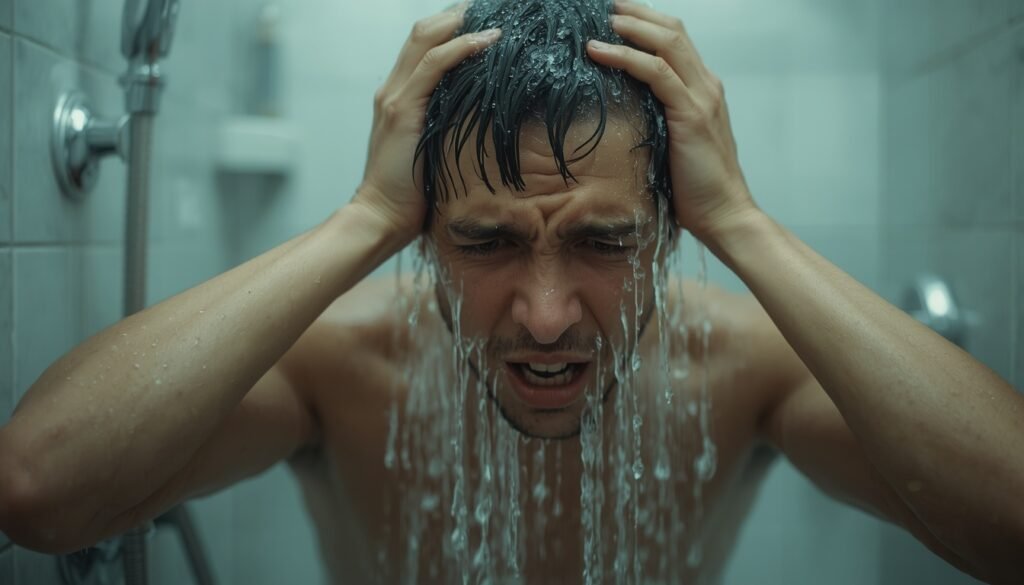
The water hits your skin.
It’s cold.
Your breath catches.
Every instinct screams: step back. Turn the dial. Make it stop.
Most people do.
But a growing number don’t.
—
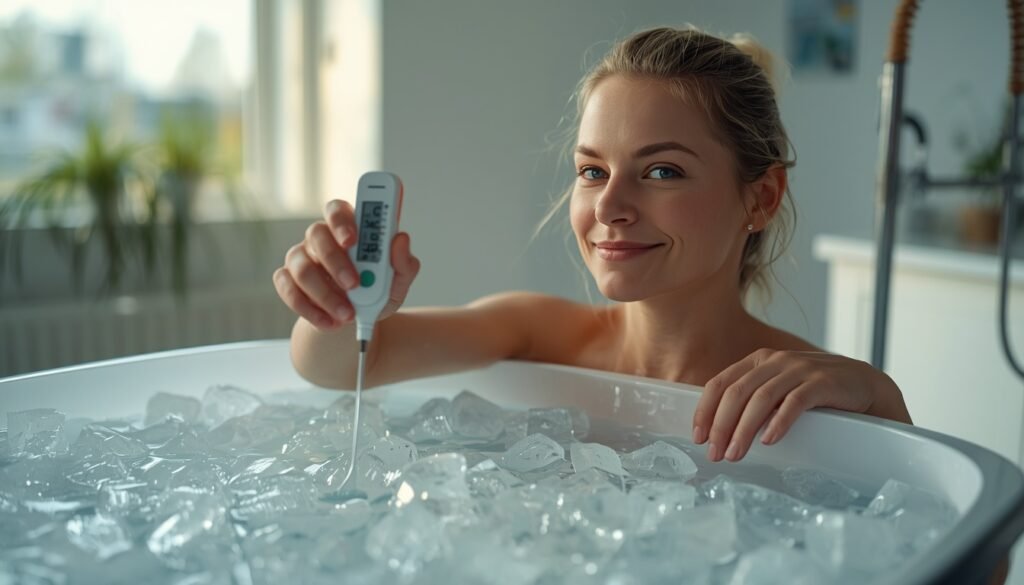
Cold exposure therapy — ice baths, cold showers, and cold plunges — has moved from elite athletes to mainstream wellness.
Not because it’s trendy.
Because the science is genuinely interesting.
—
Dopamine increases up to 250% above baseline.
Norepinephrine surges up to 530%.
People report less stress and better sleep.
These aren’t marketing claims — they’re numbers from peer-reviewed physiology research.
—
But the picture is more nuanced than social media suggests.
Cold therapy doesn’t fix everything.
Evidence in several areas is limited.
And it carries real risks if approached carelessly.
—
This article covers both sides honestly:
• The genuine science
• The realistic expectations
• The practical steps for anyone considering cold exposure
No overclaiming.
No hype.
Just what the research actually says.
What Is Cold Exposure Therapy?
In simple terms, cold exposure therapy is the deliberate, voluntary practice of exposing the body to cold water or cold air – through ice baths, cold showers, cold plunges, or cold water swimming – with the aim of triggering beneficial physiological and neurological adaptations. The core mechanism involves controlled stress activation of the sympathetic nervous system, which produces measurable hormonal and neurotransmitter responses that may support recovery, mood, and resilience over time.
In simple terms: your nervous system learns that controlled stress is survivable — and adapts to become stronger because of it.
Who Should Read This?
This article is for you if you are:
Someone curious about cold therapy but unsure where to begin safely
An athlete or active person looking for evidence-based recovery strategies
Anyone experiencing low energy, flat mood, or difficulty managing daily stress
People who have seen cold plunge content online and want honest, research-grounded information
Individuals who tried cold showers briefly and stopped before seeing any results
Anyone with a health condition who wants to understand the real risks before attempting cold exposure
Key Statistics You Should Know
📊 Statistic
Source
Cold water immersion at 14°C may increase plasma dopamine by approximately 250% above baseline in controlled settings
Srámek et al., European Journal of Applied Physiology, 2000
Norepinephrine levels may increase by up to 530% during cold water immersion
Srámek et al., 2000; PubMed ID 10751106
Consumer interest in cold plunges grew dramatically between 2022 and 2023, with significant increases in home cold-therapy equipment sales
PLOS ONE Systematic Review, 2025
Cold water immersion consistently reduces delayed onset muscle soreness compared to passive recovery
Sports Medicine Meta-Analysis, 2023
A 2025 systematic review of 3,177 participants found CWI associated with reduced stress, improved sleep, and higher quality of life
PLOS ONE, January 2025
My Personal Experience With Cold Exposure
I want to be honest about how this started for me — it was not out of discipline or optimized wellness thinking. It was a broken boiler in winter, which meant cold showers for two weeks whether I wanted them or not.
The first morning was genuinely awful. The second was slightly less awful. By day five, something unexpected happened: I noticed I was more alert in the hours after the shower than I had been in months. Not wired. Just present – the way you sometimes feel after a particularly good night of sleep, but it was 7am, and I had done nothing remarkable except survive cold water for 90 seconds.
That experience sent me into the research. What I found was both illuminating and usefully humbling. The neurochemical effects are real and measurable. The dopamine and norepinephrine data is compelling. But I also found systematic reviews cautioning that many claimed benefits are overstated, that evidence quality varies considerably, and that cold exposure is not appropriate for everyone.
Honest truth: I still do cold showers most mornings. Some days they feel transformative. Some days they just feel cold, and I get on with the day. The consistency matters more than the feeling — and that small shift in thinking changed everything about how I approached the practice.
Why It Works — The Science
The Physiological Reason
What I learned is that cold water does not just wake you up — it trains your nervous system to handle stress better. The body releases dopamine and norepinephrine, and over time it learns that discomfort is survivable. The cold is the tool; the real benefit is what your mind learns from it.
When the body makes contact with cold water, the sympathetic nervous system activates rapidly — the same system responsible for the fight-or-flight response. This triggers an immediate cascade: heart rate increases, blood vessels constrict to protect core temperature, and the adrenal glands release epinephrine, norepinephrine, and cortisol. The body is preparing to survive a perceived threat. In the context of deliberate cold exposure, that threat is controlled and temporary. With repeated exposure, research suggests the nervous system becomes more efficient at managing this stress response — a phenomenon called hormesis, in which controlled stress produces adaptive benefits greater than the stress itself.
In simple terms: the body gets better at handling stress by being repeatedly exposed to a safe version of it.
The Neurological Reason
The neurotransmitter response to cold exposure is well-documented and genuinely striking. Dopamine — which supports mood, motivation, focus, and goal-directed behaviour — increases gradually during and after cold exposure, producing a sustained elevation rather than the sharp spike-and-crash pattern associated with stimulants. Norepinephrine, which supports alertness, attention, and stress regulation, shows even more pronounced increases in controlled research settings. This sustained release pattern may partly explain why regular cold exposure practitioners consistently report improved mood and energy without the rebound fatigue often associated with caffeine.
In simple terms: cold exposure produces a neurochemical state closer to a runner’s high than a caffeine hit — and the effects last considerably longer.
Common Reasons People Try Cold Exposure
Post-exercise muscle recovery and soreness reduction
Mood improvement and stress resilience
Mental alertness and morning energy
Curiosity following social media or podcast content
Sleep quality improvement
Desire for a practical, low-cost daily wellness practice
General interest in hormetic stress adaptation
What Research Says About Cold Exposure Therapy
Study 1 — Dopamine and Norepinephrine Response to Cold Immersion
A landmark study published in the European Journal of Applied Physiology examined plasma neurotransmitter concentrations in healthy subjects before, during, and after cold water immersion at 14°C. Results showed plasma norepinephrine increased by approximately 530% and dopamine by approximately 250% above baseline. These increases were sustained — not brief spikes — and were consistently reproduced across subjects.
What this may mean for you: The neurochemical basis for reported mood and energy improvements from cold exposure is physiologically real and measurable. However, individual responses vary, and these numbers reflect controlled laboratory conditions rather than guaranteed personal outcomes.
DOI / PubMed ID: PubMed ID 10751106
Study 2 — Cold Water Immersion, Brain Connectivity, and Mood
A 2023 study published in Biology examined the effects of short-term head-out whole-body cold water immersion on brain connectivity and emotional states in healthy adults using functional MRI. Participants reported positive mood changes following cold immersion, and brain imaging revealed measurable changes in connectivity between networks associated with emotional processing and self-regulation. The researchers suggested these changes may reflect a genuine neurological basis for mood-related benefits frequently reported by cold exposure practitioners.
What this may mean for you: The mood improvements many people report after cold exposure appear to have a real neurological basis — though research is still developing and individual variation is significant.
DOI: https://doi.org/10.3390/biology12020211
Study 3 — Systematic Review: Cold Water Immersion and Overall Wellbeing
A 2025 systematic review and meta-analysis published in PLOS ONE examined 11 controlled studies with over 3,177 healthy adult participants, assessing effects of cold water immersion on sleep, stress, mood, fatigue, and quality of life. The review found cold water immersion associated with reduced stress in the 12 hours following immersion, slightly higher quality of life scores, and improved sleep outcomes. Authors noted that evidence quality was variable, and some commonly claimed benefits — including immune enhancement — had limited supporting evidence.
What this may mean for you: Stress reduction and sleep improvement are among the better-supported short-term benefits. Claims about immune boosting and significant fat loss should be approached with appropriate scepticism given current evidence.
DOI: https://doi.org/10.1371/journal.pone.0317615
“Cold water immersion triggers a neurohormonal cascade involving dopamine, norepinephrine, serotonin, and beta-endorphins — making it one of the more potent non-pharmacological tools for acute nervous system activation. The key is understanding its limits as clearly as its benefits.”
— Perspective synthesized from peer-reviewed neuropsychiatry literature, Journal of Neuropsychiatry and Clinical Neurosciences, 202

Quick Solutions That Actually Work
Start with 30 seconds of cold at the end of your normal shower. This is the most accessible entry point. No equipment needed, no scheduling required — and it produces measurable neurochemical effects even at brief durations.
Breathe slowly and deliberately before the cold hits. The instinctive response to cold water is hyperventilation, which intensifies the shock. Slow, controlled breathing before and during cold exposure reduces the panic response significantly and makes the experience far more manageable.
Stay still during immersion. Movement disturbs the thin layer of slightly warmer water that forms around the skin. Stillness allows the body to adapt more effectively and reduces perceived intensity considerably.
Time your exposure — do not guess. Start with 30 seconds and progress to 2 to 3 minutes over weeks. Research suggests 2 to 3 minutes at approximately 15°C produces significant neurochemical responses. Longer is not always better.
Choose morning for cold exposure. The norepinephrine and dopamine surge from morning cold exposure tends to support alertness and focus for several hours afterward. Evening cold exposure may interfere with sleep for some individuals.
Prioritise consistency over intensity. Three to five cold sessions per week produces more reliable nervous system adaptation than occasional extreme events. Frequency matters more than temperature extremes.
Allow natural rewarming after cold exposure when possible. Natural rewarming prolongs the neurochemical response. Immediately entering a hot shower shortens the adaptation window and reduces the downstream benefit.
Real-Life Example — How Sarah Used Cold Therapy to Rebuild Her Energy
The Problem
Sarah, a 38-year-old teacher and mother of two, had been experiencing persistent low energy, difficulty concentrating, and a flat, unmotivated emotional state for approximately eight months. Her GP had ruled out thyroid dysfunction and anaemia. Sleep was reasonable but unrestorative. She described herself as “functional but “grey”—managing daily responsibilities but without any real sense of vitality or forward momentum.
The Mistake
Sarah read about cold plunging on social media and immediately purchased a dedicated cold plunge tub — jumping from no cold exposure whatsoever to full 10-minute immersions in very cold water. The shock was significant enough to trigger anxiety, which she then associated with cold exposure itself. She stopped after four days, concluding it was simply not for her.
The Solution
Six weeks later, on a nutritionist’s suggestion, Sarah restarted cold exposure at the lowest possible threshold — 30 seconds of cool water at the end of her morning shower. She increased by 10 seconds each week, introduced a dedicated cold plunge only after eight weeks of progressive adaptation, and combined this with a 15-minute morning walk and careful attention to her sleep environment.
The Result
Within six weeks of the gradual restart, Sarah reported a noticeable improvement in morning energy and concentration lasting three to four hours after cold exposure. Within three months, she described her emotional baseline as noticeably lighter — not dramatically transformed, but meaningfully different from where she had started. Individual results vary. Sarah worked alongside a healthcare professional throughout this process, and cold exposure was one component of a broader lifestyle approach.
The 3-Step Framework for Starting Cold Exposure Safely
Step
Action
Ask Yourself
1
Start small
Can I manage 30 seconds of cool water today?
2
Progress gradually
Have I fully adapted to this level before increasing?
3
Observe honestly
What am I actually noticing — and what am I imagining?
This framework matters because the two most common failure patterns with cold exposure are identical to most wellness practices: starting too intensely and quitting from overwhelm, or progressing too slowly and losing motivation before results arrive. The third step — honest observation — is the most underrated element. The placebo effect in wellness is real and significant. Distinguishing genuine neurochemical change from expectation bias requires a degree of self-honesty that most guides skip entirely. Cold exposure works on the nervous system gradually — not overnight. Connecting your practice to an understanding of how stress and recovery interact helps explain why benefits accumulate over weeks, not days, and why rushing the process consistently works against you.
4 Questions to Ask Yourself Before You Begin
1. Do I have any cardiovascular or respiratory conditions?
This is the most important question before starting. Cold water immersion causes an immediate increase in heart rate and blood pressure. For most healthy adults this is manageable and transient. For individuals with heart disease, hypertension, Raynaud’s phenomenon, or respiratory conditions, cold exposure carries real risk. If any doubt exists, consult your doctor before beginning.
2. Am I approaching this from curiosity or social pressure?
Cold exposure has attracted a degree of wellness culture pressure — the sense that one should be doing it. Starting from social obligation rather than genuine interest produces lower adherence and more negative early experiences. Curiosity is a sustainable foundation. Obligation rarely is.
3. What do I actually expect to happen — and is that realistic?
Many people begin cold exposure expecting dramatic, rapid transformation. Research suggests more modest, gradual benefits — improved stress resilience, reduced muscle soreness, somewhat better mood and sleep — that accumulate over weeks of consistent practice. Realistic expectations are a form of respect for the process itself.
4. What does consistency look like for my actual life?
Three cold showers per week that you will reliably complete is more valuable than daily ice baths that last eight days before stopping. The protocol that fits your real life — not your ideal version of it — is the one worth designing. The reason cold exposure produces sustainable neurochemical benefits rather than a spike and crash connects directly to how the brain builds and maintains reward patterns over time. Understanding that mechanism makes the practice far more intentional and far easier to sustain.
“The reason cold exposure produces sustainable neurochemical benefits rather than a spike and crash connects directly to the science of dopamine and reward habits. Understanding that mechanism makes the practice far more intentional and far easier to sustain.”
The One Thing Most Articles About Cold Exposure Therapy Miss
Every article about cold therapy covers the dopamine numbers. The norepinephrine surge. The neuroscience of the stress response. The benefits for muscle recovery.
What almost none of them mention is this: the primary benefit of cold exposure may not be the cold itself.
It may be the act of doing something uncomfortable on purpose — and completing it.
The neurochemical response is real. But layered on top of it is something behavioural and psychological: the repeated experience of choosing discomfort, tolerating it, and arriving at the other side intact. Each repetition builds a kind of evidence that the nervous system stores — evidence that discomfort is survivable, that the initial shock is not the full story, and that the body is more capable than it felt at the beginning.
This is why many consistent cold exposure practitioners report benefits that extend well beyond the shower — greater tolerance for everyday stress, reduced reactivity to frustration, and a slightly expanded sense of what they can handle. The cold is the mechanism. The practice of voluntary discomfort is the deeper intervention.
The coldest part of a cold shower is the three seconds before you turn it on.
Does Cold Exposure Actually Increase Dopamine?
Yes. Research suggests cold water immersion at approximately 14°C may temporarily increase plasma dopamine levels by up to 250% above baseline in controlled settings. Unlike stimulants — which produce a sharp spike followed by a crash and reduced baseline — cold exposure appears to produce a gradual, sustained dopamine elevation that may last for several hours after the session ends. This pattern is associated with improved mood, motivation, and focus without the rebound fatigue typically seen with caffeine or other stimulants. Individual responses vary significantly depending on temperature, duration, and personal physiology.
7 Practical Strategies You Can Start Today
Strategy 1 — Design a Progressive Protocol, Not a Challenge
Cold exposure works best as a graduated practice, not a single feat of willpower. Begin with 30 seconds of cool water at the end of your existing shower. Increase by 15 to 30 seconds per week. Introduce colder temperatures only after fully adapting to the current level. Document your times so progress is visible rather than assumed — this simple habit makes a genuine difference to long-term adherence.
Strategy 2 — Separate Cold Exposure From Post-Strength Training
Research indicates that cold water immersion immediately after resistance training may blunt some of the anabolic signalling that drives muscle growth. If building muscle is a primary goal, consider timing cold exposure at least four hours after strength sessions or on non-training days. For endurance athletes or those focused on reducing soreness, immediate post-exercise cold immersion shows clearer evidence of benefit.
Strategy 3 — Build Breathing Technique as the Foundation
The quality of your cold exposure experience is substantially determined by your breathing. Slow exhales activate the parasympathetic nervous system, partially counteracting the fight-or-flight response triggered by cold. Practise four counts in, six counts out before entering cold water. With time this becomes automatic and dramatically reduces the subjective unpleasantness of the initial shock.
Strategy 4 — Track Mood and Energy, Not Just Duration
Most people track how long their cold exposure lasts. Few track what they notice in the two to three hours that follow. A simple one-line daily note — energy level, mood quality, and focus — provides actual personal data on whether cold exposure is producing meaningful effects for you specifically. This also builds accountability without adding perfectionism.
Strategy 5 — Pair Cold Exposure With an Existing Morning Routine
Habits attach most reliably to existing behaviours. If you already shower in the morning, adding 60 seconds of cold at the end requires almost no scheduling effort. Pairing cold exposure with a structured morning routine that already supports energy and mental focus creates a compound effect — producing neurochemical activation and behavioural consistency from the very first hour of the day.
“Pairing cold exposure with a structured morning habits for energy and mental focus routine creates a compound effect — producing neurochemical activation and behavioural consistency from the very first hour of the day.”
Strategy 6 — Understand the Difference Between Cold Showers and Ice Baths
Cold showers and ice baths produce overlapping but not identical effects. Cold showers are more accessible and appropriate for daily practice. Ice baths at temperatures below 15°C produce stronger acute neurochemical responses and are more effective for post-exercise recovery but carry greater cardiovascular risk and are far less suitable for beginners. Most research suggesting mood and stress benefits was conducted at temperatures between 14°C and 20°C — achievable with a standard cold shower in most households.
Strategy 7 — Do Not Evaluate the Practice During the Cold
The moment of cold exposure is the worst possible time to decide whether cold therapy is working. The discomfort is at its peak. The benefits are downstream. Many people abandon cold exposure because they assess it from inside the shower. The honest evaluation window is one to three hours later — and over weeks of consistent practice, not in the moment of maximum discomfort.
Common Mistakes People Make With Cold Exposure Therapy
Mistake
Why It Fails
Better Fix
Starting with full ice baths immediately
Shock too intense, creates negative association, abandoned within days
Begin with 30 seconds of cool water at the end of the shower.
Expecting dramatic results in the first week
Neurological adaptation takes weeks, not days
Track effects honestly over 4–6 weeks before evaluating
Cold exposure immediately after every workout
May reduce anabolic signaling important for muscle growth
Allow 4+ hours gap after resistance training
Holding breath during cold exposure
Increases cardiovascular strain and intensifies panic response
Breathe slowly and continuously throughout
Using cold therapy as substitute for sleep or nutrition
Cold cannot compensate for fundamental recovery deficits
Address sleep and diet first — cold exposure is complementary
Evaluating the practice during the cold itself
Peak discomfort does not reflect the downstream benefit
Assess mood and energy 1–3 hours after each session
Most people recognise themselves in at least two or three of these patterns before they understand what is actually driving the difficulty. Recognition without judgement is always the genuine starting point. The nervous system’s recovery pathways are deeply connected to how the body manages stress — and understanding those pathways changes how you approach every session.
“The nervous system’s recovery pathways are deeply connected to how the body manages stress — and understanding vagus nerve activation supports nervous system recovery
chan “Understanding [healthy lifestyle changes that actually work long-term] is the foundation that makes practices like cold exposure most effective.”
ges how you approach every session.”
When to See a Healthcare Professional
Please consult a qualified healthcare professional before beginning cold exposure therapy if you have or suspect any of the following:
Diagnosed cardiovascular disease, arrhythmia, or hypertension
Raynaud’s phenomenon or other conditions involving impaired circulation
Respiratory conditions including asthma or chronic obstructive pulmonary disease
A history of cold urticaria – a cold-induced allergic reaction
Peripheral neuropathy or reduced sensation in the extremities
Pregnancy
Any condition for which sudden changes in heart rate or blood pressure may pose risk
Additionally, discontinue cold exposure and seek medical advice immediately if you experience chest pain, difficulty breathing, persistent dizziness, numbness, or irregular heartbeat during or after cold exposure. Early professional guidance is always preferable to self-assessment.
Key Takeaways
Research suggests cold exposure may temporarily increase dopamine levels by up to 250% in controlled settings
Research suggests norepinephrine may increase by up to 530% during cold water immersion
The neurochemical response appears to produce sustained mood and energy effects rather than a spike-and-crash pattern
A 2025 systematic review of 3,177 participants supports cold water immersion for stress reduction and sleep improvement
Post-exercise cold immersion consistently reduces delayed onset muscle soreness in research settings
Evidence for immune boosting and significant fat loss remains limited — approach these claims with appropriate scepticism.
Starting gradually — 30 seconds of cool water — is safer and more effective than beginning with extreme cold
Cold exposure immediately after strength training may reduce muscle-building signals — timing matters
Breathing technique significantly affects both the quality and safety of every cold exposure session
Cold exposure carries real cardiovascular risk for individuals with certain health conditions
The deeper benefit may be the trained capacity for voluntary discomfort — not just the neurochemistry alone
Frequently Asked Questions
How cold does the water need to be for cold exposure to produce benefits?
Research suggests meaningful neurochemical effects may begin at approximately 14°C to 20°C. Most household cold water falls within this range, making cold showers a practical and accessible starting point. Colder temperatures may produce stronger acute responses but carry greater risk. Individual sensitivity varies considerably.
How long should a cold shower or ice bath last?
Research protocols typically use 2 to 3 minutes for neurochemical effects and 10 to 15 minutes for post-exercise muscle recovery. Beginners should start with 30 seconds and progress gradually. Longer durations are not always more beneficial and carry increased hypothermia risk at lower temperatures.
Will cold exposure help with depression or anxiety?
Some early research suggests cold exposure may support mood and reduce anxiety symptoms in healthy adults through norepinephrine and dopamine mechanisms. However, cold exposure is not a clinically validated treatment for depression or anxiety disorders. Anyone experiencing these conditions should work with a qualified mental health professional. Individual results vary significantly.
Can I do cold exposure every day?
Daily cold showers at moderate temperatures appear safe for most healthy adults. For ice baths at lower temperatures, three to five sessions per week with adequate recovery is a more evidence-informed approach. Daily extreme cold immersion may not allow sufficient physiological recovery between sessions.
Does cold exposure actually boost the immune system?
This is one of the more overstated claims in cold therapy circles. Current systematic review evidence found limited support for immune enhancement from cold water immersion. Some observational data suggests fewer upper respiratory infections among regular cold swimmers, but the research is not sufficiently robust to draw firm conclusions. Individual results vary.
Is it safe to do cold exposure while pregnant?
Cold water immersion is generally not recommended during pregnancy without explicit medical clearance due to cardiovascular stress and risks associated with sudden body temperature changes. Always consult your obstetrician before attempting any cold exposure during pregnancy. Individual medical circumstances vary significantly.
H2: Your 30-Day Cold Exposure Plan
Today — Start Here
Check your shower and note how cold the water gets on full cold — this is your personal baseline starting temperature
End today’s shower with 30 seconds of the coldest water available, breathing slowly and continuously throughout
This Week — Build Momentum
Repeat the 30-second cold ending every shower this week — consistency matters far more than duration at this early stage
Note how you feel in the 1 to 2 hours after each session: one honest line about energy, mood, and focus is entirely sufficient
This Month — Create Lasting Change
Increase duration by 15 to 30 seconds each week, reaching 2 to 3 minutes by the end of week four
At the end of 30 days, review your notes honestly — look for real patterns in mood and energy on cold days versus non-cold days, and let that data guide whether and how you continue
Final Thought
You do not need to become someone who plunges into ice at 5am to benefit from cold exposure. That image — popular on social media — is one version of this practice. It is not the only version, and for most people it is not the right starting point.
The science supports something more modest and more sustainable: brief, regular, voluntary contact with cold water, practised consistently over weeks, with honest attention to what it actually does for you rather than what it is supposed to do.
Some people will find it genuinely transformative. Others will find modest, real benefits worth the daily 90 seconds. A few will find it is simply not suited to their physiology or circumstances — and that is a completely valid outcome too.
The goal is not to be impressive in the cold. The goal is to be more capable of handling discomfort — in the shower and everywhere else.
Conclusion
My honest advice is to start small and stay patient. Thirty seconds of cold at the end of your shower is enough to begin. Do not chase ice baths or viral challenges. Just be consistent and notice how you feel an hour later. That is where the real change shows up.
Cold exposure therapy produces real, measurable physiological effects — including substantial increases in dopamine and norepinephrine, reduced post-exercise muscle soreness, and short-term improvements in stress, sleep, and mood. These are documented in peer-reviewed physiology and neuroscience research, not invented by wellness influencers. cold exposure therapy
At the same time, evidence quality varies considerably across different claimed benefits, and the practice carries genuine safety risks for individuals with certain health conditions. The honest position is that cold therapy is a valuable, low-cost, accessible tool for many people — and an inappropriate or dangerous one for others.
For those who are medically suitable and approach it progressively, the practice often delivers more than the neurochemistry alone. The habit of voluntary discomfort — repeated, completed, and survived — builds something harder to measure and potentially more durable than any single neurotransmitter number. Understanding which lifestyle habits genuinely move the needle over time is the foundation that makes practices like cold exposure most effective.
“Understanding healthy lifestyle changes that actually work long-term is the foundation that makes practices like cold exposure most effective.”
References
Srámek P, et al. (2000). Human physiological responses to immersion into water of different temperatures. European Journal of Applied Physiology, 81(5), 436–442. PubMed ID: 10751106
Yankouskaya A, et al. (2023). Short-Term Head-Out Whole-Body Cold-Water Immersion Facilitates Positive Affect and Increases Interaction between Large-Scale Brain Networks. Biology, 12(2), 211. DOI: https://doi.org/10.3390/biology12020211
Esperland D, de Weerd L, Mercer JB. (2022). Health effects of voluntary exposure to cold water: a continuing subject of debate. International Journal of Circumpolar Health, 81(1). DOI: https://doi.org/10.1080/22423982.2022.2111789
Effects of cold-water immersion on health and wellbeing: systematic review and meta-analysis. PLOS ONE, January 2025. DOI: https://doi.org/10.1371/journal.pone.0317615
Batista NP, et al. (2023). Cold water immersion and muscle soreness: updated systematic review and meta-analysis. Clinical Journal of Sport Medicine, 33(1), 13–25. PubMed ID: 36399666
Cold-Water Immersion: Neurohormesis and Possible Implications for Clinical Neurosciences. Journal of Neuropsychiatry and Clinical Neurosciences, 2024. DOI: https://doi.org/10.1176/appi.neuropsych.20240053
Cleveland Clinic. (2024). What to Know About Cold Plunges: Benefits and Risks. Retrieved from https://health.clevelandclinic.org/what-to-know-about-cold-plunges
Disclaimer
This content is for general informational and educational purposes only. It does not constitute medical, health, or professional advice. Research studies cited are referenced for informational purposes only. Individual physiological responses to cold exposure vary significantly. Cold water immersion carries real risks, including cardiovascular stress and hypothermia, particularly at low temperatures. This article is not a substitute for professional medical advice, diagnosis.
About the Author
HealthFitnessBloom Editorial Team
HealthFitnessBloom is dedicated to providing science-backed health, fitness, and wellness information to help readers live healthier lives. Our editorial team researches, writes, and reviews content to ensure accuracy, clarity, and practical value.