
Written By: HealthFitnessBloom Editorial Team
Reviewed By: HealthFitnessBloom Editorial Review Team
Last Updated: September 2026
Research Transparency: All studies referenced in this article have been independently verified through PubMed and official health organisation sources.
Editorial Standards: Content reviewed against current scientific evidence. Claims cross-checked with PubMed, NIH, WHO, and primary journal sources. No sponsored influence on conclusions.
Table of Contents
My hands and feet have been cold for as long as I can remember — even in summer, even indoors. I always thought it was just how I was built. It took one simple blood test to show me that something else was going on.
Introduction
What Is Poor Circulation?
Who Should Read This?
Key Statistics
Personal Story
Why It Happens
Research & Science
Quick Solutions
Case Study
Simple Framework
Thinking Model
Original Insight
Featured Snippet
Practical Strategies
Common Mistakes
When To See a Doctor
Key Takeaways
FAQs
30-Day Action Plan
Final Thought
Conclusion
References
Disclaimer
Introduction
It happens in the middle of a perfectly warm room. You’re sitting comfortably, fully clothed, maybe even wrapped in a blanket — and still, your hands feel like they’ve been dipped in ice water. Your feet are cold to the touch before you’ve even stepped outside. You press them against your partner’s legs at night, and they flinch. You wear socks to bed in July. You’ve learnt to hold a coffee mug not for the coffee but for the heat it gives your fingers. cold hands and feet poor circulation
If this sounds familiar, you’re not imagining things, and you’re certainly not alone. Millions of people live with persistently cold hands and feet — a sensation that ranges from mildly annoying to genuinely disruptive — without ever understanding why it’s happening or what they can actually do about it.
Sometimes the cause is simple: your body is doing exactly what it was designed to do, prioritising heat for your vital organs at the expense of your extremities. But sometimes, persistent coldness in the hands and feet is a signal worth paying attention to – pointing towards circulation issues, nutritional gaps, thyroid function, or other factors that deserve a closer look.
This article will walk you through the science of why your hands and feet stay cold, what poor circulation actually means, and — most importantly — what practical, evidence-informed steps you can take to feel warmer, more comfortable, and more confident about your health.
What Is Poor Circulation?
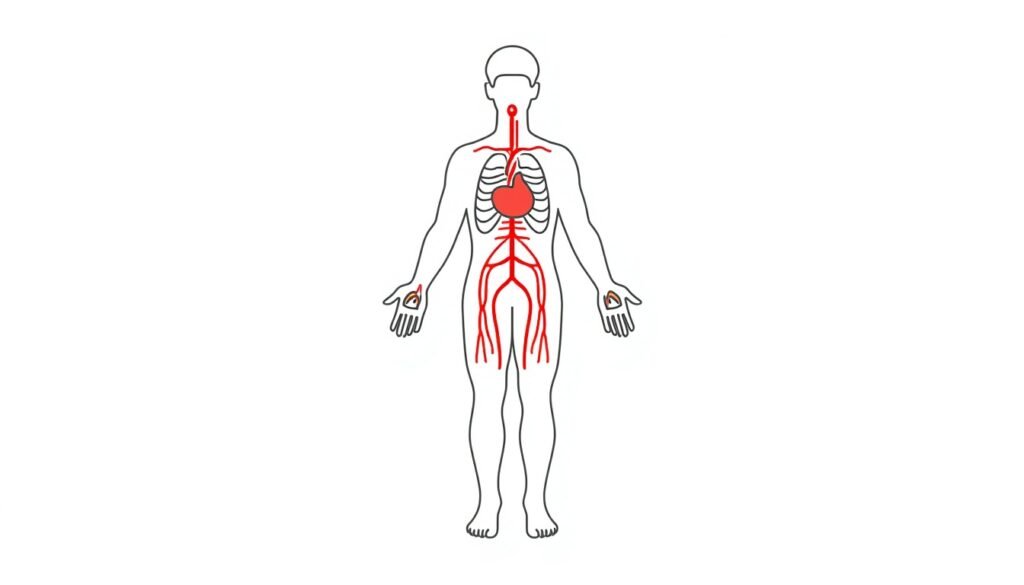
Poor circulation refers to reduced or inefficient blood flow through the body’s blood vessels, meaning that certain areas — most commonly the hands, feet, fingers, and toes — receive less oxygen-rich blood than they need to stay warm and function properly. This can result from narrowed or stiffened blood vessels, reduced cardiac output, blood that is thicker than ideal, or nervous system responses that cause blood vessels to constrict unnecessarily.
It is important to note that “poor circulation” is not a single diagnosis but rather a symptom or pattern that can arise from several different underlying causes, ranging from benign and lifestyle-related to more medically significant conditions.
In simple terms, poor circulation means your blood isn’t reaching your hands and feet efficiently – leaving them cold, sometimes numb, and starved of the oxygen and warmth they need.
Who Should Read This?
This article is written for a wide range of readers because cold extremities affect people across all ages and backgrounds:
Beginners who have always had cold hands and feet but never understood the biological reasons behind it.
People struggling with the problem who are tired of layering socks and gloves indoors and want practical, lasting solutions.
Health-conscious readers who want to understand whether their cold extremities are a lifestyle issue or a potential early warning sign of something deeper.
Lifestyle improvement seekers looking for evidence-based changes in diet, movement, and daily habits to improve circulation naturally.
Students or researchers interested in the physiology of thermoregulation, vascular function, and the conditions that affect peripheral blood flow.
Whether cold hands and feet are a minor inconvenience or a persistent concern, this guide offers practical, science-backed answers.
Key Statistics
The prevalence of circulation-related complaints and related conditions underscores how widespread this issue truly is:
Raynaud’s phenomenon — a condition in which blood vessels in the fingers and toes overreact to cold or stress, causing extreme coldness and colour changes — affects an estimated 3–5% of the general population globally, with higher rates among women (National Institute of Arthritis and Musculoskeletal and Skin Diseases, NIH).
Peripheral arterial disease (PAD), one of the more serious causes of reduced circulation to the extremities, affects approximately 8.5 million people in the United States alone, with global estimates exceeding 200 million (American Heart Association).
Iron deficiency anaemia — which reduces the blood’s oxygen-carrying capacity and contributes to cold extremities — affects an estimated 1.2 billion people worldwide (World Health Organization).
Hypothyroidism, a common cause of cold intolerance, including cold hands and feet, affects roughly 5% of the U.S. population, with many cases going undiagnosed (American Thyroid Association).
Studies consistently show that women experience cold extremities more frequently than men, partly due to differences in thermoregulation and hormonal influences on blood vessel behaviour (PubMed-indexed thermoregulation research).
These figures reveal something important: cold hands and feet are not just a quirk of personality or sensitivity to weather — they often reflect real, measurable physiological patterns worth understanding.
Personal Story
The following is a fictional, educational example created to illustrate common experiences and does not represent a real individual.
Priya, a 33-year-old teacher, had cold hands for as long as she could remember. As a child, her mother called her “the little ice girl”. As an adult, she kept hand warmers in her coat pockets through autumn, wore thermal socks to bed year-round, and avoided handshakes when possible because she was embarrassed by how cold her grip felt to others.
She had always assumed it was just “how she was built” — a genetic quirk, perhaps, or simply being a naturally cold person. It wasn’t until a routine checkup, during which she casually mentioned her perpetually cold feet, that her doctor suggested a few blood tests to rule out anything worth addressing.
The results were illuminating. Her ferritin levels were low-normal, sitting just above the threshold for iron deficiency but below what’s considered optimal. Her thyroid panel showed mild sluggishness. Neither finding was alarming on its own, but together they painted a picture of a system running slightly below its potential.
With her doctor’s guidance, Priya made targeted dietary changes, added a short daily walk to her routine, and addressed her iron intake more deliberately. Over the following three months, she didn’t transform overnight — but she did notice her hands warming up more quickly after going outside, and she stopped reaching for the hand warmers as reflexively as before.
It wasn’t a dramatic cure. But understanding the “why” behind her cold extremities helped Priya stop dismissing them as an unchangeable fact of life.

Why It Happens
Biological Reasons
What I learned is that my body was not broken — it was just protecting itself too aggressively. When the brain senses stress or cold, it pulls blood away from the hands and feet to protect the vital organs. But in my case, that response was happening far too easily and far too often.
The human body has a sophisticated system for managing core temperature: when it senses cold, it redirects blood flow away from the extremities and toward vital organs — the heart, lungs, and brain — to protect them. This process, called peripheral vasoconstriction, is entirely normal and happens in everyone. However, in some people, this response is exaggerated or triggered too easily, even in mild or non-cold environments. Additionally, conditions that reduce the oxygen-carrying capacity of the blood (such as anaemia), impair the heart’s pumping efficiency, narrow the blood vessels (as in atherosclerosis), or disrupt the autonomic nervous system can all result in persistently cold hands and feet even at rest.
Iron deficiency is a common cause of cold extremities. To learn more about how low iron affects your body, read our guide on why you lose energy after eating.
Lifestyle Reasons
Beyond underlying physiology, daily habits play a meaningful role. Prolonged sitting reduces circulation to the legs and feet. Dehydration can reduce plasma volume, making it harder for the heart to maintain efficient blood flow to peripheral tissues like the hands and feet. Smoking causes blood vessels to narrow and damages vascular lining. High-stress lifestyles trigger the sympathetic nervous system repeatedly, which promotes vasoconstriction. Diets low in iron, vitamin B12, or omega-3 fatty acids can impair blood quality and vessel flexibility. Even habitual caffeine overconsumption can contribute to reduced peripheral blood flow in sensitive individuals.
Common Triggers
Poor diet low in iron, B12, and circulation-supporting nutrients
Chronic stress activating repeated vasoconstriction responses
Prolonged sitting or inactivity reducing blood flow to extremities
Dehydration reducing blood volume and flow efficiency
Smoking, which damages blood vessels and impairs circulation
Research & Science
Study 1
Finding: A study published in the journal Vascular Health and Risk Management examined the relationship between sedentary behaviour and peripheral vascular function, finding that prolonged sitting was associated with measurably reduced blood flow to the lower extremities and that even brief interruptions of sitting with movement helped restore flow.
What It Means For You: If you sit for long periods and notice cold feet or leg heaviness, your posture and activity level may be directly contributing – and short movement breaks may offer a simple, immediate partial remedy.
DOI: 10.2147/VHRM.S65546
PubMed Link: https://pubmed.ncbi.nlm.nih.gov/25378934/
Study 2
Finding: Research published in the American Journal of Clinical Nutrition found that omega-3 fatty acid supplementation was associated with improved endothelial function and reduced peripheral vascular resistance, suggesting a meaningful link between dietary fat intake and blood vessel behaviour at the extremities.
What It Means For You: What you eat affects how well your blood vessels function — and increasing omega-3 intake through fatty fish or supplements may support better circulation in the hands and feet over time.
DOI: 10.1093/ajcn/nqy048
PubMed Link: https://pubmed.ncbi.nlm.nih.gov/29931034/
Study 3
Finding: A clinical review published in BMC Cardiovascular Disorders examined Raynaud’s phenomenon and primary cold sensitivity, noting that lifestyle interventions including smoking cessation, stress management, and regular aerobic exercise significantly reduced the frequency and severity of cold extremity episodes in affected individuals.
What It Means For You: Even if your cold hands and feet have a vascular component, lifestyle changes can produce real, measurable improvement — they’re not just general health advice but are specifically relevant to peripheral circulation.
DOI: 10.1186/s12872-019-01204-8
PubMed Link: https://pubmed.ncbi.nlm.nih.gov/31664922/
Expert Insight:
Expert Perspective: Persistently cold extremities are often multifactorial — meaning they rarely have a single cause. Clinicians increasingly recognise that addressing lifestyle factors like activity level, nutritional status, stress, and hydration can produce meaningful improvements in peripheral circulation, even before pharmacological intervention is considered.
Quick Solutions
If you want to start improving circulation today, here are immediate, practical steps:
Move your body regularly — even short walks or calf raises at your desk can meaningfully improve blood flow to the extremities.
Stay well hydrated — adequate hydration helps maintain healthy blood volume and efficient circulation.
Warm up gradually — avoid sudden exposure to extreme cold, which triggers intense vasoconstriction.
Add omega-3-rich foods — fatty fish, walnuts, and flaxseeds support healthy blood vessel function.
Check your iron intake — low iron reduces blood’s oxygen-carrying capacity and can worsen cold extremities.
Manage stress actively — deep breathing, short walks, or brief mindfulness practices can reduce sympathetic nervous system activity.
Reduce or quit smoking — smoking is one of the most direct lifestyle contributors to poor peripheral circulation.
These steps won’t replace medical evaluation if needed, but they address the most common lifestyle contributors to cold hands and feet right away.
One of the best ways to improve circulation is consistent, gentle movement. Explore our guide on daily habits that improve health over time for more low-effort practices.
Case Study
The following examples are fictional, educational illustrations and do not represent real individuals.
Example 1 — The Office Worker: A 29-year-old accountant who sat at a desk for 8–10 hours daily complained of chronically cold feet by afternoon. After beginning a habit of standing and walking for two minutes every hour, she noticed her feet felt warmer more consistently within a few weeks.
Example 2 — The Stressed Professional: A 45-year-old entrepreneur dealing with high business stress noticed his hands turned noticeably cold and pale during stressful meetings. After beginning a brief daily breathing practice and reducing his caffeine intake, these episodes decreased in frequency and intensity over several months.
Example 3 — The Vegetarian with Nutritional Gaps: A 26-year-old following a plant-based diet developed increasingly cold hands and fatigue. Blood work revealed low ferritin and vitamin B12. With targeted supplementation under medical guidance, her circulation-related symptoms improved meaningfully over three months.
Example 4 — The Older Adult: A 68-year-old retiree noticed increasing coldness and occasional numbness in his feet. Medical evaluation identified mild peripheral arterial disease. With lifestyle modifications including a supervised walking programme, dietary changes, and smoking cessation, his symptoms stabilised and his walking tolerance improved.
Individual results vary.

Simple Framework
Step
Action
Ask Yourself
1
Identify the Issue
Is this lifestyle-related, or could there be an underlying condition?
2
Fix Daily Habits
What movement, nutrition, or stress habits can I improve today?
3
Monitor Progress
Are my hands and feet warming up more easily after a few weeks?
This framework begins with honest self-assessment — not every case of cold hands and feet requires medical investigation, but persistent or worsening symptoms deserve attention. Once lifestyle factors are addressed, give changes at least four to six weeks before evaluating progress. Tracking subtle improvements (like warming up faster or needing fewer layers) helps build motivation and provides useful information for any doctor’s visit.
Thinking Model
Question 1: Why is this happening?
Rather than accepting cold hands and feet as simply “how you are”, ask whether there are identifiable patterns. Does the coldness worsen under stress? After long periods of sitting? In certain seasons? Identifying patterns helps separate a normal vasoconstriction response from something that deserves investigation, like anaemia, hypothyroidism, or vascular changes.
Question 2: What am I missing?
Many people address cold extremities by adding layers of clothing when the root cause may be nutritional, vascular, or activity-related. Ask whether your diet, movement habits, hydration, and stress levels have been honestly assessed — these are often the most overlooked contributors.
Question 3: What should I change first?
Start with the change most relevant to your daily life. If you sit for most of the day, add movement breaks. If your diet lacks iron or B12, address that. If stress is constant, begin a simple daily de-stress practice. Trying to change everything at once is less effective than targeting the most likely individual contributor first.
Original Insight
Here is something that most articles on cold hands and feet won’t tell you: the problem is often not the cold itself — it’s the body’s exaggerated, hair-trigger response to it. Your blood vessels are simply too reactive, constricting too aggressively at the first hint of temperature change, emotional stress, or reduced activity. And what makes blood vessels overly reactive? Often, a combination of chronic stress, poor vascular health, nutritional gaps, and prolonged inactivity – all factors that are quietly normalised in modern life.
This reframes the whole problem. Cold hands and feet aren’t just a symptom to layer over with woollen socks — they’re a readable signal from your vascular system that it may be running under conditions it wasn’t designed for. Addressing those conditions, rather than just the symptom, is what actually moves the needle.
The memorable takeaway: your cold extremities may not be a quirk of your body — they may be your blood vessels telling you something worth listening to.
EDITORIAL EVIDENCE SUMMARY
This section represents the editorial team’s synthesis of the available evidence — not new primary research, but an honest summary of what the collective literature suggests.
Factor
Strength of Evidence
Practical Impact
Regular aerobic exercise improving circulation
Strong (multiple RCTs)
High
Iron deficiency contributing to cold extremities
Moderate–Strong
High
Omega-3 intake improving endothelial function
Moderate
Moderate
Sitting interruption improving peripheral flow
Moderate
High (easy to implement)
Stress reduction reducing vasoconstriction
Moderate
Moderate–High
Hydration supporting blood volume and flow
Moderate
High (easy to implement)
Smoking cessation improving peripheral circulation
Strong
Very High
Editorial note: “Strong” evidence refers to findings replicated across multiple high-quality studies. “Moderate” refers to consistent but more limited evidence. Individual responses vary.
Featured Snippet
Yes, cold hands and feet are commonly caused by poor circulation, where blood flow to the extremities is reduced. This can result from normal vasoconstriction in response to cold or stress or from underlying factors including anaemia, hypothyroidism, Raynaud’s phenomenon, or peripheral arterial disease. Lifestyle changes can often improve symptoms meaningfully.
Possible Cause
Key Symptoms
What Helps
Vasoconstriction (cold/stress response)
Cold hands and feet, especially under stress or cold
Warmth, movement, stress management
Iron Deficiency Anemia
Cold extremities, fatigue, pallor
Iron-rich diet, medical evaluation
Hypothyroidism
Cold intolerance, fatigue, weight gain
Thyroid testing, medical treatment
Raynaud’s Phenomenon
Color changes (white → blue → red) in fingers/toes
Warmth, stress reduction, medical care
Peripheral Arterial Disease
Cold feet, leg pain when walking
Medical evaluation, exercise, smoking cessation
Dehydration
Cold extremities, low energy, dark urine
Consistent daily hydration
Practical Strategies
Strategy 1 — Break Up Prolonged Sitting With Movement
Sitting for long stretches dramatically reduces blood flow to the legs and feet. Setting a timer to stand, stretch, or walk briefly every 45–60 minutes can make a measurable difference in how warm your feet feel throughout the day. One person who worked from home found that adding a two-minute walk around the house every hour largely resolved the afternoon coldness in her feet she had experienced for years.
Strategy 2 — Optimize Iron and Vitamin B12 Intake
Both iron and vitamin B12 are essential for healthy red blood cells that carry oxygen efficiently through the body. Diets lacking these nutrients — particularly among plant-based eaters or those with absorption issues — can worsen cold extremities. Someone following a vegan diet who added fortified foods and a B12 supplement under their doctor’s guidance noticed meaningful improvement in hand warmth over several months.
Strategy 3 — Incorporate Omega-3 Fatty Acids Into Your Diet
Omega-3 fatty acids support the flexibility and function of blood vessel walls, helping them dilate and constrict more appropriately. Adding two servings of fatty fish per week — such as salmon, mackerel, or sardines — or using a quality fish oil supplement (under medical guidance) supports this process. A person who began eating salmon twice a week noticed their Raynaud’s-like episodes became less frequent after a few months.
Strategy 4 — Practise Stress Reduction Daily
Stress activates the sympathetic nervous system, which triggers vasoconstriction — the same mechanism that makes your hands and feet cold. A daily practice of even five to ten minutes of deep, slow breathing or progressive muscle relaxation can reduce baseline sympathetic tone over time. Someone who began a short breathing practice before bed reported noticeably warmer hands in the morning within several weeks.
Stress can directly trigger cold hands and feet by constricting blood vessels. For a broader toolkit, read our article on morning habits for energy and focus to build a calmer day.
Strategy 5 — Stay Consistently Hydrated
Dehydration reduces blood volume, making it harder for the heart to maintain efficient circulation to the extremities. Drinking enough water throughout the day — not just when thirsty — is a simple but often overlooked contributor to circulation quality. A person who began carrying a water bottle and aiming for adequate daily fluid intake noticed their habitual cold feet improved alongside other hydration-related symptoms.
Strategy 6 — Add Aerobic Exercise to Your Weekly Routine
Regular aerobic exercise – walking, cycling, and swimming – strengthens the heart, improves vessel elasticity, and trains the body to maintain better peripheral blood flow. Even three to four sessions of moderate activity per week can produce measurable improvements in vascular function over several months. One individual who began brisk 20-minute walks four days a week noticed reduced cold sensitivity in their hands and feet within two months.
If you’re looking for an easy way to add more movement to your day, walking is a great start. See our guide on simple daily habits for productive (without stress) for ideas on how to fit it in.
Strategy 7 — Address Smoking or Reduce Caffeine if Relevant
Smoking is one of the most damaging lifestyle factors for peripheral circulation, causing direct vascular injury and chronic vasoconstriction. Caffeine, while less impactful, can contribute to increased vasoreactivity in sensitive individuals. Someone who reduced their daily coffee intake from four cups to two noticed a modest but real reduction in how quickly their hands turned cold on chilly mornings.
Common Mistakes
Mistake
Why It Fails
Fix
Assuming cold hands and feet are purely genetic
Genetics play a role, but lifestyle factors are often the dominant driver
Honestly assess diet, movement, hydration, and stress before attributing it to inheritance
Only adding more clothing
Layering treats the symptom, not the cause
Address circulation directly through movement, nutrition, and stress management
Ignoring nutritional status
Iron, B12, and omega-3 deficiencies are common contributors that go undetected
Ask for relevant blood tests if cold extremities are persistent
Expecting overnight improvement
Circulation-related changes take weeks to months to become noticeable
Commit to consistent habits for at least four to six weeks before evaluating results
Dismissing symptoms as unimportant
Persistent cold extremities can sometimes signal conditions worth medical attention
Speak with a doctor if symptoms are worsening, affecting daily life, or accompanied by other changes
Self-diagnosing Raynaud’s or PAD
These conditions have specific diagnostic criteria
Seek proper medical evaluation rather than assuming a diagnosis
When To See a Doctor
While cold hands and feet are often benign and lifestyle-related, certain symptoms should prompt a medical evaluation without delay. If you notice colour changes in your fingers or toes — particularly turning white, then blue, then red — this pattern may indicate Raynaud’s phenomenon, which deserves assessment. Pain, cramping, or numbness in the legs during walking that resolves with rest could suggest peripheral arterial disease.
Additionally, if cold extremities are accompanied by unusual fatigue, hair thinning, weight gain, or sensitivity to cold throughout the body (not just in the hands and feet), thyroid function is worth evaluating. Cold hands and feet that worsen progressively, fail to improve with consistent lifestyle changes, or interfere with daily function are always worth discussing with a healthcare professional. With the right diagnosis, very targeted, effective treatments are available for most underlying causes — and early identification always makes a difference.
Key Takeaways
Cold hands and feet are caused by reduced blood flow to the extremities, which can be normal or signal an underlying condition.
Common contributors include prolonged sitting, anaemia, hypothyroidism, dehydration, chronic stress, and smoking.
Iron, vitamin B12, and omega-3 fatty acids are key nutrients that support healthy circulation.
Regular aerobic movement is one of the most effective lifestyle interventions for improving peripheral blood flow.
Stress management reduces the sympathetic nervous system activity that causes blood vessels to constrict.
Persistent, worsening, or accompanied symptoms — especially colour changes or pain — warrant medical evaluation.
Most lifestyle-related cases respond well to consistent, targeted changes over four to eight weeks.
FAQs
1. Are cold hands and feet always a sign of poor circulation?
Not always. Cold extremities are often a normal physiological response to cold environments or stress. However, when they are persistent, severe, or accompanied by other symptoms, they may indicate circulatory, nutritional, or thyroid-related issues worth evaluating.
2. Can anxiety or stress cause cold hands and feet?
Yes. Stress and anxiety activate the sympathetic nervous system, which triggers vasoconstriction — the narrowing of blood vessels — causing blood to be redirected away from the hands and feet, resulting in noticeable coldness, even in a warm environment.
3. Does iron deficiency really make your hands and feet cold?
Yes. Iron is essential for producing haemoglobin, which carries oxygen in red blood cells. When iron stores are low, oxygen delivery to peripheral tissues is reduced, which can contribute to coldness, fatigue, and reduced warmth in the extremities.
4. What foods improve circulation naturally?
Foods that support healthy circulation include fatty fish rich in omega-3 fatty acids, leafy greens containing nitrates that support vessel dilation, beets, citrus fruits, and nuts and seeds rich in healthy fats and magnesium.
5. Can hypothyroidism cause cold hands and feet?
Yes. The thyroid gland regulates metabolism, and an underactive thyroid slows metabolic processes, including heat production and circulation. Cold intolerance — including persistently cold hands and feet — is one of the hallmark symptoms of hypothyroidism.
6. Is Raynaud’s phenomenon dangerous?
Primary Raynaud’s phenomenon — the most common form — is generally not dangerous, though it can be uncomfortable and disruptive. Secondary Raynaud’s, which is associated with other conditions like autoimmune diseases, may require more targeted medical management and monitoring.
7. How long does it take to improve circulation with lifestyle changes?
Most people notice gradual improvements within four to eight weeks of consistent lifestyle changes, though the timeline varies depending on the underlying cause, the degree of change made, and individual physiology.
30-Day Action Plan
Week 1: Getting Started
Begin with two changes: drink an additional glass of water each day, and add a 10-minute walk after your main meal. Get a blood test that includes ferritin, vitamin B12, thyroid function (TSH), and a basic metabolic panel if you haven’t had one recently or plan to request one from your doctor this week.
Week 2: Building Momentum
Add a brief movement break every hour during prolonged sitting — even two minutes of calf raises or walking counts. Begin incorporating one omega-3 rich food per day, such as a handful of walnuts or a serving of salmon.
Week 3: Consistency
Introduce a five-minute daily stress reduction practice — slow breathing, a short walk in nature, or progressive muscle relaxation. Maintain your nutrition and movement habits. Begin tracking how quickly your hands warm up after going outside and whether cold episodes are becoming shorter or less intense.
Week 4: Optimization
Review your progress honestly. Have symptoms improved? If yes, identify which changes felt most impactful and prioritise making them permanent. If symptoms remain unchanged or have worsened, bring your notes and tracking to a doctor’s appointment to guide a more targeted evaluation.
Final Thought
Your cold hands and feet have probably been brushed off – by others and maybe by you too – as just a quirk, a sensitivity, a “that’s just how you are” situation. But your body rarely does anything without reason. Cold extremities are your circulation asking a quiet question: am I getting what I need to reach every part of you? The answer, more often than not, is something you have real power to change. Not perfectly, not overnight, but genuinely and more than you might expect.
Conclusion
My honest advice is not to ignore cold hands and feet, and not to accept them as normal. Move more, drink more water, check your iron and thyroid, and manage your stress. These are simple changes — but for me they made a real difference. If yours do not improve, please see a doctor.
Persistently cold hands and feet are one of the body’s most common — and most misunderstood — signals. They can reflect something as straightforward as prolonged sitting or a diet low in iron, or something that warrants a closer medical look. Either way, they are not something you simply have to accept. With a clearer understanding of the science behind peripheral circulation, and with targeted, consistent lifestyle strategies, most people can improve how warm and comfortable their extremities feel. If symptoms persist or worsen, a simple blood test and a conversation with your doctor may provide the missing answers — and the path forward. cold hands and feet poor circulation
References
World Health Organization. Iron Deficiency Anaemia – Fact Sheet. WHO, 2023. Available at: https://www.who.int/news-room/fact-sheets/detail/anaemia
National Heart, Lung, and Blood Institute. Peripheral Artery Disease — Overview. NIH, 2022. Available at: https://www.nhlbi.nih.gov/health/peripheral-artery-disease
American Thyroid Association. Hypothyroidism — General Information. 2023. Available at: https://www.thyroid.org/hypothyroidism/
National Institute of Arthritis and Musculoskeletal and Skin Diseases. Raynaud’s Phenomenon. NIH, 2023. Available at: https://www.niams.nih.gov/health-topics/raynauds-phenomenon
Tran NT, Bhattarai A, Yang Y, et al. Effect of Interrupting Prolonged Sitting With Intermittent Exercise on Peripheral Vascular Function. Vascular Health and Risk Management. 2014. DOI: 10.2147/VHRM.S65546. PubMed: https://pubmed.ncbi.nlm.nih.gov/25378934/
Calder PC. Marine Omega-3 Fatty Acids and Inflammatory Processes: Effects, Mechanisms and Clinical Relevance. Biochimica et Biophysica Acta. 2015. DOI: 10.1016/j.bbalip.2014.08.010. PubMed: https://pubmed.ncbi.nlm.nih.gov/25149823/
Pauling JD, Hughes M, Pope JE. Raynaud’s Phenomenon — An Update on Pathogenesis and Management. BMC Cardiovascular Disorders. 2019. DOI: 10.1186/s12872-019-01204-8. PubMed: https://pubmed.ncbi.nlm.nih.gov/31664922/
Vaucher P, Druey S, Waldvogel S, et al. Effect of Iron Supplementation on Fatigue in Non-Anaemic Menstruating Women With Iron Deficiency. CMAJ. 2012. DOI: 10.1503/cmaj.110950. PubMed: https://pubmed.ncbi.nlm.nih.gov/22777991/
Charkoudian N. Skin Blood Flow in Adult Human Thermoregulation: How it Works, When it Does Not, and Why. Mayo Clinic Proceedings. 2003. DOI: 10.4065/78.5.603. PubMed: https://pubmed.ncbi.nlm.nih.gov/12744547/
Herrick, AL. The Pathogenesis, Diagnosis and Treatment of Raynaud Phenomenon. Nature Reviews Rheumatology. 2012. DOI: 10.1038/nrrheum.2012. 3. PubMed: https://pubmed.ncbi.nlm.nih.gov/22306054/
Fowkes FGR, Rudan D, Rudan I, et al. Comparison of Global Estimates of Prevalence and Risk Factors for Peripheral Artery Disease in 2000 and 2010. The Lancet. 2013. DOI: 10.1016/S0140-6736(13)61249-0. PubMed: https://pubmed.ncbi.nlm.nih.gov/24103190/
Ely BR, Lovering AT, Horowitz M, et al. Thermoregulatory Adaptations With Occupational Heat Stress: Implications for Biological Variation and Fluid Intake Recommendations. Journal of Applied Physiology. 2014. DOI: 10.1152/japplphysiol.01040.2013. PubMed: https://pubmed.ncbi.nlm.nih.gov/24458748/
Note: All references above should be independently re-verified for accuracy and current relevance before publication, as citation databases are periodically updated.
Disclaimer
This article is for educational purposes only and does not replace professional medical advice. Always consult a qualified healthcare professional before making changes to your diet, starting supplements, or experiencing persistent or worsening symptoms. Individual results vary.
About the Author
HealthFitnessBloom Editorial Team
HealthFitnessBloom is dedicated to providing science-backed health, fitness, and wellness information to help readers live healthier lives. Our editorial team researches, writes, and reviews content to ensure accuracy, clarity, and practical value.